Dialing in espresso or espresso extraction can feel frustrating when the numbers look right but the coffee still tastes sour, bitter, thin, or harsh.
- ☕ Quick Answer: How Do You Dial In Espresso?
- The 18 g → 36 g Starting Point
- Why 25–30 Seconds Isn't a Pass/Fail Test
- LOCK → PULL → MEASURE → TASTE → ADJUST → REPEAT
- 1. Lock In Your Dose
- 2. Pull the Shot
- 3. Measure Yield and Time
- 4. Taste the Espresso
- 5. Adjust One Variable
- 6. Repeat and Compare
- Signs of Under-Extraction
- Signs of Over-Extraction
- Why Taste and Flow Can Sometimes Conflict
- What Happens When You Grind Finer?
- What Happens When You Grind Coarser?
- How Much Should You Adjust?
- When to Change Grind Size
- When to Change Yield
- When to Change Dose
- Channeling
- Uneven Distribution
- Poor Puck Preparation
- Coffee Freshness
- Grinder Performance
- Starting recipe
- Sour + fast
- Bitter/harsh + slow
- Thin + fast
- Uneven or gushing flow
- Numbers look right but the espresso tastes wrong
- The golden rule
- What is the best ratio for espresso?
- How long should an espresso shot take?
- Should I grind finer if espresso tastes sour?
- Should I grind coarser if espresso tastes bitter?
- What does it mean when espresso runs too fast?
- What does it mean when espresso runs too slowly?
- Why is my espresso sour even when the shot time is correct?
- How many shots does it take to dial in espresso?
The good news is that you don’t need to keep changing everything at once. Once you understand how dose, yield, grind size, extraction time, flow, and taste work together, dialing in becomes a repeatable process rather than guesswork.
In this guide, you’ll learn how to dial in espresso step by step, how to recognize under- and over-extraction, and what to change when a shot doesn’t taste right.
The most important principle to remember is simple:
Don’t dial in by the clock alone. Use the numbers to diagnose the shot, but let taste tell you whether the extraction is working.
☕ Quick Answer: How Do You Dial In Espresso?
Start with a consistent dose and a 1:2 brew ratio, such as 18 g of coffee to 36 g of espresso. Pull the shot, record the yield and time, taste it, then adjust the grind one small step at a time until the espresso tastes balanced.
What Does It Mean to Dial In Espresso?

Dialing in espresso means adjusting your coffee recipe and grind setting until you consistently produce espresso with the flavor, balance, body, and strength you want.
The main variables are:
- Dose: how much ground coffee goes into the basket
- Yield: how much espresso comes out
- Brew ratio: the relationship between dose and yield
- Grind size: how finely the coffee is ground
- Extraction time: how long the shot takes to reach the target yield
- Puck preparation: how evenly the coffee is distributed and tamped
These variables interact, which is why changing several at once can make espresso difficult to troubleshoot.
A better approach is to establish a consistent starting recipe, pull a shot, taste it, and make one controlled adjustment at a time.
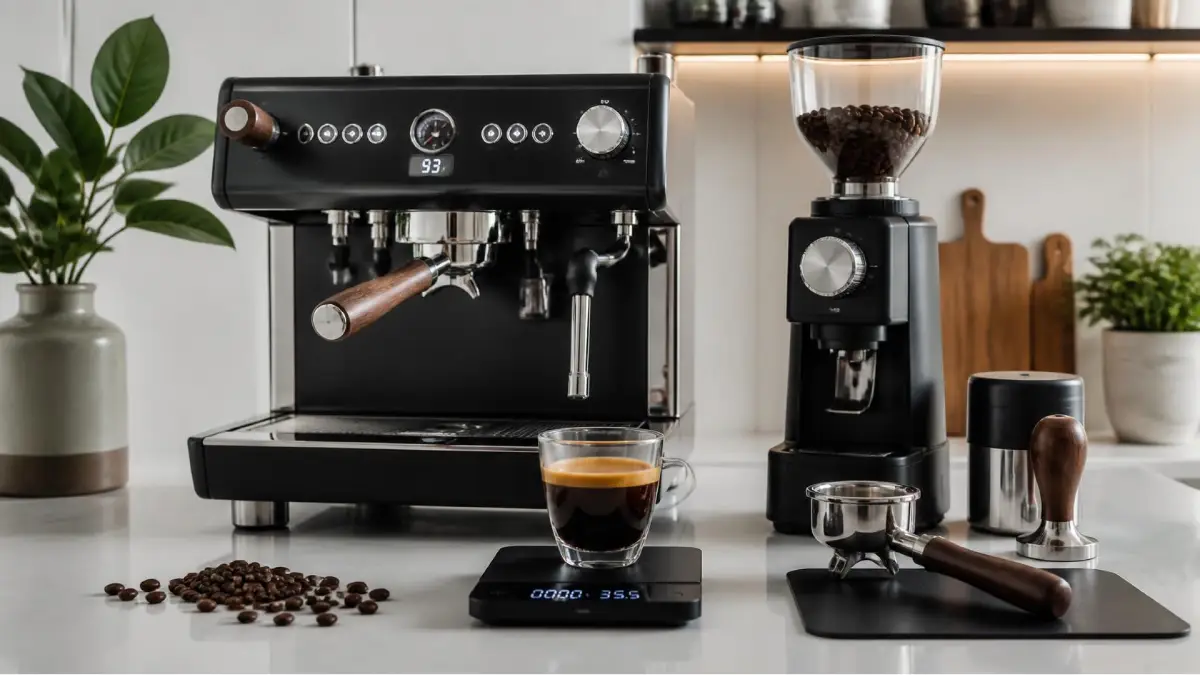
What You’ll Need
- Espresso machine
- Espresso grinder
- Digital scale
- Fresh coffee beans
- Portafilter and appropriate basket
- Tamper
Optional:
- Timer, if your scale doesn’t include one
Start With a Simple Espresso Recipe
Before you can diagnose a shot, you need a baseline.
A useful starting point for many traditional espresso recipes is:
| Variable | Starting point |
|---|---|
| Coffee dose | 18 g |
| Espresso yield | 36 g |
| Brew ratio | 1:2 |
| Extraction time | About 25–30 seconds |
This gives you an 18 g dose and a 36 g yield, which is a 1:2 espresso brew ratio.
But don’t treat these numbers as a pass/fail test.
Different coffees can perform differently depending on roast level, processing, freshness, grinder, machine, water, and your preferred flavor profile.
The 18 g → 36 g Starting Point
Think of 18 g in and 36 g out as a controlled starting point.
It gives you something consistent to work from.
For example, if you pull:
18 g coffee → 36 g espresso in 18 seconds
and the shot tastes sharp, sour, and thin, you have useful information.
If another shot produces:
18 g coffee → 36 g espresso in 34 seconds
and tastes bitter and drying, you also have useful information.
The numbers help you understand what happened.
Why 25–30 Seconds Isn’t a Pass/Fail Test
Extraction time is useful, but it isn’t the definition of a good espresso.
A 28-second shot can taste unpleasant.
A 32-second shot can taste balanced.
That’s why you shouldn’t automatically change your grinder simply because a shot falls outside a particular time range.
Instead, use time, yield, flow, and taste together.
👉 How to Make a Triple Shot Espresso
A good espresso recipe is a starting point. A good-tasting espresso is the goal.
The Frothy Fusion Espresso Dial-In Method
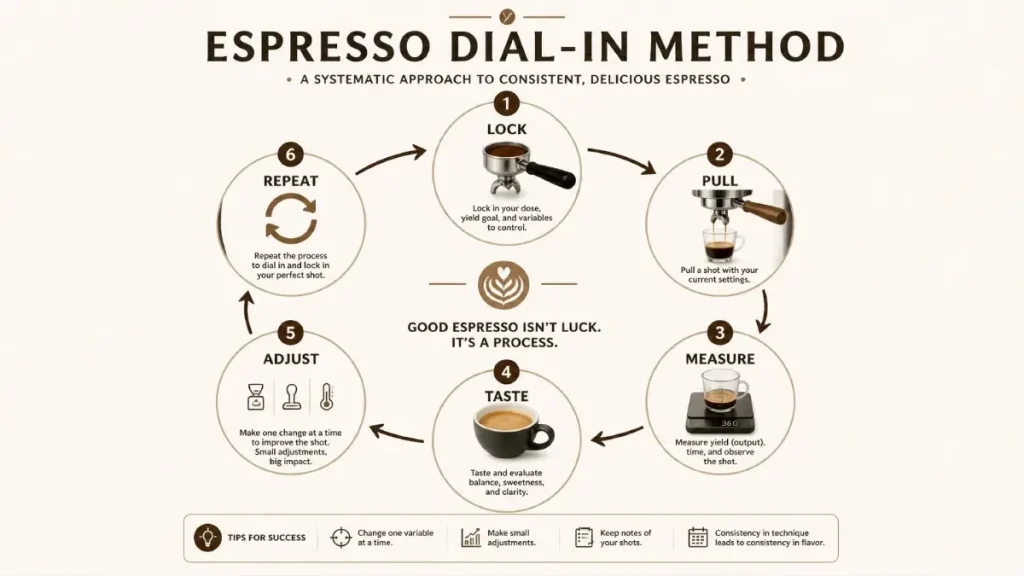
When you’re learning how to dial in espresso, it helps to use the same process every time.
LOCK → PULL → MEASURE → TASTE → ADJUST → REPEAT
This six-step method keeps the process controlled and makes it easier to understand what each adjustment actually does.
1. Lock In Your Dose
Start with a consistent dose.
For example, if you’re using an 18 g basket recipe, weigh approximately 18 g of coffee for each shot.
Keeping the dose consistent removes one variable from the experiment.
2. Pull the Shot
Prepare the puck consistently and extract your espresso using your starting recipe.
Aim initially for approximately:
18 g in → 36 g out
Don’t worry if the first shot isn’t perfect.
The first shot is information.
3. Measure Yield and Time
Use a scale that can measure espresso output accurately enough for your purposes.
Record:
- dose
- yield
- extraction time
For example:
18 g in → 36 g out → 22 seconds
or:
18 g in → 36 g out → 32 seconds
This gives you a useful reference point for the next adjustment.
4. Taste the Espresso
Now evaluate the coffee.
Look for:
- sourness
- sweetness
- bitterness
- body
- harshness
- dryness
- astringency
- overall balance
This is the step beginners sometimes skip.
Don’t assume that a shot is good because the numbers look good.
👉 How Much Caffeine Is in Espresso
5. Adjust One Variable
If the shot needs correcting, make one deliberate adjustment.
For most basic dial-in situations, grind size is the first variable to adjust.
Make a small change rather than moving dramatically.
6. Repeat and Compare
Pull another shot using the same dose and target yield.
Then compare it with the previous shot.
Ask:
Did the flavor improve?
If it did, you’re moving in the right direction.
If it didn’t, use the new information to make your next controlled adjustment.
How to Tell If Your Espresso Is Under-Extracted or Over-Extracted
Extraction describes how much of the soluble material from the coffee grounds is dissolved into the brewing water.
The challenge is recognizing what the resulting cup is telling you.
Signs of Under-Extraction
Under-extracted espresso can taste:
- sour
- sharp
- acidic in an unpleasant way
- thin
- hollow
- lacking sweetness
- short on the finish
The shot may also run relatively quickly.
If you have a fast-flowing shot that tastes sharp and underdeveloped, try grinding finer as your first adjustment.
The finer grind increases resistance and can slow the flow, giving the water more opportunity to extract the coffee.
Signs of Over-Extraction
Over-extracted espresso can taste:
- bitter
- harsh
- dry
- astringent
- unpleasantly intense
- lacking balance
The shot may also take longer to reach the target yield.
If the espresso is bitter or drying and the shot is running slowly, try grinding slightly coarser.
This can increase flow and reduce the amount of extraction taking place.
Why Taste and Flow Can Sometimes Conflict
This is where espresso becomes more complicated than a simple troubleshooting chart.
A shot can run slowly and still have areas of the puck that are under-extracted.
The reason can be channeling.
Channeling occurs when water finds easier pathways through the coffee puck rather than flowing evenly through the entire bed.
That means different areas of the puck can experience very different extraction.
So if your espresso tastes confusingly sour and bitter at the same time, or the flavor remains poor despite apparently correct numbers, don’t immediately keep changing the grind.
Check your puck preparation as well.
☕ Taste First. Use the Numbers to Understand Why.
Espresso Dial-In Troubleshooting: What Should You Change?
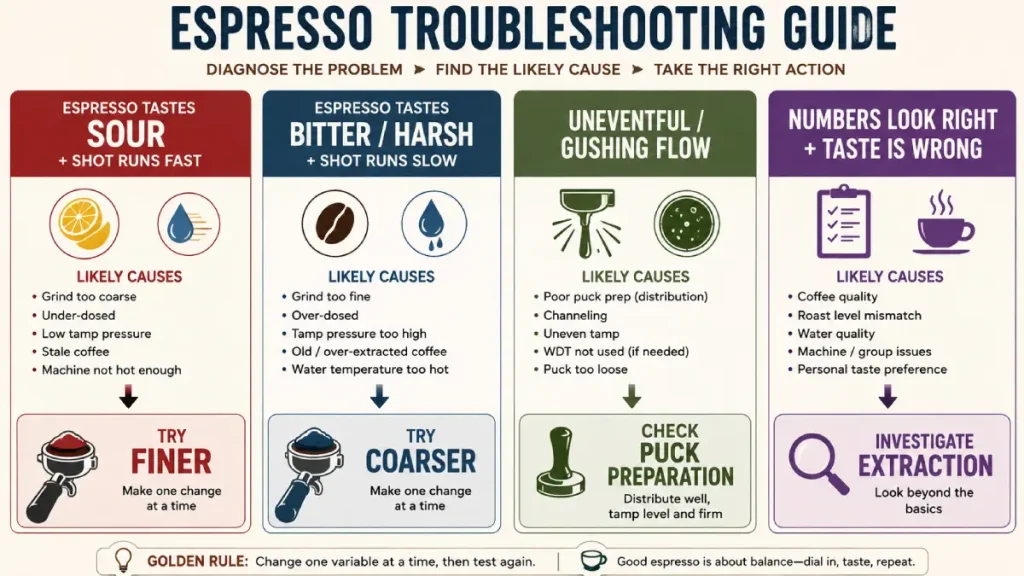
Use this table as a starting point when a shot doesn’t taste right.
| What you notice | What it may indicate | First thing to try |
|---|---|---|
| Sour + fast | Likely under-extraction | Grind finer |
| Bitter/harsh + slow | Likely over-extraction | Grind coarser |
| Thin + fast | Under-extraction or low concentration | Start with a finer grind |
| Dry + slow | Possible over-extraction | Try a coarser grind |
| Uneven or gushing flow | Possible channeling | Improve puck preparation |
| Numbers look right but flavor is poor | Uneven extraction or recipe mismatch | Investigate puck prep, coffee, and recipe |
The words “likely,” “may,” and “first” matter here.
Espresso extraction isn’t always predictable from one symptom.
For example, sourness can come from under-extraction, but it can also be influenced by the coffee itself, roast level, recipe, or uneven extraction.
Think of the table as a diagnostic starting point, not a set of absolute rules.
👉 Troubleshooting Any Common Coffee Problems
How Grind Size Changes Espresso Extraction
Grind size is one of the most useful variables when dialing in espresso.
Small changes can significantly affect how quickly water moves through the coffee puck.
What Happens When You Grind Finer?
A finer grind creates smaller coffee particles and generally increases resistance to water flow.
This can:
- slow the shot
- increase contact between water and coffee
- increase extraction potential
If a shot is running too quickly and tastes sour or thin, a small move toward a finer grind is often a sensible first adjustment.
What Happens When You Grind Coarser?
A coarser grind creates larger particles and generally reduces resistance.
This can:
- speed up the shot
- reduce extraction potential
- change the balance of the cup
If a shot is running very slowly and tastes bitter, harsh, or drying, try a small move toward a coarser setting.
How Much Should You Adjust?
Avoid making huge grinder changes when you’re close to your target.
A small adjustment can make a surprisingly large difference with espresso.
After changing the grind, pull another shot while keeping the dose and target yield consistent.
That makes the result easier to interpret.
When Should You Change Grind, Dose or Yield?
One of the easiest ways to make dialing in confusing is to change several variables at the same time.
Instead, give each adjustment a purpose.
When to Change Grind Size
Grind size is generally the first place to look when:
- the shot runs too quickly or slowly
- the flavor suggests under- or over-extraction
- you’re trying to bring the extraction into balance
Keep the dose and target yield consistent while you adjust.
When to Change Yield
Changing yield changes the relationship between the coffee dose and the amount of espresso produced.
For example, you might use a longer ratio if you want a different balance or a shorter ratio for a more concentrated style.
Yield is therefore useful when the basic extraction is working but you want to change the strength, body, or flavor balance.
When to Change Dose
Dose is usually better treated as a recipe decision rather than the first response to a bad shot.
You may change the dose when:
- using a different basket
- changing the intended beverage size
- deliberately changing coffee strength
- adapting a recipe to your equipment
If a shot simply tastes bad, don’t automatically change the dose.
First work out what the extraction is telling you.
Why Your Espresso Can Taste Wrong Even When the Numbers Look Right
Here’s one of the most important lessons in espresso:
18 g in, 36 g out and 30 seconds does not guarantee a great espresso.
You can hit all three numbers and still produce an unpleasant shot.
Channeling
Water may find weak points in the puck and flow preferentially through them.
This can create simultaneous areas of over-extraction and under-extraction.
The result can be inconsistent, harsh, sour, bitter, or difficult-to-describe flavors.
Uneven Distribution
If coffee grounds are distributed unevenly before tamping, some parts of the puck can offer less resistance than others.
This increases the risk of uneven extraction.
Consistent distribution is therefore an important part of repeatable espresso.
Poor Puck Preparation
Clumps, uneven density, poor distribution, or inconsistent tamping can all affect how water moves through the coffee.
Good extraction begins before you press the brew button.
👉 Best Coffee Water for Espresso Machines
Coffee Freshness
Coffee changes as it ages.
A recipe that worked beautifully when you opened a bag may need adjustment later.
That’s one reason dialing in isn’t something you necessarily do once and forget.
👉 How Fresh Should Coffee Beans Be for Espresso?
Grinder Performance
Two grinders set to the same approximate grind size can produce different results.
Particle distribution, grinder design, retention, alignment, and condition can all influence the way coffee extracts.
The important lesson is that numbers describe the shot, but they don’t tell the entire story.
👉 Espresso Troubleshooting Guide
How Puck Preparation Affects Espresso Extraction
Before worrying about tiny grinder adjustments, make sure your puck preparation is reasonably consistent.
The basic goal is simple:
Create an even coffee bed so water can flow through the puck as evenly as possible.
Pay attention to:
- distributing grounds evenly
- breaking up obvious clumps
- avoiding large areas of loose or compressed coffee
- tamping consistently
- keeping the puck level
If your espresso sometimes gushes from one side of the basket, sprays, or produces dramatically different results from shot to shot, puck preparation deserves attention.
For a deeper look at the tools used to improve distribution, see our guide to Espresso Distribution Tools.
Why You Need to Dial In Again With New Coffee
Every coffee can behave differently.
When you open a new bag, you may find that your previous grinder setting no longer produces the same flow or flavor.
Differences in:
- roast level
- processing method
- bean density
- origin
- freshness
- age after roasting
- environmental conditions
can all influence extraction.
That’s normal.
Instead of thinking:
“My grinder setting was wrong before.”
Think:
“This coffee needs its own baseline.”
Coffee also changes as it ages, so you may need to make small adjustments during the life of a bag.
For more on how coffee freshness affects espresso, see How Fresh Should Coffee Beans Be for Espresso?
How Long Does It Take to Dial In Espresso?
There isn’t a fixed number of shots required to dial in a coffee.
A new coffee may be close to your preferred recipe after the first adjustment, while another may take several attempts.
The process becomes faster as you learn to recognize what the combination of taste, flow, yield, and time is telling you.
A useful goal is not:
“I need to dial this in within three shots.”
Instead, aim for:
balanced flavor + repeatable extraction + a recipe you can reproduce.
Once you’re getting the flavor you want consistently, you’re there.
👉 How to Make a Double Espresso
Espresso Dial-In Quick Reference
Starting recipe
18 g coffee → 36 g espresso → approximately 25–30 seconds
Sour + fast
Try grinding finer.
Bitter/harsh + slow
Try grinding coarser.
Thin + fast
Look for under-extraction and consider a finer grind.
Uneven or gushing flow
Check puck preparation and possible channeling.
Numbers look right but the espresso tastes wrong
Don’t keep chasing the clock. Investigate extraction, puck preparation, coffee freshness, and recipe.
The golden rule
Taste first. Use the numbers to understand why.
Frequently Asked Questions
What is the best ratio for espresso?
A 1:2 brew ratio is a useful starting point for many espresso recipes. For example, 18 g of ground coffee producing 36 g of espresso gives a 1:2 ratio. However, the best ratio depends on the coffee, roast, equipment, and flavor profile you prefer.
How long should an espresso shot take?
A common starting range is approximately 25–30 seconds for a traditional espresso recipe, but time shouldn’t be treated as an absolute rule. Taste, yield, flow, and extraction all matter.
Should I grind finer if espresso tastes sour?
If the espresso is sour and also running quickly, try grinding finer. A finer grind generally increases resistance and slows the flow, which can increase extraction. However, sourness can have other causes, so consider the whole shot rather than changing the grinder based on taste alone.
Should I grind coarser if espresso tastes bitter?
If the espresso tastes bitter, harsh, or drying and the shot is also running slowly, try grinding slightly coarser. This can increase flow and reduce extraction. If the shot is fast but bitter, investigate the coffee, recipe, and puck preparation before automatically changing the grind.
What does it mean when espresso runs too fast?
A shot that reaches its target yield unusually quickly may have insufficient resistance and may be under-extracted. If it also tastes sour or thin, try grinding finer. Check your dose and puck preparation as well.
What does it mean when espresso runs too slowly?
A slow shot can indicate excessive resistance and possible over-extraction, particularly if it tastes bitter, harsh, or dry. Try grinding slightly coarser. However, uneven puck preparation can also contribute to unusual flow.
Why is my espresso sour even when the shot time is correct?
Shot time alone doesn’t guarantee even extraction. Your espresso can reach the target yield within the expected time and still taste sour because of grind distribution, channeling, coffee freshness, roast characteristics, or recipe mismatch. If the numbers look right but the flavor doesn’t, investigate the extraction rather than simply chasing a different time.
How many shots does it take to dial in espresso?
There is no fixed number. A new coffee may take several shots to dial in, particularly if you’re still learning how changes in grind size affect flavor and flow. The process gets easier with practice. Make one controlled adjustment at a time and compare each shot.
Final Takeaway
Dialing in espresso isn’t about finding one magical combination of numbers.
Start with a consistent recipe such as:
18 g coffee → 36 g espresso → approximately 25–30 seconds
Then:
Lock → Pull → Measure → Taste → Adjust → Repeat.
If the shot is sour and fast, try finer.
If it’s bitter or harsh and slow, try coarser.
If the numbers look right but the coffee still tastes wrong, don’t assume the grinder is the only answer. Look at puck preparation, channeling, coffee freshness, recipe, and equipment.
Most importantly, remember:
The goal isn’t to make the stopwatch happy. The goal is to make a balanced, repeatable espresso that tastes good to you.
☕ Just a heads up—this post contains affiliate links. If you buy through them, Frothy Fusion may earn a small commission (at no cost to you). Thanks for supporting our coffee-fueled content!