Choosing the right coffee tamper matters more than most home baristas realize. Uneven tamping leads to channeling, inconsistent extraction, and shots that taste sour, bitter, or just “off” — even with great beans and a good machine.
- Quick Answer on Rhinoware Coffee Tamper
- What Makes Rhinoware Tampers Different
- How to Choose the Right Size Rhinoware Coffee Tamper
- Rhinoware Tamper vs. Generic Flat Tamper
- How to Use a Coffee Tamper Correctly
- Buying Guide: What to Look For
- ☕ Quick Verdict
- Frequently Asked Questions on Rhinoware Coffee Tamper
- What size Rhinoware coffee tamper do I need?
- Is a self-levelling tamper worth the extra cost?
- Does tamping pressure actually affect espresso taste?
- Can I use a Rhinoware coffee tamper with a non-Rhinoware espresso machine?
- How do I clean a Rhinoware coffee tamper?
- What's the difference between a flat and a self-levelling tamper?
- Final Verdict on Rhinoware Coffee Tamper
- Next Steps
- ✅Related Articles
The Rhinoware coffee tamper range is one of the most popular choices for solving this problem, offering everything from simple flat-base tampers to self-levelling and spring-loaded designs that take pressure guesswork out of the equation entirely.
In this Rhinoware Coffee Tamper guide, we’ll compare the main Rhinowares tamper models, help you pick the right size for your portafilter, and walk through how to get a consistent tamp every time.
Quick Answer on Rhinoware Coffee Tamper
For most home espresso setups, the Rhinowares Self-Levelling Tamper is the best all-round pick — its spring-loaded base automatically aligns flat against the coffee bed, which removes the most common source of uneven tamping for beginners and experienced users alike.
If you prefer full manual control and a more traditional feel, the Rhinowares Flat Stainless Tamper is a reliable, well-built alternative at a lower price point.
Rhinoware Coffee Tamper
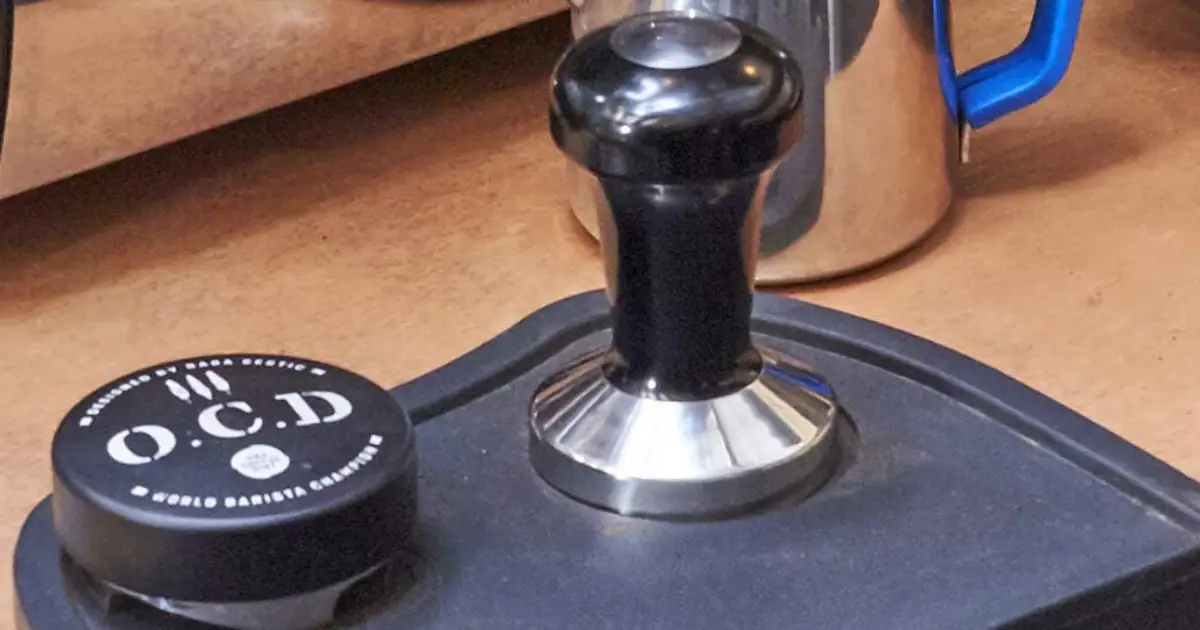
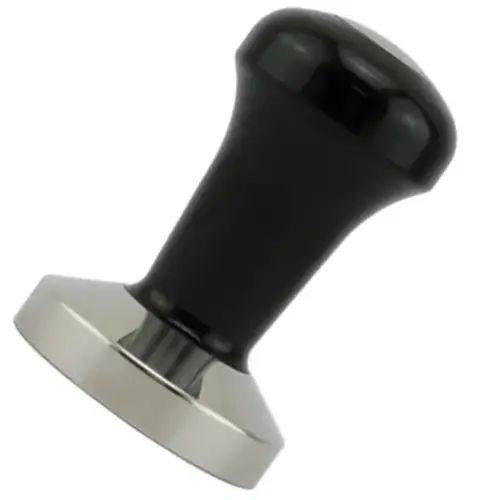
The Rhinoware Coffee Tamper features a durable stainless steel base and an ergonomic handle, offering consistent, comfortable tamping for perfect espresso shots every time.
Key Takeaways
- Best overall: Rhinowares Self-Levelling Tamper — corrects for uneven pressure automatically
- Best budget/simple option: Rhinowares Flat 58mm Tamper — classic stainless design, no moving parts
- Best for shared or multi-machine setups: Adjustable-depth Rhinowares tamper — lets you set a consistent tamp depth
- Best for precision-focused users: Rhinowares Dynamometric (spring-force) tamper — applies a set amount of pressure every time
- Sizing matters: Rhinowares tampers come in multiple diameters (53mm, 54mm, 57.5mm, 58mm, 58.4mm) — always match yours to your portafilter basket, not your machine brand
Quick Comparison Table
| Model | Best For | Base Material | Mechanism |
|---|---|---|---|
| Rhinowares Flat Tamper | Beginners, purists | 304 stainless steel | Manual, fixed flat base |
| Rhinowares Self-Levelling Tamper | Most home users | Stainless steel + spring base | Self-levelling spring |
| Rhinowares Dynamometric Tamper | Precision/consistency-focused users | Stainless steel + calibrated spring | Set-pressure spring |
| Adjustable-Depth Tamper | Shared machines, multiple baskets | Stainless steel | Manual, adjustable stop |
What Makes Rhinoware Tampers Different
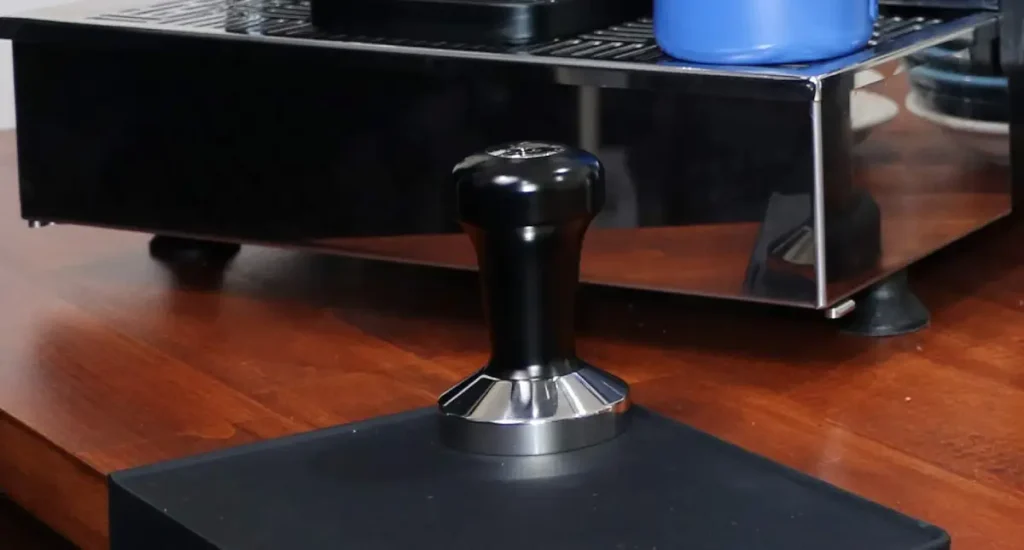
Rhinoware (Rhino Coffee Gear) builds its tamper line around a few consistent design choices: a flat, food-grade 304 stainless steel base, an anodized 6061 aluminum handle for grip and durability, and — depending on the model — either a fixed base or a self-levelling/spring mechanism designed to reduce channeling.
The brand is popular with both home baristas and cafés because it sits in a sweet spot between budget no-name tampers and premium boutique brands, without sacrificing build quality.
Rhinoware Flat Tamper
Overview: The simplest option in the range — a solid stainless base on an ergonomic handle, with no moving parts.
Pros
✔ Durable, professional-grade stainless steel
✔ Comfortable, non-slip handle
✔ Reliable and low-maintenance
✔ Affordable entry point into the range
Cons
✘ Requires proper technique to tamp level
✘ No built-in correction for uneven pressure
Who it’s best for: Anyone who wants a dependable, traditional tamper and is comfortable practicing consistent technique.
Rhinoware Self-Levelling Tamper
Overview: This model uses an internal spring and base lip system that automatically levels itself against the coffee bed, correcting for wrist angle or uneven pressure as you tamp.
Pros
✔ Reduces channeling caused by uneven tamping
✔ Beginner-friendly — hard to tamp “wrong”
✔ Still delivers a firm, even puck
✔ Comfortable ergonomic handle
Cons
✘ Slightly higher price than the flat tamper
✘ Some users prefer full manual control
Who it’s best for: Home baristas who want consistent results without years of practiced technique.
Rhinoware Dynamometric (Spring-Force) Tamper
Overview: Built for users who want to remove pressure variation entirely, this tamper uses a calibrated spring that engages at a set force, so every tamp applies the same pressure regardless of how hard you push.
Pros
✔ Removes pressure inconsistency between shots
✔ Combines with self-levelling base on some versions
✔ Popular with baristas focused on shot-to-shot repeatability
Cons
✘ Most expensive option in the lineup
✘ Overkill for casual, once-a-day brewers
Who it’s best for: Espresso enthusiasts and small cafés who want lab-level consistency.
How to Choose the Right Size Rhinoware Coffee Tamper
Rhinowares tampers are sold in several diameters — commonly 53mm, 54mm, 57.5mm, 58mm, and 58.4mm. This is the single most important spec to get right, and it has nothing to do with your machine’s brand:
- Measure your portafilter basket, not the machine body — baskets vary even within the same brand’s lineup.
- A tamper that’s too small will tamp unevenly around the edges, causing channeling.
- A tamper that’s too large won’t fit the basket at all.
- 58mm and 58.4mm are the most common sizes for prosumer and commercial-style portafilters (La Marzocco, VST, IMS-compatible baskets); 53–54mm typically suits compact home machines like some Breville, Sage, or older Gaggia models.
What size Rhinoware coffee tamper do I need?
Measure the exact inner diameter of your portafilter basket in millimeters, then choose a Rhinowares tamper that matches it precisely — sizing runs from 53mm up to 58.4mm, and even a 1mm mismatch can cause uneven extraction.
Rhinoware Tamper vs. Generic Flat Tamper
| Feature | Rhinoware Tamper | Generic Flat Tamper |
|---|---|---|
| Base material | 304 stainless steel | Often lower-grade steel or aluminum |
| Base weight | Professionally calibrated (~500g range) | Varies, often lighter/unbalanced |
| Handle | Anodized aluminum, ergonomic | Often plain wood or plastic |
| Self-levelling option | Yes (select models) | Rarely available |
| Price | Mid-range | Low |
How to Use a Coffee Tamper Correctly
- Dose and distribute your grounds evenly in the basket before tamping.
- Position the tamper flat on top of the grounds, applying light pressure to settle them.
- Tamp straight down with firm, even pressure — avoid twisting or angling the tamper.
- Check the surface — it should be flat and level, with no visible gaps at the edges.
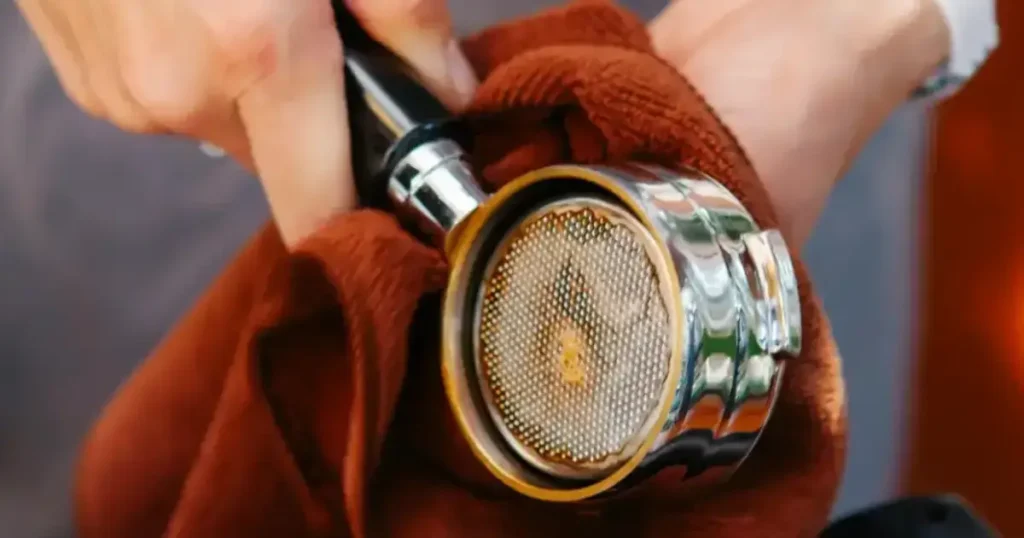
- Wipe the tamper base after each use to prevent grounds building up on the flat surface.
☕ Expert Tip: If you’re using a flat (non-self-levelling) tamper, rest your elbow directly over the portafilter as you press down — this naturally keeps the tamper level and reduces wrist angle, which is the most common cause of channeling.
Buying Guide: What to Look For
- Size first: Match the tamper diameter to your basket exactly.
- Base type: Flat manual base for control, self-levelling for consistency, spring-loaded for repeatable pressure.
- Handle comfort: Look for ergonomic, non-slip designs if you’re tamping multiple shots a day.
- Build material: Stainless steel bases resist wear and are easy to clean; avoid painted or coated bases that can chip.
- Budget: Flat tampers are the most affordable entry point; self-levelling and dynamometric models cost more but reduce the learning curve.
Common Mistakes to Avoid
❌ Buying a tamper size based on your machine brand instead of measuring your basket
❌ Tamping at an angle instead of straight down
❌ Skipping the wipe-down, letting old grounds build up on the base
❌ Over-tamping to compensate for inconsistent grind — fix the grind first
☕ Quick Verdict
Rhinoware Coffee Tamper
The Rhinoware Coffee Tamper features a durable stainless steel base and an ergonomic handle, offering consistent, comfortable tamping for perfect espresso shots every time.
👉 Check Price on AmazonFrequently Asked Questions on Rhinoware Coffee Tamper
What size Rhinoware coffee tamper do I need?
Measure your portafilter basket’s inner diameter and match it exactly — common Rhinowares sizes are 53mm, 54mm, 57.5mm, 58mm, and 58.4mm. Getting this wrong is the most common tamper mistake.
Is a self-levelling tamper worth the extra cost?
For most home users, yes — it removes the guesswork around wrist angle and pressure, which is especially helpful while you’re still developing consistent technique.
Does tamping pressure actually affect espresso taste?
Yes, but less than most people think — consistency matters more than raw force. An even, repeatable tamp (regardless of exact pressure) is what prevents channeling and uneven extraction.
Can I use a Rhinoware coffee tamper with a non-Rhinoware espresso machine?
Absolutely — tampers are compatible with any machine as long as the diameter matches your portafilter basket.
How do I clean a Rhinoware coffee tamper?
Wipe the base after every use with a dry or slightly damp cloth. Avoid submerging the handle if it has any wood or non-waterproof components, and never put it in the dishwasher unless the manufacturer specifies it’s safe.
What’s the difference between a flat and a self-levelling tamper?
A flat tamper has a fixed, solid base that requires you to apply level pressure manually. A self-levelling tamper has a spring-loaded base that pivots slightly to align flat against the coffee bed automatically.
Final Verdict on Rhinoware Coffee Tamper
If you want a dependable, no-frills tamper and don’t mind practicing your technique, the Rhinowares Flat Tamper is a solid, affordable choice. If you’d rather remove the guesswork, the Self-Levelling Tamper is worth the extra cost — especially for beginners.
Serious enthusiasts chasing shot-to-shot consistency should look at the Dynamometric model. Whichever you choose, the size match to your portafilter basket matters more than the model itself.
Next Steps
Check out our guides on the Crema Coffee WDT Tool for pre-tamp distribution, and the LuxHaus Tamper for another mid-range comparison point.
✅Related Articles
- Best Espresso Tampers – Roundup
“See how Rhinoware stacks up in our roundup of the best espresso tampers.” - Normcore V4 Spring-Loaded Tamper Review
“Looking for an upgrade? Check out the Normcore V4, a premium spring-loaded option.” - How to Use a Coffee Tamper Properly
“Master your tamping technique with this step-by-step guide for better espresso.”
☕ Just a heads up—this post contains affiliate links. If you buy through them, Frothy Fusion may earn a small commission (at no cost to you). Thanks for supporting our coffee-fueled content!