

Buying an espresso machine can feel overwhelming.
One model promises café-quality coffee. Another boasts advanced temperature controls.
- Quick Summary ☕
- What Are Espresso Machine Features?
- Why Espresso Machine Features Matter
- Espresso Machine Features Comparison Table
- Essential Espresso Machine Features Explained
- 1. Brewing Pressure
- 2. PID Temperature Control
- 3. Boiler Type
- 4. Built-In Grinder
- 5. Steam Wand Quality
- 6. Pre-Infusion
- 7. Adjustable Settings
- 8. Portafilter Size
- 9. Water Reservoir vs Direct Plumbing
- 10. Automatic vs Manual Controls
- Pros and Cons of Advanced Espresso Machine Features
- Who These Features Are Best For
- Alternatives to Feature-Packed Espresso Machines
- Verdict Box ☕
- Frequently Asked Questions
- You May Also Like ☕✨
A third includes a built-in grinder and dozens of customization options.
So which espresso machine features actually matter?
The truth is that not every feature improves your coffee.
Some genuinely help you pull better shots, while others are mostly convenience upgrades.
In this guide, you’ll learn the most important espresso machine features, which ones are worth paying for, and how to choose the right machine based on your experience level and coffee goals.
Quick Summary ☕

The most important espresso machine features are:
- Consistent pressure
- Stable temperature control
- Quality steam wand
- Reliable boiler system
- Proper portafilter size
- Adjustable settings
- Built-in grinder (optional but convenient)
For beginners, simplicity and consistency matter most. For enthusiasts, advanced controls can significantly improve espresso quality.
What Are Espresso Machine Features?
Espresso machine features are the components and technologies that affect how the machine brews espresso, steams milk, and allows customization of the brewing process.
Some features directly impact espresso quality, while others improve convenience and ease of use.
Features That Affect Coffee Quality
- Brewing pressure
- Temperature stability
- Boiler design
- Portafilter size
- Pre-infusion capability
Features That Improve Convenience
- Built-in grinder
- Automatic milk frothing
- Programmable drinks
- Touchscreen controls
- Self-cleaning systems
Why Espresso Machine Features Matter
Great espresso depends on precision.
Small changes in temperature, grind size, pressure, and extraction time can dramatically affect flavor.
Machines with better features help create:
✅ Richer crema
✅ More balanced flavor
✅ Better consistency
✅ Easier milk steaming
✅ Greater control over extraction
This is why understanding features is often more important than simply buying the most expensive machine.
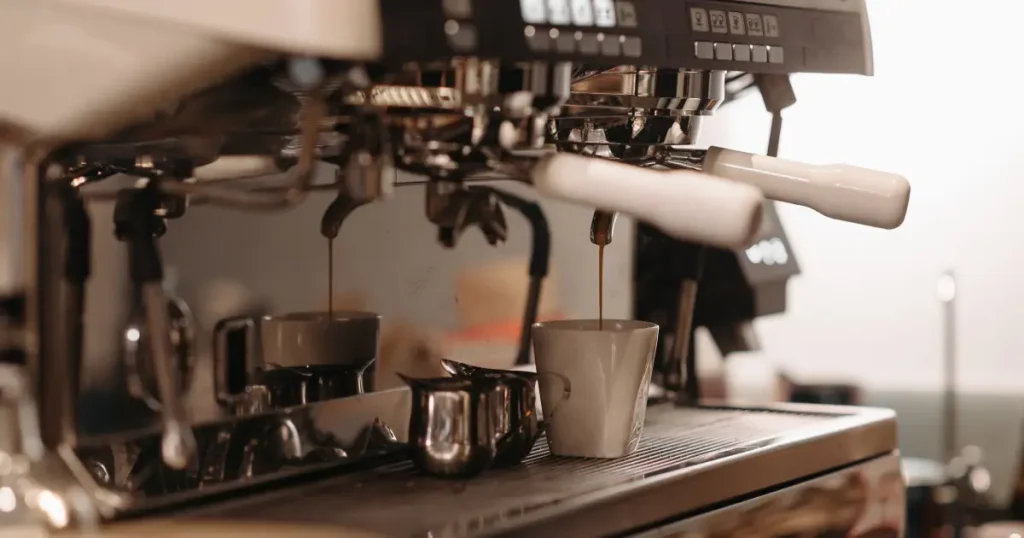
Espresso Machine Features Comparison Table
| Feature | Why It Matters | Best For |
|---|---|---|
| PID Temperature Control | Improves temperature consistency | Enthusiasts |
| Built-In Grinder | Convenience and freshness | Beginners |
| Dual Boiler | Simultaneous brewing and steaming | Heavy users |
| Thermoblock System | Faster heat-up times | Casual users |
| Pre-Infusion | More even extraction | Espresso enthusiasts |
| Pressure Gauge | Brewing feedback | Intermediate users |
| Steam Wand | Milk texturing | Latte lovers |
| Programmable Settings | Easy repeatability | Busy households |
Essential Espresso Machine Features Explained
1. Brewing Pressure
Most espresso machines advertise 15–20 bars of pressure.
However, espresso extraction itself only requires approximately 9 bars.
What Matters?
Not maximum pressure.
What matters is the machine’s ability to maintain stable brewing pressure throughout extraction.
Benefits
- Better crema
- Improved extraction
- More balanced flavor
2. PID Temperature Control
One of the most valuable upgrades available.
PID (Proportional-Integral-Derivative) controllers maintain highly accurate water temperatures.
Why It Matters
Espresso is sensitive to temperature fluctuations.
Even small changes can alter:
- Acidity
- Sweetness
- Bitterness
- Body
Best For
- Intermediate users
- Enthusiasts
- Home baristas seeking consistency
If you’re learning extraction fundamentals, our guide to espresso beverages can help you understand how brewing variables influence different drinks.
3. Boiler Type
The boiler system significantly impacts performance.
Single Boiler
A single boiler performs brewing and steaming separately.
Pros
- Affordable
- Compact
Cons
- Waiting between brewing and steaming
Heat Exchange (HX)
Allows brewing and steaming simultaneously.
Pros
- Faster workflow
Cons
- More temperature management required
Dual Boiler
Separate boilers for brewing and steaming.
Pros
- Maximum performance
- Excellent temperature stability
Cons
- Higher cost
Quick Answer
For most home users:
Single boiler = sufficient
For serious enthusiasts:
Dual boiler = ideal
4. Built-In Grinder
Freshly ground coffee is critical for espresso.
Machines with integrated grinders offer:
- Convenience
- Less countertop clutter
- Faster workflow
Pros
- One machine solution
- Easier setup
- Fresh grinding
Cons
- Less flexibility
- More difficult upgrades
Many enthusiasts still prefer pairing a machine with a dedicated grinder.
For more guidance, see our article on choosing the right coffee grinder for espresso.
5. Steam Wand Quality
If you enjoy milk drinks, this feature is extremely important.
A quality steam wand helps create:
- Microfoam
- Latte art milk texture
- Creamier beverages
Best For
- Lattes
- Cappuccinos
- Flat whites
- Caffè mochas
If milk drinks are your favorite, explore our guides on cappuccinos, flat whites, and caffè mochas.
6. Pre-Infusion
Pre-infusion gently wets coffee grounds before full pressure extraction begins.
Benefits
- More even extraction
- Reduced channeling
- Better flavor balance
This feature is becoming increasingly common on mid-range and premium machines.
7. Adjustable Settings
The more control available, the more you can fine-tune espresso.
Common adjustable settings include:
- Brew temperature
- Shot volume
- Pre-infusion time
- Pressure profiles
Best For
- Experimentation
- Specialty coffee enthusiasts
- Advanced home baristas
8. Portafilter Size
Professional espresso machines typically use 58mm portafilters.
Advantages of 58mm
- Better accessory compatibility
- More consistent extraction
- Easier upgrades
Smaller sizes can still produce excellent espresso but offer fewer accessory options.
9. Water Reservoir vs Direct Plumbing
Water Reservoir
Most home machines use removable tanks.
Pros
- Flexible placement
- Easy setup
Direct Plumbed
Connected directly to a water supply.
Pros
- Continuous operation
- No refilling
Best For
- Serious home cafés
- Office environments
10. Automatic vs Manual Controls
Automatic Machines
- Push-button convenience
- Consistent results
- Minimal learning curve
Manual Machines
- Greater control
- More involvement
- Better customization
Your ideal choice depends on whether you prioritize convenience or craftsmanship.
Pros and Cons of Advanced Espresso Machine Features
Pros ✅
- Better espresso quality
- Improved consistency
- Easier milk steaming
- More customization
- Greater long-term satisfaction
Cons ❌
- Higher purchase cost
- More learning required
- Additional maintenance
- Potentially unnecessary for casual drinkers
Who These Features Are Best For
Beginners
Prioritize:
- Built-in grinder
- Simple controls
- Reliable temperature stability
- Easy maintenance
Intermediate Users
Consider:
- PID control
- Pressure gauge
- Better steam wand
- Pre-infusion
Enthusiasts
Look for:
- Dual boilers
- Advanced pressure profiling
- Premium build quality
- Extensive customization
Alternatives to Feature-Packed Espresso Machines
Not everyone needs a high-end machine.
Alternative brewing methods include:
Manual Espresso Makers
Offer maximum involvement and portability.
Moka Pots
Create strong coffee with minimal investment.
Pour-Over Brewers
Excellent for highlighting coffee flavor clarity.
Bean-to-Cup Machines
Ideal for convenience-focused users.
You may also enjoy:
- How to Make Better Coffee at Home
- Beginner’s Guide to Espresso
- Coffee Brewing Methods Explained
- Best Coffee Grinders for Home Use
- Manual vs Automatic Espresso Machines
Verdict Box ☕
Recommended Approach
If you’re buying your first espresso machine, focus on:
✔ Temperature stability
✔ Good steam wand
✔ Reliable grinder setup
✔ Easy cleaning
Advanced features like dual boilers and pressure profiling are wonderful upgrades but aren’t necessary for making delicious espresso at home.
The best espresso machine features are the ones you’ll actually use consistently.
Frequently Asked Questions
What is the most important feature in an espresso machine?
Temperature stability is arguably the most important feature because it directly affects extraction consistency and flavor quality.
Is a built-in grinder worth it?
For many beginners, yes. It provides convenience and ensures coffee is ground fresh before brewing.
Do I need a dual boiler espresso machine?
Not necessarily. Most home users are well served by a quality single-boiler machine.
What does PID mean on an espresso machine?
PID stands for Proportional-Integral-Derivative controller. It regulates temperature more accurately than traditional thermostats.
Is pre-infusion worth having?
Yes. Pre-infusion can improve extraction consistency and help produce a more balanced espresso shot.
How many bars of pressure should an espresso machine have?
Most quality machines brew at around 9 bars of pressure, even if they advertise 15–20 bars maximum.
You May Also Like ☕✨
- Beginner’s Guide to Espresso Machines
- Best Coffee Grinders for Espresso
- Espresso Beverages Explained
- How to Make Better Coffee at Home
- Manual vs Automatic Espresso Machines
Final Thoughts
Understanding espresso machine features helps you spend money where it matters most.
Rather than chasing the machine with the longest feature list, focus on features that improve consistency, extraction quality, and everyday usability.
When those fundamentals are in place, you’ll be far closer to café-quality coffee at home.
☕ Just a heads up—this post contains affiliate links. If you buy through them, Frothy Fusion may earn a small commission (at no cost to you). Thanks for supporting our coffee-fueled content!