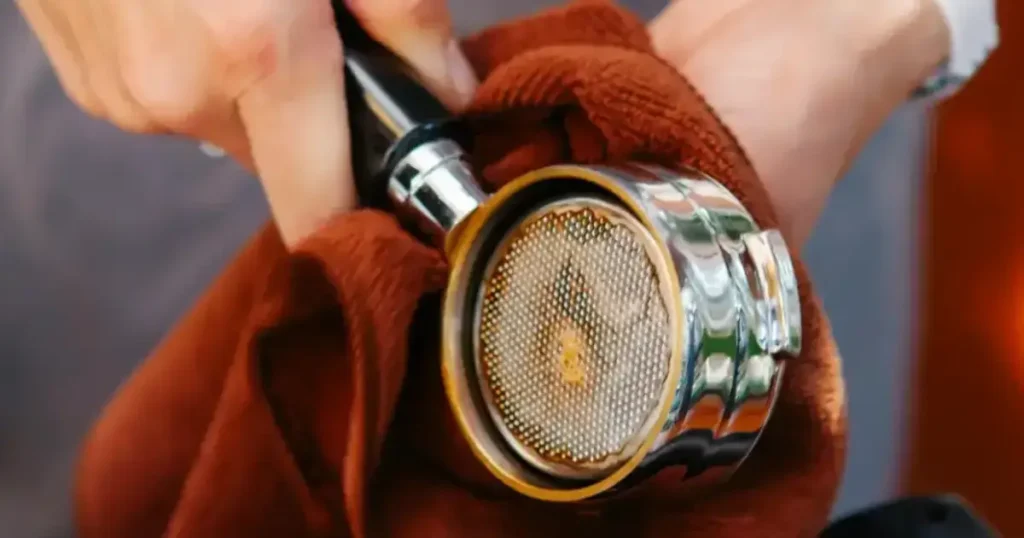
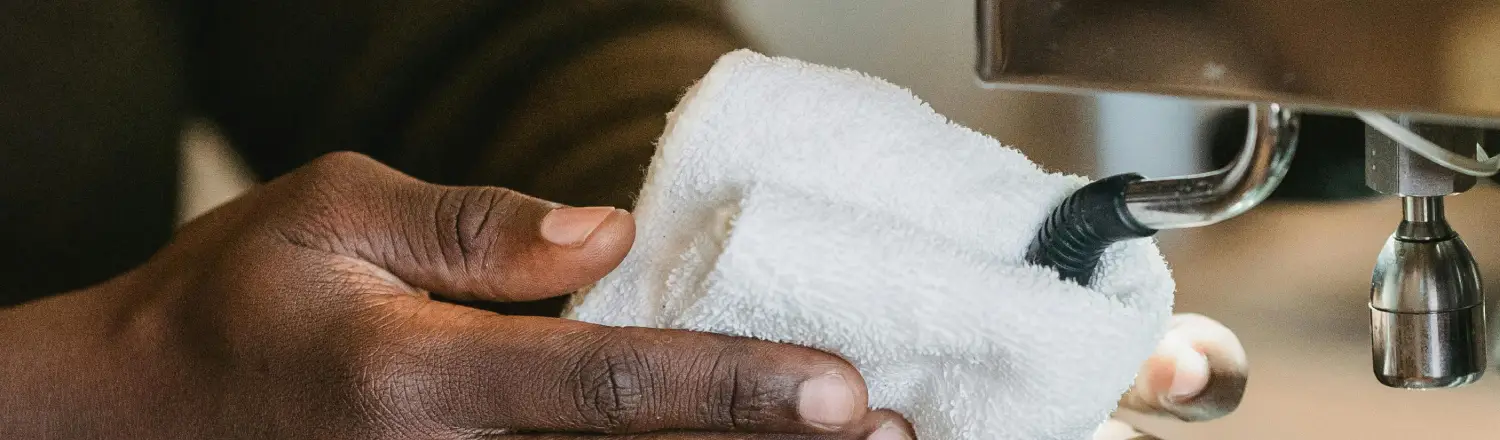
Making amazing espresso isn’t just about high-end gear — it’s also about keeping it clean and consistent.
- 🧽 1. Group Head Brush
- 💦 2. Backflush Disc / Blind Filter
- 🧴 3. Espresso Machine Cleaning Detergent
- 🧼 4. Microfiber Cleaning Cloths
- 🧊 5. Descaling Solution
- 🪛 6. Steam Wand Cleaning Tool
- 🛁 7. Portafilter & Basket Soaking Container
- ✨ Bonus: Espresso Cleaning Tool Kit
- ☕ Why Cleaning Tools Matter (Even for Home Baristas)
- 🔄 Your Weekly Espresso Cleaning Routine
- ❓ FAQs
- ☕ You May Also Like
Coffee oils, ground residue, and mineral buildup can quietly sabotage your shots if you’re not careful. The good news? With the right cleaning tools, you can keep your espresso machine running like new and your coffee tasting top-notch.
Whether you’re rocking a beginner setup or a prosumer powerhouse, here are the must-have espresso cleaning tools every home barista needs.
🧽 1. Group Head Brush
Essential for: Cleaning the group head gasket and screen
This stiff-bristled tool reaches into the group head of your espresso machine to scrub away built-up coffee residue where the portafilter locks in.
Look for one with an angled neck to avoid burning your hand on a hot machine.
Top Pick: Pallo Coffeetool Group Head Brush – durable, heat-resistant, and even has a detergent scoop built into the handle.
💦 2. Backflush Disc / Blind Filter
Essential for: Backflushing your espresso machine
If you have a machine with a 3-way solenoid valve (like most semi-automatics), backflushing is a critical part of cleaning. A blind filter basket or rubber backflush disc seals the portafilter so cleaning solution can force its way through the group valve and lines.
Tip: Only use with machines that support backflushing. Check your manual!
🧴 3. Espresso Machine Cleaning Detergent
Essential for: Deep cleaning internal components
Specialized espresso detergents are designed to break down oils and residue that water alone can’t touch. Use these for backflushing and soaking portafilter parts.
Best Choice: Urnex Cafiza – the industry standard for a reason. Safe for machines, effective for gunk.
🧼 4. Microfiber Cleaning Cloths
Essential for: Wiping down your steam wand, drip tray, and exterior
Keep several on hand — dedicate one to wiping the steam wand, another for cleaning the machine’s exterior, and one for drying parts after cleaning. Microfiber is gentle, absorbent, and reusable.
Pro Tip: Rinse and air dry your cloths between uses to avoid that sour milk smell!
🧊 5. Descaling Solution
Essential for: Removing limescale from the boiler and internal water lines
If you live in an area with hard water, mineral scale can build up quickly — affecting heat and water flow. Use a descaling solution (not vinegar!) every few months to dissolve scale without damaging your machine.
Popular Option: Dezcal Descaling Powder – effective and safe for most espresso machines.
🪛 6. Steam Wand Cleaning Tool
Essential for: Clearing out milk residue in the wand tip
A clogged steam wand can ruin your milk texture and shorten your machine’s life. A thin cleaning tool or pin easily clears the holes in the steam tip. Some kits even come with brushes designed just for this job.
Tip: Purge your wand after every use — but still deep clean weekly!
🛁 7. Portafilter & Basket Soaking Container
Essential for: Deep cleaning removable parts
Your portafilter, baskets, and shower screens collect oils and buildup. Soak them regularly in hot water mixed with espresso cleaner. Use a container that’s heatproof and sized to hold everything flat.
Quick Hack: An old glass food container or stainless steel bowl works great!
✨ Bonus: Espresso Cleaning Tool Kit
Want everything in one go? Some kits bundle brushes, backflush discs, and cleaning solutions together for convenience.
All-in-One Pick: Urnex Espresso Machine Cleaning Kit – great starter set if you’re building your barista station.
☕ Why Cleaning Tools Matter (Even for Home Baristas)
Neglecting cleaning can lead to:
- Bitter, off-tasting shots ☹️
- Poor crema and uneven extraction
- Shorter machine lifespan
- Funky steam wand smells 😬
Investing in proper cleaning tools protects your espresso gear and keeps your coffee consistently delicious.
🔄 Your Weekly Espresso Cleaning Routine
Here’s a simple schedule to follow:
| Task | Tool | Frequency |
|---|---|---|
| Wipe steam wand | Cloth | After every use |
| Backflush with water | Blind filter | Daily |
| Backflush with detergent | Blind filter + Cafiza | Weekly |
| Soak baskets/portafilter | Soaking bowl + Cafiza | Weekly |
| Descale boiler | Descaling solution | Every 2–3 months |
| Scrub group head | Group head brush | Weekly |
❓ FAQs
How often should I clean my espresso machine?
Daily wipe-downs and water backflushes are recommended. Deep cleaning with detergent and descaling should be done weekly to every 2–3 months depending on water hardness.
What is the best cleaner for espresso machines?
Urnex Cafiza is the industry standard for removing coffee oils and residue. Use Dezcal for descaling internal boiler and water line buildup.
Can I use vinegar to descale my espresso machine?
It’s not recommended because vinegar can damage rubber seals and leave a lingering smell. Always use a proper espresso descaling solution.
What happens if I don’t clean my espresso machine regularly?
Neglecting cleaning can lead to bitter-tasting coffee, poor crema, clogged steam wands, and a shortened machine lifespan.
Do all espresso machines need backflushing?
Only machines with a 3-way solenoid valve support backflushing. Check your machine manual before performing this step.
☕ You May Also Like
- How to Clean Your Espresso Machine Like a Pro
- Maintaining Your Espresso Equipment
- Best Coffee Scales for Brewing Accuracy