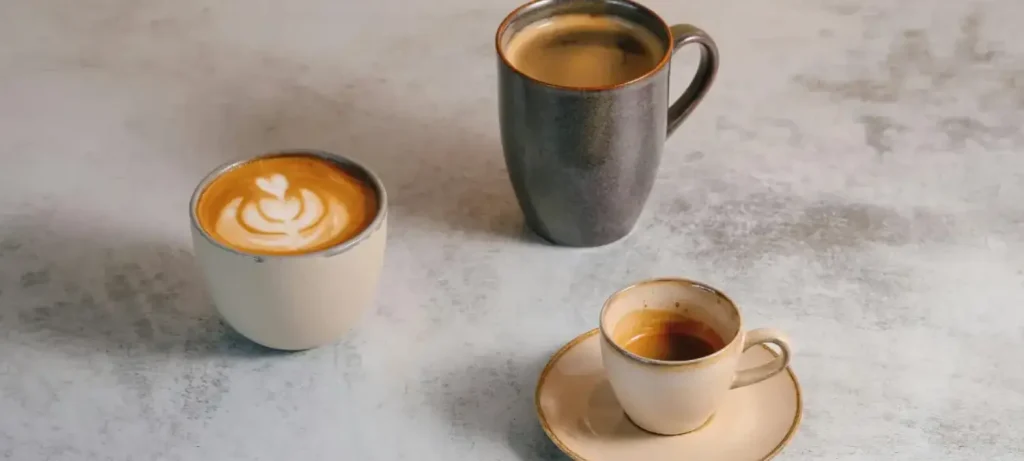
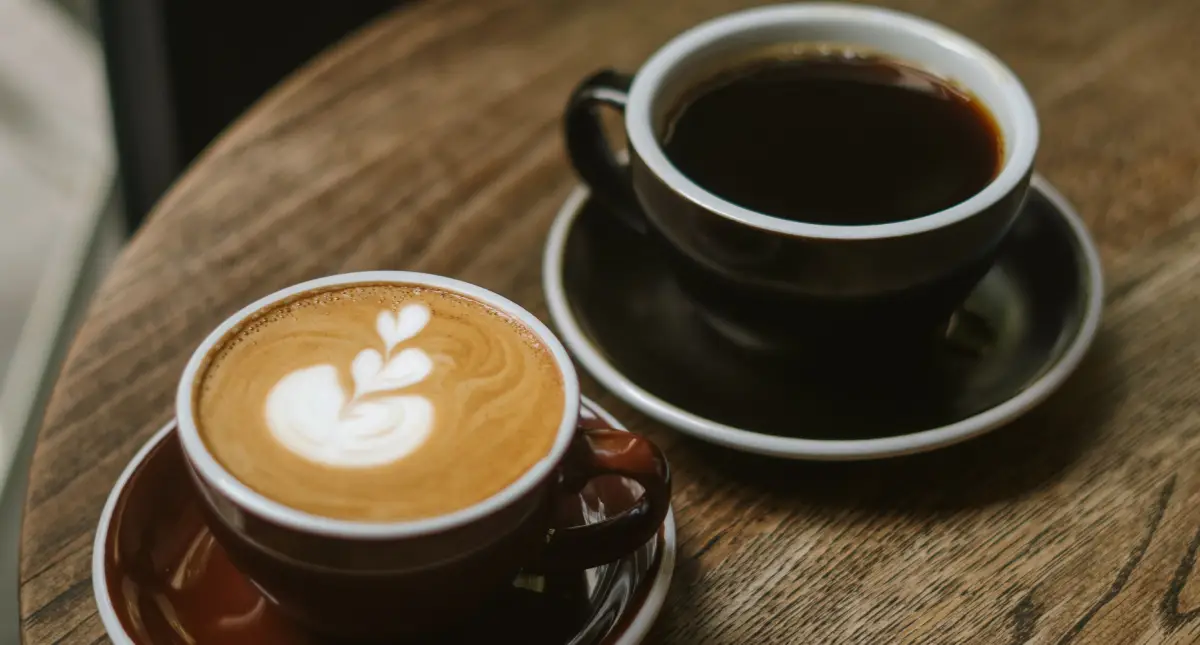
Espresso vs coffee sounds like a simple choice, but the two are often mixed up. Espresso is not a type of bean or a roast.
- Quick Answer: Espresso vs Coffee
- Key Takeaways
- What Is Espresso?
- What Is Regular Coffee?
- Espresso vs Coffee: The Key Differences
- Is Espresso Stronger Than Coffee? Caffeine Compared
- Espresso vs Coffee: Pros and Cons
- Which Should You Choose: Espresso or Coffee?
- How to Make Each at Home: Step by Step
- ☕ Serving Styles & Drink Types
- Frequently Asked Questions About Espresso vs Coffee
- What is the main difference between espresso and coffee?
- Is espresso stronger than coffee?
- Does espresso have more caffeine than coffee?
- Are espresso beans different from coffee beans?
- Can you make espresso without an espresso machine?
- Is espresso healthier than coffee?
- Is a latte espresso or coffee?
- What is the difference between an Americano and regular coffee?
- Final Verdict: Espresso vs Coffee
It is a brewing method, while “coffee” usually means a longer, gentler style such as drip, pour-over or French press. This guide explains how they differ in brewing, strength, caffeine, taste and cost, so you can decide what to make at home.
You’ll also find a comparison table, common mistakes to avoid, and answers to the questions people ask most.
Quick Answer: Espresso vs Coffee
Quick answer: Espresso is a concentrated coffee made by forcing hot water through finely ground beans at high pressure in about 25 to 30 seconds. Regular coffee is brewed more slowly, with coarser grounds and far more water. Espresso is stronger per millilitre, but a full mug of regular coffee usually contains more total caffeine.
Key Takeaways
- Espresso is a method, not a bean. The same beans can be brewed as espresso or as filter coffee.
- Pressure and time are the big differences. Espresso takes about 9 bars of pressure and under 30 seconds; filter coffee uses gravity and takes several minutes.
- Espresso is more concentrated. It has roughly 63 mg of caffeine per 30 ml shot, versus about 12 mg per 30 ml of brewed coffee.
- A mug of coffee usually has more caffeine overall. An 8 oz (240 ml) cup holds about 95 mg, which is more than a single shot.
- Espresso is the base for most café drinks. Lattes, flat whites, cappuccinos and Americanos all start with it.
- Best for beginners: filter coffee is cheaper and easier to start with. Best for flavour intensity and milk drinks: espresso.
Espresso vs Coffee at a Glance
| Feature | Espresso | Regular (brewed) coffee |
|---|---|---|
| Brewing method | Pressurised extraction through a puck of ground coffee | Gravity or immersion (drip, pour-over, French press) |
| Grind size | Fine | Medium to coarse |
| Brew time | 25 to 30 seconds | 2 to 8 minutes |
| Typical serving | 30 ml (single) or 60 ml (double) | 240 to 350 ml |
| Caffeine per serve | About 63 mg per single shot | About 95 mg per 240 ml cup |
| Caffeine per 30 ml | About 63 mg | About 12 mg |
| Taste and body | Intense, syrupy, with crema | Lighter, cleaner, more delicate |
| Equipment | Espresso machine and a good grinder | Drip machine, pour-over cone or French press |
| Best for | Short shots, lattes, flat whites, cappuccinos | Sipping slowly, large mugs, batch brewing |
Caffeine figures are US Department of Agriculture averages. Real numbers vary with the bean, roast, dose and brew method.
What Is Espresso?
Espresso is a small, concentrated coffee made by forcing near-boiling water through a compact bed of finely ground coffee at around 9 bars of pressure. A standard shot is about 30 ml, takes roughly 25 to 30 seconds to pull, and is topped with a golden-brown foam called crema.
That pressure is the whole point. It pulls out oils, acids and dissolved solids quickly, which gives espresso its thick, syrupy body and bold flavour. The method was developed in Italy in the early 1900s, and it is now the foundation of nearly every café menu.
Espresso is not a type of bean
A common myth is that espresso comes from special beans. It doesn’t. You can brew espresso from almost any coffee. Roasters do sell beans labelled “espresso”, usually a medium to dark roast blended to taste balanced and sweet under pressure, but those same beans work in a filter brewer too.
What is crema?
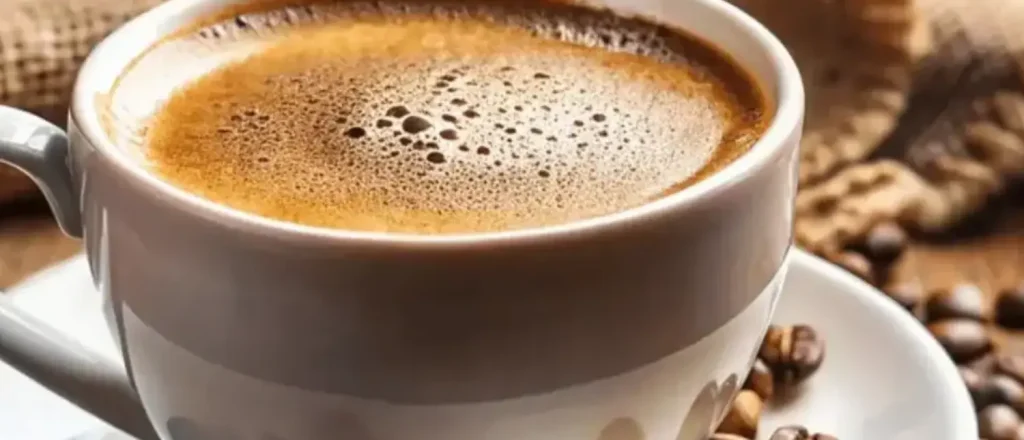
Crema is the reddish-brown foam on top of a freshly pulled shot. It forms when pressurised water emulsifies coffee oils and traps tiny gas bubbles, mostly carbon dioxide from the roast. Fresh beans and a good grind produce thicker crema, so it’s a handy visual clue, though not a guarantee of flavour.
Drinks built on espresso
- Straight shots: single, double (doppio), ristretto and lungo
- Milk drinks: latte, flat white, cappuccino, cortado and macchiato
- Water-based: Americano or long black
What Is Regular Coffee?
“Regular coffee” is the everyday term for brewed coffee: ground beans steeped in hot water for a few minutes, using gravity or immersion rather than high pressure. It is served in a larger volume, usually 240 to 350 ml, and tastes lighter and cleaner than espresso.
The ratio of water to coffee is much higher than in espresso. A typical filter brew uses about 60 g of coffee per litre of water, while espresso uses roughly 18 g of coffee to make 36 g of liquid. That extra water is why filter coffee feels gentler in the cup.
Common ways to brew regular coffee
| Method | How it works | Typical flavour |
|---|---|---|
| Drip machine | Hot water drips through a paper or mesh filter | Balanced, convenient |
| Pour-over (V60, Chemex) | Water poured by hand over a filter cone | Clean, bright, detailed |
| French press | Grounds steep in water, then are pressed out | Full-bodied, rich |
| AeroPress | Immersion plus gentle pressure | Smooth, versatile |
| Cold brew | Grounds steep in cold water for 12 to 18 hours | Mellow, low acidity |
A moka pot and stovetop percolator sit in between: they use steam pressure, but far less than an espresso machine, so the result is strong but not true espresso.
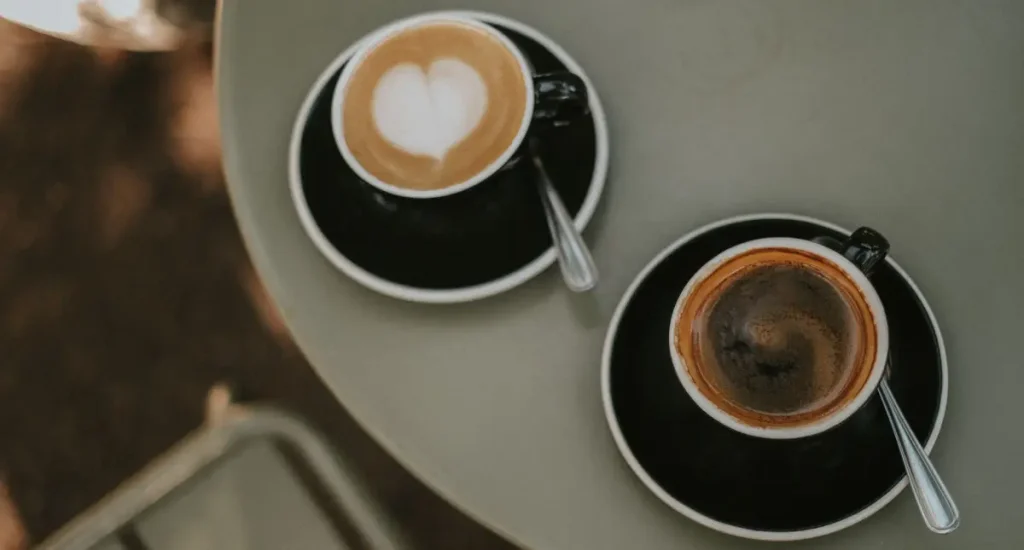
Espresso vs Coffee: The Key Differences
The differences come down to how the water meets the coffee: how fine the grind is, how much pressure is used, how long the contact lasts, and how much water is involved. Change any one of those and the taste changes with it.
1. Brewing method and pressure
Espresso machines push water through the grounds at about 9 bars, roughly nine times atmospheric pressure. Regular coffee relies on gravity (drip, pour-over) or simple steeping (French press), so there is almost no pressure at all.
2. Grind size
Espresso needs a fine, consistent grind, close to the texture of table salt or a little finer. Filter coffee uses a medium grind, and French press needs a coarse one. Getting this wrong is the most common reason a shot tastes sour or bitter.
3. Brew time
A shot of espresso is done in about 25 to 30 seconds. A pour-over takes around 3 to 4 minutes, and a French press about 4 minutes. Longer contact with a coarser grind gives a different balance of flavours.
4. Strength and concentration
Espresso is a concentrate. A typical recipe uses about 18 g of coffee to produce roughly 36 g of liquid (a 1:2 ratio), while filter coffee is nearer 1:15 to 1:17. That’s why espresso tastes so intense in the mouth.
5. Flavour, body and texture
Espresso is thick and syrupy with a lingering finish, plus a layer of crema. Filter coffee is lighter and usually shows more of a bean’s delicate fruit, floral or tea-like notes because the paper filter removes many oils.
6. Serving size
Espresso is sipped in a few mouthfuls from a small cup. Brewed coffee is a long drink you can nurse for half an hour. Many people choose based on this habit alone.
7. Equipment and cost
A decent home espresso setup needs a machine and a quality grinder, and the learning curve is steep. A drip machine, pour-over cone or French press costs far less and is forgiving for beginners.
Side-by-side comparison
| Espresso | Regular coffee | |
|---|---|---|
| Pressure | About 9 bars | Gravity or immersion |
| Grind | Fine | Medium to coarse |
| Coffee to water ratio | About 1:2 | About 1:15 to 1:17 |
| Time | 25 to 30 seconds | 2 to 8 minutes |
| Crema | Yes | No |
| Body | Thick, syrupy | Light to medium |
| Learning curve | Steep | Gentle |
| Startup cost | Higher | Lower |
Is Espresso Stronger Than Coffee? Caffeine Compared
Espresso is stronger by volume, but not by serving. Per 30 ml, espresso has about five times as much caffeine as brewed coffee. Per cup, a standard mug of brewed coffee usually has more, simply because it contains eight times the liquid.
| Drink | Serving | Approx. caffeine |
|---|---|---|
| Single espresso | 30 ml (1 oz) | About 63 mg |
| Double espresso | 60 ml (2 oz) | About 126 mg |
| Brewed coffee | 240 ml (8 oz) | About 95 mg |
| Large brewed coffee | 475 ml (16 oz) | About 190 mg |
| Decaf brewed coffee | 240 ml (8 oz) | 2 to 7 mg |
These are averages based on US Department of Agriculture data. Cafés often pull bigger or stronger shots, and a coffee chain’s brewed cup can run well above 95 mg, so treat the table as a guide rather than a promise.
Why espresso feels stronger
There are two reasons. First, the flavour is concentrated, so it tastes bolder. Second, a small shot is usually drunk quickly, so the caffeine arrives faster than it does from a mug sipped over half an hour.
How much caffeine is too much?
The US Food and Drug Administration says up to 400 mg a day is not generally associated with negative effects for most healthy adults. That is roughly three double espressos or four 240 ml cups of brewed coffee. Sensitivity varies, and pregnancy or certain health conditions call for lower limits, so check with a doctor if you’re unsure.
Espresso vs Coffee: Pros and Cons
Espresso
Pros
- ✔ Intense, complex flavour in a small cup
- ✔ The base for lattes, flat whites and cappuccinos
- ✔ Quick to brew once your machine is warm
- ✔ Crema and a syrupy texture
Cons
- ✘ Higher equipment cost
- ✘ Needs a good grinder and some practice to dial in
- ✘ Small serving, so it’s not a long sipping drink
- ✘ More cleaning and maintenance
Regular (brewed) coffee
Pros
- ✔ Cheap and easy to start with
- ✔ Large servings and batch brewing for a crowd
- ✔ Forgiving: small mistakes rarely ruin the cup
- ✔ Highlights delicate flavours in light roasts
Cons
- ✘ Can taste weak or flat if brewed poorly
- ✘ Not suited to traditional milk drinks like a flat white
- ✘ Goes stale on a hot plate if left sitting
Frothy Fusion Tip
☕ Frothy Fusion Tip: Preheat your cup before pulling a shot. A cold ceramic cup can drop a 30 ml shot by several degrees within seconds, which dulls sweetness and makes it taste more bitter.
☕ Frothy Fusion Tip: If you’re new to espresso, change only one thing at a time (usually grind size) when a shot tastes off. Changing grind, dose and time together makes it impossible to tell what helped.
Common Mistakes to Avoid
Avoid
- ❌ Using stale beans: espresso shows up flat or lifeless fast, so aim for beans within 2 to 4 weeks of roast
- ❌ Grinding too coarse for espresso: water rushes through and the shot tastes sour and thin
- ❌ Grinding too fine for filter coffee: it over-extracts and turns bitter
- ❌ Using pre-ground coffee for espresso: it is rarely fine enough and loses aroma quickly
- ❌ Skipping cleaning: old oils and scale make both espresso and filter coffee taste rancid
Which Should You Choose: Espresso or Coffee?
Choose espresso if you love bold flavour and milk-based drinks and are happy to learn a skill. Choose regular coffee if you want a large, easy, affordable cup with minimal fuss. Plenty of people end up with both.
Espresso is best for
- Home café fans who want lattes, flat whites and cappuccinos
- Anyone who enjoys the ritual of dialling in a shot
- People who prefer a small, intense drink
- Nespresso and pod users who want convenience with an espresso-style result (note that pods are a simplified take, not a traditional shot)
Regular coffee is best for
- Beginners building their first coffee setup
- Households brewing several cups at once
- Slow sippers who want a big mug at their desk
- Anyone drinking black coffee who wants to taste a bean’s origin
Quick decision guide
| If you want… | Go with |
|---|---|
| The lowest startup cost | Regular coffee |
| A flat white or latte | Espresso |
| A big mug to sip all morning | Regular coffee |
| The boldest flavour in a small cup | Espresso |
| The easiest morning routine | Regular coffee (or pods) |
| To geek out on technique | Espresso |
How to Make Each at Home: Step by Step
How to pull a basic espresso shot
- Weigh and grind. Grind about 18 g of fresh beans to a fine, even texture.
- Prepare the portafilter. Add the grounds, level them off, and tamp evenly with firm pressure.
- Preheat. Run a little water through the group head, and warm your cup.
- Pull the shot. Start the machine and aim for about 36 g of espresso in 25 to 30 seconds.
- Taste and adjust. If it runs fast and tastes sour, grind finer. If it runs slowly and tastes bitter, grind coarser.
How to make a simple pour-over or drip-style coffee
- Measure. Use about 60 g of coffee per litre of water (for one 300 ml mug, about 18 g).
- Grind medium. Aim for something like coarse sand.
- Rinse the filter. This removes any paper taste and warms the brewer.
- Bloom. Pour just enough water to wet the grounds and wait 30 seconds.
- Pour and finish. Add the rest of the water slowly in circles, finishing in about 3 to 4 minutes.
➡️ Beginner’s Guide to Coffee Brewing Methods
What you need for each
| Espresso | Regular coffee | |
|---|---|---|
| Brewer | Espresso machine | Drip machine, V60, French press or AeroPress |
| Grinder | Quality burr grinder (fine, precise) | Burr grinder (medium or coarse) |
| Extras | Tamper, scales, milk jug | Scales, kettle, filters |
For tamping tips, see our guide on how to tamp espresso.
👉 Related: Beginner’s Guide to Espresso Machines
☕ Serving Styles & Drink Types
Common Espresso-Based Drinks:
👉 Related: How to Brew Pour Over Coffee
Regular Coffee Styles:
- Black coffee
- Coffee with milk/cream
- Iced coffee
- Cold brew (a whole different process!)
👉 How to Brew Pour Over Coffee (Step-by-Step)
Frequently Asked Questions About Espresso vs Coffee
What is the main difference between espresso and coffee?
The main difference is the brewing method. Espresso forces hot water through finely ground coffee at about 9 bars of pressure in roughly 30 seconds, producing a small, concentrated shot with crema. Regular coffee uses gravity or steeping with coarser grounds and more water, creating a larger, lighter cup over several minutes.
Is espresso stronger than coffee?
Espresso is stronger by volume. A 30 ml shot has about 63 mg of caffeine, compared with about 12 mg per 30 ml of brewed coffee. However, a full 240 ml mug of brewed coffee typically contains around 95 mg, so it usually delivers more caffeine in total than one single shot.
Does espresso have more caffeine than coffee?
Per millilitre, yes. Per serving, usually no. One shot of espresso has less caffeine than a standard cup of brewed coffee, but a double shot (about 126 mg) is similar to or higher than a medium mug. Bean type, roast, dose and brew time all change the real number.
Are espresso beans different from coffee beans?
Not really. Espresso beans are ordinary coffee beans, usually roasted a bit darker and blended for a balanced, sweet taste under pressure. “Espresso” describes how coffee is brewed, not the bean itself, so you can brew espresso-labelled beans in a filter machine and vice versa, although results vary.
Can you make espresso without an espresso machine?
You can make espresso-style coffee, but not true espresso. A moka pot, AeroPress or a manual lever device can produce a strong, concentrated brew. True espresso needs about 9 bars of pressure, which only an espresso machine delivers reliably. For many drinks, strong moka coffee is a decent substitute.
Is espresso healthier than coffee?
Neither is clearly healthier. Both come from the same beans, and plain black versions have almost no calories. A single shot has less total caffeine than a mug of brewed coffee, but the bigger factors are what you add (sugar, syrups, milk) and how much you drink overall.
Is a latte espresso or coffee?
A latte is an espresso drink. It is made with one or two shots of espresso topped with steamed milk and a thin layer of foam. Many people call it coffee, which is correct in a general sense, but it is not made with brewed filter coffee.
What is the difference between an Americano and regular coffee?
An Americano is espresso diluted with hot water, so it tastes like a lighter, longer drink but keeps espresso’s body and flavour. Regular filter coffee is brewed from coarser grounds without pressure and tastes cleaner and more delicate. They look similar in the cup but taste different.
Read our article on Americano coffee if you need more information
Final Verdict: Espresso vs Coffee
Espresso vs coffee isn’t a contest with a winner. They are two ways to brew the same bean, built for different moments. Espresso is the better choice for concentrated flavour and for milk drinks like lattes and flat whites. Regular coffee wins on simplicity, serving size and cost.
Who espresso is for: people who enjoy bold flavour, café-style drinks and a hands-on hobby.
Who should skip it (for now): anyone who wants a quick, cheap, big mug with no learning curve.
Best alternatives: a moka pot or AeroPress sits in the middle, giving strong coffee without a full espresso setup. For a lower-caffeine option, try a single shot or decaf.
Disclosure: this guide is based on published nutrition data and standard brewing practice, not on lab testing of specific machines or beans.
What to read next
- Compare milk drinks in Latte vs Flat White
- Perfect your technique with How to Tamp Espresso
- Understand a popular espresso drink in Americano vs Long Black
- Cut your caffeine with Decaf vs Regular Coffee
- Ready to upgrade? Browse our Best Rocket Espresso Machines Ranked
☕ Just a heads up—this Espresso vs Coffee post contains affiliate links. If you buy through them, Frothy Fusion may earn a small commission (at no cost to you). Thanks for supporting our coffee-fueled content!