Cortado vs latte is one of the most common questions at the espresso bar, and the short answer is milk.
- Quick Answer: What Is the Difference Between a Cortado and a Latte?
- Key Takeaways
- Cortado vs Latte at a Glance
- What Is a Cortado?
- What Is a Latte?
- Cortado vs Latte: The Key Differences
- How to Make a Cortado and a Latte at Home
- Cortado vs Latte: Pros, Cons and Which to Choose
- Frequently Asked Questions about Cortado vs Latte
- Is a cortado stronger than a latte?
- Does a cortado have more caffeine than a latte?
- What is the ratio for a cortado?
- Is a cortado the same as a flat white?
- Is a cortado the same as a macchiato?
- Which has fewer calories, a cortado or a latte?
- Can I make a cortado with a Nespresso machine?
- Can I use plant-based milk in a cortado or latte?
- Final Verdict: Cortado vs Latte
- What to Read Next after Cortado vs Latte
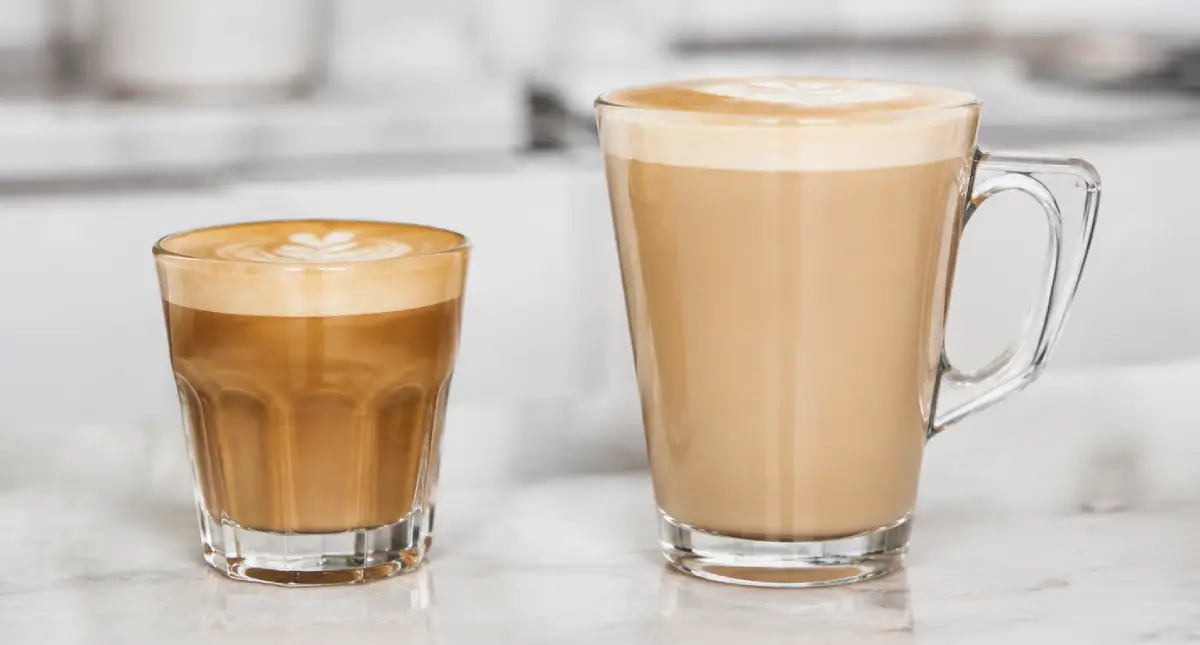
A cortado pairs espresso with an equal amount of warm milk in a small glass, while a latte pours the same espresso into a much larger serving of steamed milk topped with a thin layer of foam. The result is a bold, silky cortado versus a mellow, creamy latte.
If you’ve ever stared at a café menu wondering which one to order, or which one to learn at home, this guide has you covered.
You’ll learn how the two drinks compare on ratio, size, strength, taste, caffeine and calories, how to make each one in your own kitchen, and how to decide which suits your mornings best.
Quick Answer: What Is the Difference Between a Cortado and a Latte?
A cortado is a small espresso drink made with equal parts espresso and warm steamed milk, served in about 4 oz (120 ml).
A latte combines espresso with three to five times as much steamed milk and a thin layer of foam, served in 8 to 12 oz (240 to 350 ml). The cortado tastes bolder and more coffee-forward; the latte tastes milder and creamier.
Key Takeaways
- Ratio: a cortado is roughly 1:1 espresso to milk; a latte is roughly 1:3 to 1:5.
- Size: a cortado is about 4 oz (120 ml); a latte is typically 8 to 12 oz (240 to 350 ml) or more.
- Taste: a cortado is intense, smooth and balanced; a latte is soft, sweet and creamy.
- Caffeine: the number of espresso shots matters more than the drink name, so a double-shot cortado and a double-shot latte contain about the same caffeine.
- Calories: a cortado is usually the lighter option because it contains far less milk.
- Best for beginners: a latte is the gentler introduction to espresso; a cortado suits anyone who wants to taste the coffee itself.
- At home: both drinks need espresso and a way to steam or froth milk, and a cortado needs far less milk and equipment fuss.
Cortado vs Latte at a Glance
The two drinks share the same espresso base, so the differences come down to how much milk goes in the cup. Figures are typical café conventions and vary from shop to shop.
| Feature | Cortado | Latte |
|---|---|---|
| Espresso to milk ratio | About 1:1 | About 1:3 to 1:5 |
| Typical size | 4 to 4.5 oz (120 to 130 ml) | 8 to 12 oz (240 to 350 ml) |
| Espresso shots | Usually a double, sometimes a double ristretto | One or two shots |
| Milk texture | Warm, silky, very little foam | Steamed milk with about 1 cm (1/2 inch) of foam |
| Flavour | Bold, coffee-forward, softened acidity | Mild, creamy, sweeter |
| Caffeine (approx.) | 60 to 125 mg, depending on shots | 60 to 125 mg, depending on shots |
| Calories (approx., whole milk) | 40 to 60 kcal | 130 to 190 kcal |
| Served in | Small glass or demitasse | Tall glass or large ceramic cup |
| Best for | Espresso lovers who want a smoother edge | Anyone who wants a milky, mellow coffee |
What Is a Cortado?
A cortado is an espresso drink made with equal parts espresso and warm steamed milk, served in a small glass of about 4 oz (120 ml). The milk “cuts” the espresso’s sharpness without drowning it, giving a smooth, concentrated coffee with a velvety texture and very little foam.
Where the Cortado Comes From
The name comes from the Spanish verb cortar, meaning “to cut”. The idea is that the milk cuts through the espresso’s acidity and bitterness. The drink is a staple in Spain and Portugal and widely loved across Latin America, where regional versions such as the Cuban cortadito add sugar. Specialty cafés popularised it in the United States, where it is sometimes called a Gibraltar after the sturdy tumbler it is often served in.
What Does a Cortado Taste Like?
A cortado tastes like espresso with the volume turned down on its harshness. You still get the roasted, chocolatey or fruity notes of the beans, but the warm milk adds a rounded sweetness and a silky body. Because the ratio is so close, the coffee never gets lost, which is why espresso fans tend to love it.
How a Cortado Is Served
Cafés usually serve a cortado in a small glass or a demitasse, with no latte art or a very simple pour. The milk is steamed to a smooth, pourable texture rather than a thick foam, so the drink looks almost like a short, glossy espresso with a pale brown surface.
Who a Cortado Is Best For
- Espresso drinkers who find a straight shot too sharp or intense
- Latte drinkers who want to taste more coffee
- Anyone who wants a small, quick drink after a meal or mid-afternoon
- Home baristas with limited milk-steaming experience, since you only need a small amount of milk
☕ Frothy Fusion Tip Pre-warm your glass with hot water before pouring. A cold glass drops the temperature of such a small drink quickly, which dulls both the sweetness of the milk and the aroma of the espresso.
What Is a Latte?
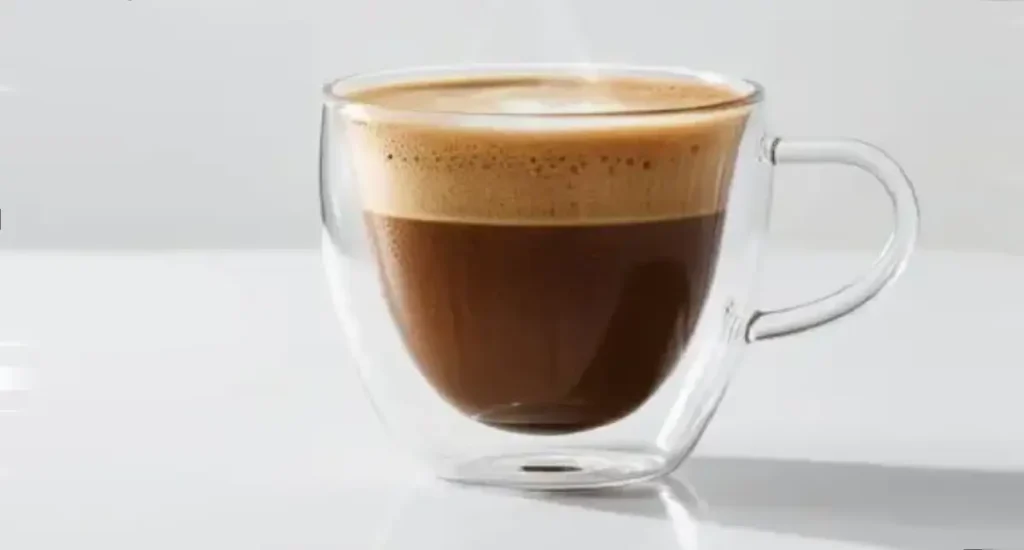
A latte is an espresso drink made with one or two shots of espresso, a generous amount of steamed milk and a thin layer of foam on top, usually served in 8 to 12 oz (240 to 350 ml). Milk makes up most of the cup, so the flavour is mellow, creamy and lightly sweet.
Where the Latte Comes From
The word is short for caffè latte, Italian for “milk coffee”. In Italy, asking for just a “latte” will get you a glass of milk, so travellers need the full name. The big, milky café latte most people picture today took off in the United States and spread worldwide through café chains, where it became the base for flavoured and iced versions.
What Does a Latte Taste Like?
A latte tastes smooth, creamy and gentle. The steamed milk naturally sweetens as it heats, which softens the espresso’s bitterness and acidity. You can still pick out a hint of roast and chocolate, but the coffee sits in the background. That is exactly why lattes are such a popular entry point for people new to espresso.
How a Latte Is Served
Lattes are served in tall glasses or wide ceramic cups, often with latte art on top. The milk is steamed to a texture called microfoam, a fine, glossy blend of milk and tiny bubbles that pours smoothly and holds its shape for art. A latte can also be iced, flavoured with syrups such as vanilla or caramel, or made with plant-based milk.
Who a Latte Is Best For
- Beginners who are new to espresso and prefer a milder taste
- People who like a longer, slower drink to sip over a morning
- Anyone who enjoys flavoured syrups, iced coffee or latte art
- Drinkers who want a comforting, milky coffee rather than a punchy one
☕ Frothy Fusion Tip A latte is only as good as its milk. Start with cold milk and a cold pitcher, and stop steaming when the pitcher is too hot to hold comfortably for more than a second or two, roughly 55 to 65 °C (130 to 150 °F). Overheated milk loses its sweetness and tastes flat.

Cortado vs Latte: The Key Differences
The main difference between a cortado and a latte is the amount of milk: a cortado uses about as much milk as espresso, while a latte uses three to five times as much. Everything else, from size and strength to calories, follows from that single change. This comparison is based on standard barista conventions and published nutrition data rather than lab testing, and exact sizes vary from café to café.
Espresso to Milk Ratio
A cortado is built at roughly 1:1, so a 60 ml (2 oz) pour of espresso meets about the same amount of milk. A latte sits closer to 1:3 to 1:5, so the same espresso is diluted into 180 to 300 ml of milk. There is no official governing body for either drink, which is why a café’s cortado can taste noticeably different from the one down the road.
Size and Serving Style
A cortado is tiny at about 4 to 4.5 oz (120 to 130 ml). A latte is two to three times larger at 8 to 12 oz (240 to 350 ml), and chain cafés often go up to 16 or 20 oz. If you want a quick, concentrated drink, choose the cortado. If you want something to sip slowly, choose the latte.
Milk Texture and Foam
A cortado uses silky, lightly textured milk with almost no foam, so it feels smooth and dense. A latte has a thin cap of microfoam, about 1 cm (1/2 inch), on top of liquid steamed milk. Some cafés add a little more foam to a latte, but a thick, dry foam is closer to a cappuccino.
Strength and Flavour
Because a cortado contains less milk, the espresso is far more prominent. Expect more roast, acidity and bittersweet chocolate notes. In a latte the milk dominates, so you taste sweetness, cream and a gentle coffee finish. Neither drink is stronger in caffeine by default; it only tastes stronger in a cortado because it is less diluted.
Caffeine
A single espresso shot contains roughly 60 to 65 mg of caffeine and a double about 120 to 130 mg. A cortado and a latte made with the same number of shots have the same caffeine. Many cafés use a double shot in a cortado and a single or double in a small latte, so check your café’s recipe if caffeine matters to you.
Calories
With whole milk, a cortado has roughly 40 to 60 calories, while a 12 oz latte has roughly 130 to 190 calories. The gap comes entirely from the milk, so switching to skim or a lower-calorie plant milk narrows it. Syrups add more calories on top of either drink. These figures are approximate and depend on the milk you use.
Cortado vs Latte: Side-by-Side Summary
| Difference | Cortado | Latte |
|---|---|---|
| Milk amount | Small, about equal to espresso | Large, 3 to 5 times the espresso |
| Foam | Minimal | Thin layer of microfoam |
| Drink size | About 4 oz (120 ml) | 8 to 12 oz (240 to 350 ml) |
| Taste | Strong, smooth, espresso-forward | Mild, creamy, milk-forward |
| Calories | Lower | Higher |
| Drinking time | A few minutes | A slow sip |
Cortado vs Flat White, Macchiato and Piccolo
Several small milk drinks sit close to the cortado, which is why menus can be confusing. The sizes below are typical, not strict.
| Drink | Typical size | Espresso to milk | Foam |
|---|---|---|---|
| Macchiato | 2 to 3 oz (60 to 90 ml) | Mostly espresso with a spoonful of milk | A dollop of foam |
| Piccolo (popular in Australia) | About 3 oz (90 ml) | Ristretto topped with milk | Little foam |
| Cortado | 4 to 4.5 oz (120 to 130 ml) | About 1:1 | Minimal |
| Flat white | 5 to 6 oz (150 to 180 ml) | About 1:2 to 1:3 | Fine microfoam |
| Latte | 8 to 12 oz (240 to 350 ml) | About 1:3 to 1:5 | Thin layer of foam |
In short, a cortado has more milk than a macchiato but less than a flat white. If you can’t decide between a cortado and a flat white, our guide to latte vs flat white explains how the milk drinks differ. Fans of Australian café culture may also come across the magic, a double ristretto with steamed milk in a small glass, which is a close cousin of the cortado.
☕ Frothy Fusion Tip When you order at a new café, ask how many shots and how much milk go into the drink. Cortado, piccolo and flat white are used loosely, and a quick question gets you the drink you were actually imagining.
How to Make a Cortado and a Latte at Home
Both drinks start with a well-extracted espresso and silky steamed milk; the only real change is how much milk you add. You don’t need a café setup to get good results.
What You Need
- Espresso: a home espresso machine, or a Nespresso machine with a ristretto (25 ml) or espresso (40 ml) capsule
- Fresh beans and a grinder: a medium or medium-dark roast with chocolate or caramel notes stands up well to milk
- Milk: whole milk steams best; barista-style oat and soy blends work well for dairy-free drinks
- A steaming wand, handheld frother or milk frother: an espresso machine wand gives the silkiest texture
- Glassware: a 4 to 4.5 oz (120 to 130 ml) glass for a cortado and a 300 to 350 ml cup for a latte
How to Make a Cortado
- Warm the glass. Fill your cortado glass with hot water and discard it just before pouring.
- Pull a double shot. Use about 18 g of ground coffee and aim for roughly 36 to 45 g of espresso in 25 to 30 seconds. For a bolder cortado, pull a shorter double ristretto.
- Steam a small amount of milk. Pour about 100 ml of cold milk into a small pitcher and steam it to roughly 55 to 65 °C (130 to 150 °F). Introduce only a brief hiss of air for 2 to 3 seconds so the milk stays silky rather than foamy.
- Swirl and tap. Swirl the pitcher and tap it gently on the bench to pop large bubbles and keep the milk glossy.
- Combine. Pour the espresso into the glass first, then add milk until the glass holds roughly equal parts espresso and milk. Serve right away.
No espresso machine? Brew a concentrated shot with an AeroPress or moka pot, then warm and froth a little milk in a small saucepan or with a handheld frother. It won’t be identical to a café cortado, but the flavour balance is close.
How to Make a Latte
- Warm the cup. Rinse a 300 to 350 ml cup with hot water.
- Pull one or two shots. Use a single shot for a lighter latte or a double for a stronger one, extracting the same way as above.
- Steam the milk. Pour 200 to 250 ml of cold milk into a pitcher. Introduce air for 3 to 5 seconds to build about 1 cm (1/2 inch) of foam, then lower the wand deeper to heat and swirl the milk to 55 to 65 °C (130 to 150 °F).
- Polish the milk. Tap and swirl the pitcher until the milk looks like wet paint.
- Pour. Add the espresso to the cup, tilt the cup and pour the milk in a steady stream. Straighten the cup and finish with a simple heart or rosetta if you like.
☕ Frothy Fusion Tip Use the same espresso for both drinks and taste them side by side. Pulling the same shot twice is the quickest way to learn how much milk changes the flavour of your beans.
Common Mistakes to Avoid
- ❌ Overheating the milk above about 70 °C (160 °F), which burns off sweetness and leaves a flat, cooked taste
- ❌ Adding too much foam to a cortado, which turns it into a small cappuccino
- ❌ Using stale beans or grinding too coarse, which makes weak, sour shots that milk can’t rescue
- ❌ Pouring milk into a cold glass or cup, which cools the drink before you finish it
- ❌ Skipping cleaning, since milk residue on the wand and pitcher spoils flavour fast
Cortado vs Latte: Pros, Cons and Which to Choose
Choose a cortado if you want a strong, smooth coffee in a few sips, and a latte if you want a creamy, long drink. Each has real strengths and trade-offs.
Cortado Pros and Cons
Pros
- ✔ Rich, espresso-forward flavour with softened acidity
- ✔ Lower in calories because it uses little milk
- ✔ Quick to make and easy to finish while it is warm
- ✔ Shows off good beans rather than hiding them
Cons
- ✘ Small serving that disappears quickly
- ✘ Can taste intense or bitter if the espresso is poorly extracted
- ✘ Hard to find at some chain cafés, and the recipe varies
- ✘ Less suited to syrups, iced versions or detailed latte art
Latte Pros and Cons
Pros
- ✔ Mild, creamy and approachable for beginners
- ✔ Large enough to enjoy slowly
- ✔ Easy to customise with syrups, spices, plant milks or ice
- ✔ Available at virtually every café
Cons
- ✘ Higher in calories because of the milk
- ✘ Coffee flavour can be muted, especially in large sizes with a single shot
- ✘ Quality depends heavily on milk steaming skill
- ✘ Can feel heavy or filling for some drinkers
Who Should Choose Which?
| If you… | Choose |
|---|---|
| Love the taste of espresso but want a gentler edge | Cortado |
| Are new to espresso drinks | Latte |
| Want a lighter, lower-calorie milk coffee | Cortado |
| Like sipping a milky coffee slowly | Latte |
| Enjoy flavoured syrups or iced coffee | Latte |
| Want a small after-dinner coffee | Cortado |
| Are learning milk steaming at home | Cortado to start, then latte |
Still unsure? Order a cortado first. If it tastes too strong, a latte is the natural next step, and if it tastes too weak, ask for a double ristretto cortado or move on to a flat white.
Frequently Asked Questions about Cortado vs Latte
Is a cortado stronger than a latte?
A cortado tastes stronger than a latte because it contains much less milk, so the espresso is less diluted. In caffeine terms, the two drinks are equal when they use the same number of shots. Most of the difference you notice is flavour and intensity, not extra caffeine. If strength matters, check how many shots your café uses in each drink.
Does a cortado have more caffeine than a latte?
Not by default. Caffeine comes from the espresso, not the milk, so a double-shot cortado and a double-shot latte contain roughly the same amount, about 120 to 130 mg. A café might put a single shot in a small latte and a double in a cortado, which would make the cortado higher. Always ask how many shots are used.
What is the ratio for a cortado?
The classic cortado ratio is 1:1, one part espresso to one part warm steamed milk. In a typical 4 to 4.5 oz (120 to 130 ml) glass, that means roughly 50 to 60 ml of each. Some cafés lean slightly more milky, around 1:1.5, but a cortado should always taste espresso-forward and noticeably less milky than a flat white or latte.
Is a cortado the same as a flat white?
No, although they are close. A cortado is smaller, about 4 oz (120 ml), with roughly equal espresso and milk and very little foam. A flat white is usually 5 to 6 oz (150 to 180 ml) with more milk, around 1:2 to 1:3, and a fine microfoam. The flat white is a little creamier; the cortado is a little punchier.
Is a cortado the same as a macchiato?
No. A traditional macchiato is mostly espresso “marked” with a small spoonful of milk foam, so it is smaller and stronger. A cortado contains roughly equal parts espresso and steamed milk, giving a softer, silkier drink. If you find a macchiato too intense, a cortado is the natural step up in milk.
Which has fewer calories, a cortado or a latte?
A cortado has fewer calories because it uses far less milk. With whole milk, a cortado is roughly 40 to 60 calories, while a 12 oz latte is about 130 to 190. Using skim milk or an unsweetened plant milk lowers both drinks, and flavoured syrups raise them. Figures are approximate and vary by recipe and milk.
Can I make a cortado with a Nespresso machine?
Yes. Brew a ristretto (25 ml) or espresso (40 ml) capsule into a small glass, then add an equal amount of warm, lightly frothed milk. A Nespresso milk frother or a handheld frother works well. For a stronger cortado, brew two ristretto capsules into the same glass and keep the milk to about 60 ml.
Can I use plant-based milk in a cortado or latte?
Yes. Barista-style oat milk gives the creamiest, most stable texture, and barista soy and almond blends also steam well. Look for products labelled for baristas, since standard cartons can split or foam poorly. Heat plant milks gently, as they can separate when overheated or poured into very acidic espresso.
Final Verdict: Cortado vs Latte
In the cortado vs latte debate, there is no winner, only a different balance of coffee and milk. The cortado is the pick for espresso lovers who want a small, silky, coffee-forward drink. The latte is the pick for anyone who prefers a creamy, mild coffee they can sip slowly.
Best for: cortado for people who enjoy the taste of espresso; latte for beginners and milk-coffee fans.
Who should avoid it: skip a cortado if you want a long, milky or flavoured drink, and skip a latte if you want a strong, concentrated hit of coffee.
Best alternatives: try a flat white for a middle ground, a macchiato for something stronger, or a cappuccino if you enjoy a lighter, foamier texture.
What to Read Next after Cortado vs Latte
- Compare two more milk drinks in our guide to latte vs flat white
- Learn how milk changes espresso in our guide to macchiato vs latte
- Dial in your shots with our guide to espresso ratios
- Browse our coffee recipes to put your new knowledge to use at home
☕ Just a heads up—this post contains affiliate links. If you buy through them, Frothy Fusion may earn a small commission (at no cost to you). Thanks for supporting our coffee-fueled content!