Standing at the café counter, it is easy to wonder what actually separates a macchiato from a latte, since both start with espresso and both involve milk.
- Macchiato vs Latte: Quick Answer
- Key Takeaways
- Macchiato vs Latte at a Glance
- What Is a Macchiato?
- How It Tastes and Feels
- Short vs Long Macchiato
- What Is a Latte?
- What Is the Difference Between a Macchiato and a Latte?
- Latte Macchiato vs Espresso Macchiato vs Caramel Macchiato
- How to Make a Macchiato and a Latte at Home
- Which Should You Choose: Macchiato or Latte?
- Frequently Asked Questions
- Is a macchiato stronger than a latte?
- Which has more milk, a macchiato or a latte?
- Is a macchiato the same as a latte macchiato?
- How much caffeine is in a macchiato vs a latte?
- Is a macchiato healthier than a latte?
- What is the difference between a macchiato and a cappuccino?
- Can you make a macchiato at home without an espresso machine?
- Which is better for beginners, a macchiato or a latte?
- Final Verdict: Macchiato vs Latte
- 📚 Related Reads
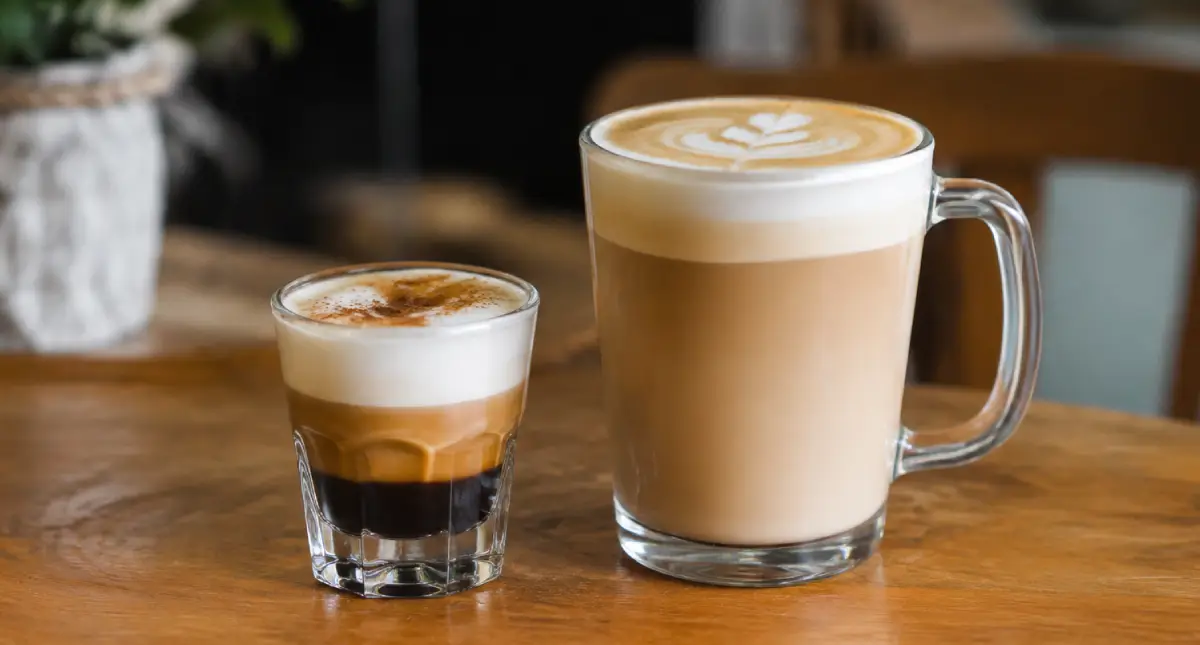
The short answer is proportion. A macchiato is a small, strong espresso “marked” with a dollop of milk foam, while a latte is a large, creamy drink with far more steamed milk than coffee.
This macchiato vs latte guide explains how each is made, how they taste, how much caffeine they contain, and which one suits you best, whether you order at a café or brew at home.
Macchiato vs Latte: Quick Answer
Quick Answer A macchiato is an espresso topped with a spoonful of milk foam, served in about 2–3 oz (60–90 ml) and tasting bold and coffee-forward. A latte is one or two espresso shots with a lot of steamed milk and a thin foam layer, served in 8–12 oz (240–350 ml) and tasting smooth, mellow and creamy.
Key Takeaways
- Bolder drink: the macchiato, because it has almost no milk to soften the espresso.
- Creamier drink: the latte, with roughly three to five parts milk to one part espresso.
- Caffeine: nearly identical if both use the same number of shots, so size and milk do not change it.
- Calories: a macchiato is usually under 20 kcal, while a milk-based latte is commonly 120–190 kcal.
- Best for beginners: the latte, as it is the gentler, more forgiving introduction to espresso.
- Best for espresso fans: the macchiato, which keeps the coffee front and centre.
- Watch the name: a “latte macchiato” and a caramel macchiato are different drinks from a classic espresso macchiato (covered below).
Macchiato vs Latte at a Glance
The table below compares a classic espresso macchiato with a standard café latte. Figures are typical ranges and vary by café, cup size and milk type.
| Feature | Espresso Macchiato | Latte |
|---|---|---|
| Core recipe | Espresso + a dollop of milk foam | Espresso + steamed milk + thin foam |
| Typical size | 2–3 oz (60–90 ml) | 8–12 oz (240–350 ml) |
| Espresso shots | 1–2 | 1–2 |
| Milk amount | A spoonful of foam | Roughly 6–10 oz of steamed milk |
| Espresso-to-milk ratio | About 1:0.2 | About 1:3 to 1:5 or more |
| Flavour | Bold, intense, slightly softened | Smooth, mellow, creamy |
| Caffeine (per shot) | About 63 mg | About 63 mg |
| Calories (approx.) | 10–20 kcal | 120–190 kcal with whole milk |
| Texture | Light, with a small cap of foam | Velvety, with a thin microfoam layer |
| Best for | Espresso lovers, quick pick-me-up | Milky-coffee fans, beginners, flavoured drinks |
| Served in | Demitasse cup | Tall glass or large ceramic cup |
What Is a Macchiato?
A macchiato, often called an espresso macchiato, is a shot of espresso “stained” with a small amount of milk foam. The word macchiato is Italian for “stained” or “marked,” and it describes exactly what happens: a spoonful of foam sits on top of the espresso like a small cap, leaving the drink mostly coffee.
How It Tastes and Feels
Expect a concentrated, bold cup. The espresso’s natural bitterness, acidity and sweetness come through clearly, with just enough foam to take the sharp edge off the first sip. Because there is so little milk, the flavour of your beans matters a great deal. A well-roasted, fresh espresso blend shines here, and a poor one has nowhere to hide.
Short vs Long Macchiato
In many cafés, particularly in Australia and New Zealand, you will see two sizes. A short macchiato uses a single shot with a dash of foam. A long macchiato uses a double shot and a bit more milk, served in a slightly larger cup. Both stay firmly in espresso territory.
Pros
- ✔ Strong, coffee-forward flavour
- ✔ Quick to drink and very low in calories
- ✔ Shows off the quality of your espresso beans
- ✔ Needs only a small splash of milk
Cons
- ✘ Can taste too intense for newcomers
- ✘ Very little milk, so it is not a creamy drink
- ✘ Less filling than a latte
- ✘ Unforgiving if the shot is poorly extracted
Who It’s Best For
The macchiato suits espresso enthusiasts, people who find a straight espresso a touch harsh, and anyone who wants a fast, flavourful coffee without the volume of a milky drink. It is also a good choice after a meal, which is traditional in Italy.
☕ Frothy Fusion Tip Preheat your demitasse cup with hot water before pulling the shot. A cold cup cools a small drink fast, and the foam collapses sooner.
What Is a Latte?
A latte, short for caffè latte (Italian for “coffee with milk”), is one or two shots of espresso combined with a generous pour of steamed milk and topped with a thin layer of microfoam, usually about 1 cm deep. It is the most popular milk-based espresso drink in many countries, and the base for flavoured versions such as vanilla, caramel and pumpkin spice.
How It Tastes and Feels
A latte is smooth, sweet and gentle. Steaming milk brings out its natural sugars, which mellows the espresso’s bitterness and acidity. The result is a velvety, easy-drinking coffee where the milk is just as noticeable as the espresso. Medium and dark roasts tend to work best because they hold their flavour through all that milk.
Why Baristas Love It
The smooth microfoam on a latte is the canvas for latte art, from simple hearts to rosettas and tulips. It is also very flexible: it can be served hot or iced, made with dairy or plant-based milk, and sweetened with syrups.
Pros
- ✔ Creamy, mild and approachable
- ✔ Easy to customise with syrups, spices and milk alternatives
- ✔ Works hot or iced
- ✔ Larger and more filling than a macchiato
Cons
- ✘ The espresso flavour is diluted by the milk
- ✘ Higher in calories, especially with syrups
- ✘ Requires milk steaming skill to get the texture right
- ✘ Can taste flat if made with weak espresso
Who It’s Best For
The latte is ideal for beginners, milky-coffee lovers, and anyone who wants a comforting drink to sip slowly. It is also the better choice if you enjoy flavoured coffee or want to practise latte art at home.
☕ Frothy Fusion Tip Steam your milk to roughly 60–65°C (140–150°F). Hotter than that and the milk loses its sweetness and takes on a cooked, flat taste.
What Is the Difference Between a Macchiato and a Latte?
The main difference between a macchiato and a latte is the amount of milk. A macchiato contains only a small spoonful of foam on top of espresso, while a latte contains several ounces of steamed milk. Everything else, from strength to calories, follows from that one change.
Milk Ratio and Texture
In a macchiato the milk is a garnish. In a latte it is the main ingredient. A latte typically combines one part espresso with three to five or more parts steamed milk, plus a thin foam cap. A macchiato is closer to one part espresso to a fraction of a part foam.
Strength and Flavour
The macchiato tastes stronger because the espresso is not diluted. The latte tastes milder because the milk spreads the same coffee across a much bigger drink. Neither drink is “stronger” in caffeine terms, only in flavour intensity.
Caffeine Content
Caffeine depends on the number of espresso shots, not the milk. A single shot of espresso contains roughly 63 mg of caffeine, so a double shot is about 125 mg. A macchiato and a latte made with the same number of shots have the same caffeine. A large café latte can contain more only if it is made with an extra shot. For general guidance on healthy caffeine intake, see the FDA’s advice on caffeine.
Calories
A plain macchiato has roughly 10 to 20 calories. A 12 oz latte made with whole milk is commonly around 150 to 190 calories, and syrups or sweetened milk push it higher. Skim or unsweetened plant milks lower the total.
Size and How You Drink It
A macchiato is a few sips, often finished in under two minutes, and is served in a small demitasse cup. A latte is a longer drink served in a tall glass or large cup, designed to be sipped over 15 to 30 minutes.
Quick Comparison: Latte vs Cappuccino vs Macchiato
If you are also weighing a cappuccino, the main difference is foam. A cappuccino has roughly equal thirds of espresso, steamed milk and thick foam, giving it a lighter, airier texture than a latte and a milkier taste than a macchiato.
| Drink | Espresso | Steamed Milk | Foam | Taste |
|---|---|---|---|---|
| Macchiato | Most of the drink | None | Small dollop | Bold |
| Cappuccino | About one third | About one third | About one third | Balanced, airy |
| Latte | A small portion | Most of the drink | Thin layer | Creamy, mild |
Latte Macchiato vs Espresso Macchiato vs Caramel Macchiato
Part of the confusion around macchiato vs latte comes from the fact that “macchiato” means different things depending on where you order. The word always means “marked,” but what is being marked changes.
Espresso Macchiato
This is the classic Italian drink: espresso marked with a little milk foam. When a café menu just says “macchiato,” this is usually what you get.
Latte Macchiato
The order is reversed. A latte macchiato is a tall glass of steamed milk “marked” with a shot of espresso poured in slowly, creating visible layers of milk, coffee and foam. It tastes like a latte but looks different and is often a little milkier and gentler. In Italy, it is more of a drink for home or children than a café staple.
Caramel Macchiato
This is a flavoured café creation rather than a traditional Italian drink. In the popular chain version, vanilla syrup goes in first, then steamed milk, then espresso on top, finished with caramel drizzle. In practice it behaves like a sweet, layered vanilla latte, so it is far from the small, strong espresso macchiato.
| Drink | What Is “Marked” | Size | Strength | Sweetness |
|---|---|---|---|---|
| Espresso macchiato | Espresso, with milk foam | Small | Very strong | Low |
| Latte macchiato | Milk, with espresso | Large | Mild | Low to medium |
| Caramel macchiato | Vanilla milk, with espresso and caramel | Large | Mild | High |
Ordering Tip If you want the small, strong drink, say “espresso macchiato” or “short macchiato.” If you want the milky one, ask for a latte.
How to Make a Macchiato and a Latte at Home
Both drinks start with a good shot of espresso, so the quality of your beans, grinder and machine matters more than anything else. Fresh, evenly ground coffee gives you a sweet, balanced shot with real crema. Note that these steps are based on standard barista technique and research rather than a single machine test, so adjust times and amounts to your own setup.
What You Need
- An espresso machine or capsule machine (a Nespresso works well for both)
- Freshly roasted coffee beans and a burr grinder, if you grind your own
- A milk frother or steam wand
- A demitasse cup for the macchiato and a larger glass or mug for the latte
- Cold, fresh milk, whole milk gives the creamiest foam
How to Make an Espresso Macchiato
- Preheat the cup. Rinse a demitasse cup with hot water so the drink stays warm.
- Pull the espresso. Brew a single or double shot, about 25–30 seconds for a standard dose, with a rich crema on top.
- Froth a little milk. Steam or froth a small amount of cold milk until it forms thick, glossy foam.
- Mark the espresso. Spoon one or two teaspoons of foam on top of the shot.
- Serve immediately. The foam settles quickly, so drink it fresh.
How to Make a Latte
- Pull the espresso. Brew one or two shots into a large cup or glass.
- Steam the milk. Heat 6–10 oz of cold milk to about 60–65°C (140–150°F), introducing air for just the first few seconds so the texture stays silky rather than bubbly.
- Swirl and tap. Swirl the jug and tap it on the bench to knock out large bubbles.
- Pour. Hold back the foam at first, then pour steadily so the milk blends with the espresso and finishes with a thin foam layer.
- Finish. Add a touch of latte art, or a little syrup if you like.

How to Make a Latte Macchiato
Steam milk and pour it into a tall glass, spoon the foam on top, then slowly pour the espresso through the foam so it settles into layers.
Common Mistakes to Avoid
- ❌ Using stale beans, which gives flat, bitter espresso
- ❌ Overheating the milk, which destroys its sweetness
- ❌ Adding too much foam to a macchiato, turning it into a small cappuccino
- ❌ Skipping the cup preheat, which cools small drinks fast
- ❌ Grinding too coarse, which gives weak, watery shots
☕ Frothy Fusion Tip Cold milk in a cold jug froths best. Chill the jug for a few minutes in the fridge before steaming and you get more time to build smooth foam.

Which Should You Choose: Macchiato or Latte?
Choose a macchiato if you want a bold, quick espresso with just a hint of softness. Choose a latte if you want a creamy, mellow drink you can sip slowly. The right pick depends on your taste, your goals and how you brew.
Choose a Macchiato If You
- Enjoy the flavour of espresso and do not want it diluted
- Want something low in calories
- Prefer a short, quick drink
- Have good quality beans you want to show off
Choose a Latte If You
- Prefer smooth, milky, mellow coffee
- Are new to espresso and want an easy start
- Like flavoured or iced coffee
- Want a larger, more filling drink
What About Dairy-Free Options?
Both drinks work with plant-based milks. A latte shows the difference more because it uses much more milk. Barista-style oat and soy milks usually steam and foam best, while some almond milks split or foam poorly. For a macchiato, you need so little milk that almost any frothed milk will do.
Using a Nespresso or Capsule Machine
Capsule owners can make both drinks easily. For a macchiato, brew an espresso capsule and top it with a spoonful of frothed milk from a separate frother. For a latte, use a larger espresso or lungo capsule and add steamed or frothed milk until the cup is full. A built-in or separate frother makes the biggest difference to the final texture.
Best Beans for Each Drink
A macchiato rewards a balanced, sweet espresso blend with low bitterness, since the coffee is so exposed. A latte can handle a bolder, darker roast because the milk softens it. In either case, buy freshly roasted beans and grind just before brewing.
A Simple Decision Guide
| If You Want | Order or Make |
|---|---|
| Maximum coffee flavour | Macchiato |
| Creamy and mild | Latte |
| Fewest calories | Macchiato |
| Latte art practice | Latte |
| Something to sip for a while | Latte |
| A quick after-dinner coffee | Macchiato |
Frequently Asked Questions
Is a macchiato stronger than a latte?
A macchiato tastes stronger, but it is not higher in caffeine. Both drinks get their caffeine from espresso, so a macchiato and a latte made with the same number of shots contain the same amount. The macchiato simply tastes more intense because it has almost no milk to dilute the coffee.
Which has more milk, a macchiato or a latte?
A latte has far more milk. A latte usually contains 6 to 10 oz of steamed milk with a thin layer of foam, while a macchiato contains only a spoonful or two of milk foam. That difference is what makes the latte creamy and the macchiato bold.
Is a macchiato the same as a latte macchiato?
No. An espresso macchiato is espresso with a dollop of foam. A latte macchiato is the reverse: a tall glass of steamed milk with espresso poured in, creating layers. The latte macchiato is much larger, milkier and milder, and closer to a standard latte in taste.
How much caffeine is in a macchiato vs a latte?
A single shot contains about 63 mg of caffeine and a double about 125 mg. A single-shot macchiato has roughly 63 mg, and a latte with one shot has the same. Many cafés make lattes with two shots, so check your order if caffeine matters to you.
Is a macchiato healthier than a latte?
A plain macchiato is lower in calories, fat and sugar because it uses very little milk. A latte provides some protein and calcium from the milk but adds more calories, especially with whole milk or syrups. Neither is unhealthy in moderation, and the better choice depends on your goals.
What is the difference between a macchiato and a cappuccino?
A cappuccino has roughly equal parts espresso, steamed milk and foam, so it is larger and milkier. A macchiato is mostly espresso with only a dab of foam. A cappuccino feels light and airy, while a macchiato is small and concentrated.
Can you make a macchiato at home without an espresso machine?
Yes. A moka pot, AeroPress or capsule machine can make a strong, espresso-style coffee. Top it with a spoonful of milk frothed with a handheld frother or by shaking warm milk in a jar. The result will not be true espresso, but it is a good approximation.
Which is better for beginners, a macchiato or a latte?
A latte is usually better for beginners because it is milder and creamier, which softens espresso’s bitterness. Once you are used to the flavour, try a macchiato to taste the espresso more clearly. Many people move from lattes to cappuccinos and then to macchiatos.
Final Verdict: Macchiato vs Latte
In the macchiato vs latte debate, there is no winner, only a better fit for your taste. A macchiato is the drink for people who love espresso and want it strong, small and nearly milk-free. A latte is the better pick if you prefer something smooth, creamy and comforting.
Who the macchiato is for: espresso fans, calorie-conscious drinkers and anyone who wants a quick, flavourful coffee.
Who should avoid it: people who dislike bold or bitter coffee, or who want a big, milky drink.
Who the latte is for: beginners, milky-coffee lovers and anyone who enjoys flavours, iced versions or latte art.
Who should avoid it: anyone who wants a strong espresso taste or is watching calories closely.
Best alternatives: try a cortado or flat white for a middle ground, a cappuccino for a lighter, foamier drink, or a straight espresso if you want the purest coffee flavour.
Next Steps
If you enjoyed this guide, read our comparison of the Latte vs Flat White next, or learn how espresso differs from regular coffee in Espresso vs Coffee.
📚 Related Reads
- ☕ Cappuccino vs Latte: What’s the Difference?
- 🌟 Ristretto vs Espresso: Taste and Strength Explained
- 🥄 Cortado vs Latte: Which Is Right for You?
☕ Just a heads up—this post contains affiliate links. If you buy through them, Frothy Fusion may earn a small commission (at no cost to you). Thanks for supporting our coffee-fueled content!