Which Low-Caffeine Coffee Alternative Is Better? ☕
- Which Low-Caffeine Coffee Alternative Is Better? ☕
- Quick Answer to Mushroom Coffee vs Decaf Coffee
- Mushroom Coffee vs Decaf Coffee – What’s the Difference?☕🍄
- What Is Mushroom Coffee?
- What Is Decaf Coffee?
- Mushroom Coffee vs Decaf Coffee – Key Differences
- 2. Taste ☕
- 3. Health & Wellness Benefits 🍄
- 4. Digestive Comfort ☕✨
- Pros and Cons
- Mushroom Coffee Pros ✅
- Mushroom Coffee Cons ❌
- Decaf Coffee Pros ✅
- Decaf Coffee Cons ❌
- Who Is Mushroom Coffee Best For? 🍄
- Who Is Decaf Coffee Best For? ☕
- Best Use Cases: Quick Comparison
- Alternatives to Mushroom Coffee & Decaf ☕✨
- FAQs to Mushroom Coffee vs Decaf Coffee☕🍄
- Verdict Box ☕✨
- Final Recommendation – Mushroom Coffee vs Decaf Coffee
- You May Also Like ☕✨
| Feature | Mushroom Coffee | Decaf Coffee |
|---|---|---|
| Caffeine Level | Low to moderate | Very low |
| Taste | Earthy, functional | Traditional coffee flavor |
| Main Benefit | Focus + wellness support | Classic coffee without caffeine |
| Best For | Functional drink fans | Coffee lovers avoiding caffeine |
| Common Ingredients | Lion’s Mane, Chaga, Reishi | Regular coffee beans with caffeine removed |
| Energy Boost | Mild, steady | Minimal |
| Digestive Impact | Often gentler | Depends on roast/acidity |
Quick Answer to Mushroom Coffee vs Decaf Coffee
If you want a functional wellness-style coffee with added mushrooms and a mild energy lift, mushroom coffee may suit you better. If you simply want the familiar taste of coffee without most of the caffeine, decaf coffee is usually the easier choice.
👉 Mushroom Coffee VS Decaf Coffee
Mushroom Coffee vs Decaf Coffee – What’s the Difference?☕🍄
Coffee lovers are becoming more health-conscious than ever.
Some people want less caffeine without giving up their morning ritual, while others are searching for functional drinks that may support focus, energy, or wellness.
That’s where mushroom coffee vs decaf coffee come in.
At first glance, they seem similar because both are often marketed as “better” alternatives to regular coffee. But they’re actually very different drinks with different goals.
In this guide, you’ll learn:
- What mushroom coffee really is
- How decaf coffee is made
- Which option has more caffeine
- The pros and cons of each
- Taste differences
- Who each drink is best for
If you’ve been wondering whether mushroom coffee or decaf coffee deserves a spot in your daily routine, this comparison breaks it down clearly ☕✨
What Is Mushroom Coffee?
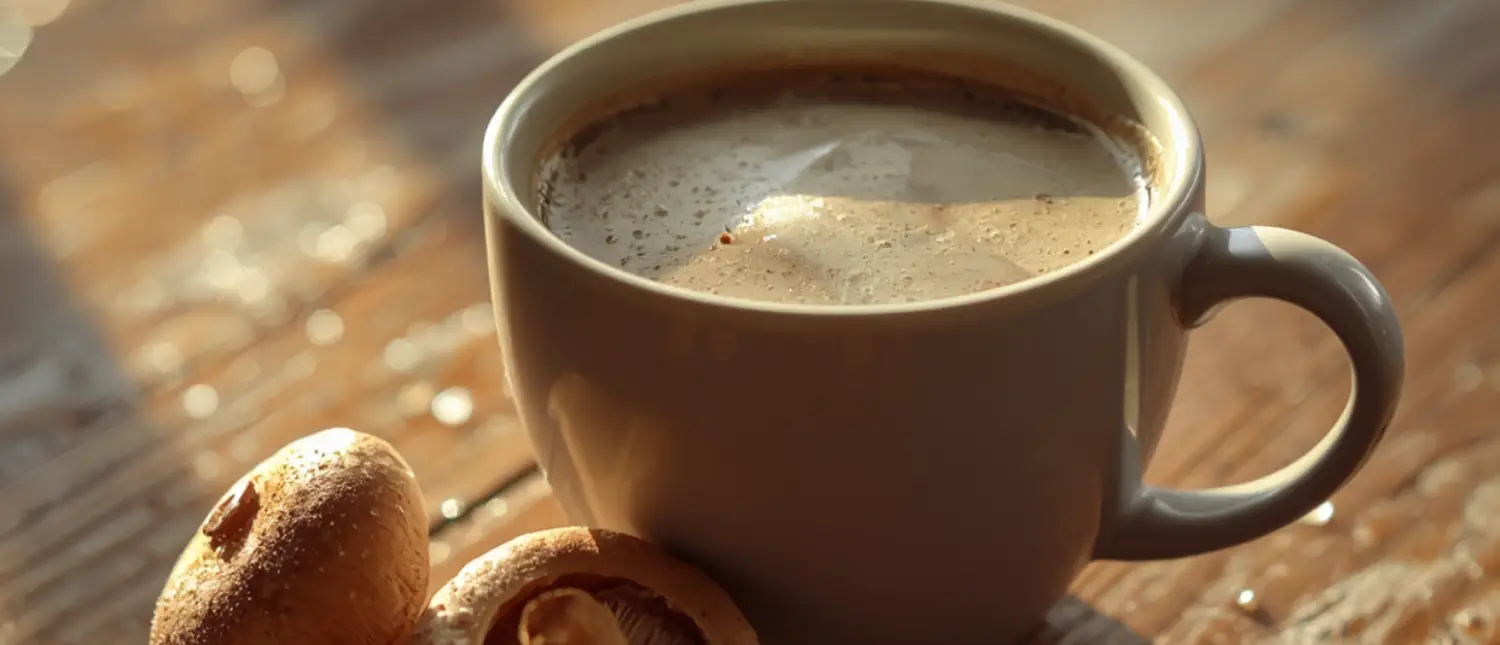
Mushroom coffee is a blend of regular coffee (or sometimes instant coffee) mixed with powdered medicinal mushrooms.
Common mushrooms include:
- Lion’s Mane
- Chaga
- Reishi
- Cordyceps
- Turkey Tail
These mushrooms are typically dried, extracted, and blended into coffee powder.
Unlike culinary mushrooms, medicinal mushrooms are used for their potential wellness properties rather than flavor.
Mushroom Coffee Usually Contains Less Caffeine
Most mushroom coffee blends still contain coffee beans, but often at lower amounts than standard coffee.
That means you may get:
- A gentler energy boost
- Less caffeine crash
- Reduced jitters
- Smoother focus
Many people also describe mushroom coffee as easier on the stomach compared to acidic coffee blends.
👉 Mushroom Coffee vs Decaf Coffee Related Reads: How low-acid coffee works for sensitive stomachs
👉 Mushroom Coffee vs Decaf Coffee Related Reads: Best functional coffee drinks for energy and focus
What Is Decaf Coffee?
Decaf coffee is regular coffee that has had most of its caffeine removed.
The beans still come from traditional coffee plants, but manufacturers use methods like:
- Swiss Water Process
- Carbon dioxide extraction
- Solvent-based decaffeination
Even though decaf is called “decaf,” it still contains small amounts of caffeine.
How Much Caffeine Is in Decaf?
Most decaf coffee contains around:
- 2–15 mg of caffeine per cup
Compared to regular coffee:
- 80–120 mg per cup
That makes decaf a popular option for people who:
- Want better sleep
- Are sensitive to caffeine
- Love coffee flavor
- Need to reduce caffeine intake
👉 If you like what we cover in mushroom coffee vs decaf coffee try: Decaf vs regular coffee: what’s the real difference?
Mushroom Coffee vs Decaf Coffee – Key Differences
1. Caffeine Levels ⚡
This is one of the biggest differences.
Mushroom Coffee
- Usually contains reduced caffeine
- Often around 30–60 mg per serving
- Provides mild stimulation
Decaf Coffee
- Very low caffeine
- Typically under 15 mg
- Minimal stimulant effect
Best Choice?
- For mild energy: Mushroom coffee
- For avoiding caffeine almost entirely: Decaf coffee
2. Taste ☕
Mushroom Coffee Taste
Many people expect mushroom coffee to taste like soup or mushrooms — but most blends still taste fairly coffee-like.
Common flavor notes:
- Earthy
- Nutty
- Smooth
- Slightly herbal
The stronger the mushroom blend, the more noticeable the earthy flavor becomes.
Decaf Coffee Taste
Decaf tastes much closer to regular coffee.
However, depending on the decaffeination process, some decaf coffees may taste:
- Slightly flatter
- Less bold
- Less aromatic
High-quality decaf beans can still produce excellent espresso and brewed coffee.
👉 Related guide to Mushroom Coffee VS Decaf Coffee: How coffee roasting affects flavor profiles
3. Health & Wellness Benefits 🍄
Mushroom Coffee Potential Benefits
Different mushrooms are associated with different wellness claims.
For example:
| Mushroom | Common Use |
|---|---|
| Lion’s Mane | Focus and cognitive support |
| Reishi | Relaxation and stress support |
| Cordyceps | Energy and endurance |
| Chaga | Antioxidant support |
Research is still developing, but many people enjoy mushroom coffee as part of a wellness-focused lifestyle.
Decaf Coffee Benefits
Decaf still contains:
- Antioxidants
- Polyphenols
- Coffee flavor compounds
You may still get some benefits associated with coffee without the higher caffeine intake.
Best Choice?
- For functional wellness trends: Mushroom coffee
- For traditional coffee enjoyment: Decaf coffee
4. Digestive Comfort ☕✨
Some coffee drinkers switch because regular coffee feels too acidic or harsh.
Mushroom Coffee
Often marketed as:
- Gentler on digestion
- Lower acid
- Less irritating
Decaf Coffee
Can still be acidic depending on:
- Roast level
- Bean origin
- Brewing method
👉 Helpful guide to Mushroom Coffee VS Decaf Coffee: Best brewing methods for low-acid coffee
Pros and Cons
Mushroom Coffee Pros ✅
- Lower caffeine than regular coffee
- Functional mushroom ingredients
- May reduce jitters
- Often smoother energy
- Popular wellness drink
Mushroom Coffee Cons ❌
- More expensive
- Earthy flavor may not appeal to everyone
- Research on benefits is still evolving
- Some blends still contain caffeine
Decaf Coffee Pros ✅
- Familiar coffee taste
- Very low caffeine
- Widely available
- Great for evening drinking
- Works with espresso machines and brewers
Decaf Coffee Cons ❌
- May taste weaker than regular coffee
- Still contains trace caffeine
- Some cheap decaf tastes flat
- Fewer “functional” ingredients
Who Is Mushroom Coffee Best For? 🍄
Mushroom coffee may suit:
- Wellness-focused drinkers
- People wanting smoother energy
- Fans of functional beverages
- Those reducing caffeine without quitting entirely
- Coffee drinkers curious about adaptogens
Who Is Decaf Coffee Best For? ☕
Decaf coffee is often ideal for:
- Traditional coffee lovers
- People sensitive to caffeine
- Evening coffee drinkers
- Espresso fans wanting less caffeine
- Anyone reducing caffeine for sleep or anxiety reasons
Best Use Cases: Quick Comparison
| Situation | Better Choice |
|---|---|
| Need focus without a big caffeine hit | Mushroom coffee |
| Love classic coffee taste | Decaf coffee |
| Want almost zero caffeine | Decaf coffee |
| Interested in wellness ingredients | Mushroom coffee |
| Want coffee at night | Decaf coffee |
| Sensitive stomach | Mushroom coffee (sometimes) |
Alternatives to Mushroom Coffee & Decaf ☕✨
If neither option sounds perfect, there are other coffee alternatives worth exploring:
Matcha
Provides:
- Gentle caffeine
- L-theanine for calm focus
- Antioxidants
👉 Related article: Matcha vs coffee for energy and focus
Low-Acid Coffee
Designed for sensitive stomachs and reflux-prone coffee drinkers.
👉 Related guide: Best low-acid coffees explained
Chicory Coffee
Naturally caffeine-free with a roasted flavor similar to coffee.
Half-Caf Coffee
A blend of regular and decaf beans for moderate caffeine levels.
👉 You may also enjoy: Best coffee alternatives for beginners
FAQs to Mushroom Coffee vs Decaf Coffee☕🍄
Is mushroom coffee healthier than decaf coffee?
Not necessarily. They serve different purposes.
Mushroom coffee focuses more on functional ingredients and moderate caffeine, while decaf is mainly about reducing caffeine while keeping traditional coffee flavor.
Does mushroom coffee taste like mushrooms?
Usually only slightly.
Most blends still taste like coffee but with earthy or nutty notes.
Is mushroom coffee completely caffeine-free?
No. Most mushroom coffee contains some coffee and therefore some caffeine.
Always check the label.
Can you drink decaf coffee every day?
Yes, most people can enjoy decaf daily as part of a balanced diet
Which is better for anxiety?
Many people find decaf coffee better because it contains very little caffeine.
However, some mushroom coffee blends with calming mushrooms like Reishi may also feel gentler than regular coffee.
Can mushroom coffee replace regular coffee?
For some people, yes.
Others prefer it as an occasional wellness drink rather than a full replacement.
Verdict Box ☕✨
Choose Mushroom Coffee If:
✅ You want mild energy without a crash
✅ You enjoy wellness-focused functional drinks
✅ You’re curious about medicinal mushrooms
✅ Regular coffee feels too harsh or jittery
Choose Decaf Coffee If:
✅ You love traditional coffee flavor
✅ You want minimal caffeine
✅ You drink coffee later in the day
✅ You already enjoy espresso or brewed coffee rituals
Final Recommendation – Mushroom Coffee vs Decaf Coffee
For most coffee lovers, decaf coffee is the easier and more familiar switch.
But if you enjoy experimenting with functional beverages and want smoother energy with added wellness ingredients, mushroom coffee offers a unique alternative worth trying 🍄☕
You May Also Like ☕✨
- Decaf vs regular coffee: what changes most?
- Best low-acid coffee options for sensitive stomachs
- Matcha vs coffee for focus and energy
- Coffee alternatives that still feel like coffee
- Beginner’s guide to functional mushroom drinks