☕ Why the Bloom Matters in Pour-Over Coffee
If your pour-over coffee tastes flat, sour, or inconsistent… the problem might not be your beans or technique—it could be your bloom.
- ☕ Why the Bloom Matters in Pour-Over Coffee
- 🌱 What Is Coffee Blooming?
- 👀 What a Perfect Bloom Looks Like
- 🧪 Step-by-Step: How to Master the Perfect Bloom
- ⚠️ Common Bloom Mistakes (and How to Fix Them)
- ☕ Pro Tips for Next-Level Blooming
- 🆚 Bloom vs No Bloom: What’s the Difference?
- 🏡 Final Thoughts: Small Step, Big Difference
- 👉 Next Step for Better Coffee
- ❓ Frequently Asked Questions (FAQs)
- ☕ You May Also Like
The bloom is the first pour of water over your coffee grounds, and it plays a critical role in how your coffee extracts.
👉 When hot water hits fresh coffee grounds, it releases trapped carbon dioxide (CO₂).
👉 If you skip or rush this step, that gas interferes with extraction—leading to uneven, dull flavors.
A proper bloom = better extraction = better coffee.
🌱 What Is Coffee Blooming?
Blooming is the process of:
- Adding a small amount of hot water to fresh grounds
- Letting them “bubble up” and expand
- Allowing gases to escape before full brewing begins
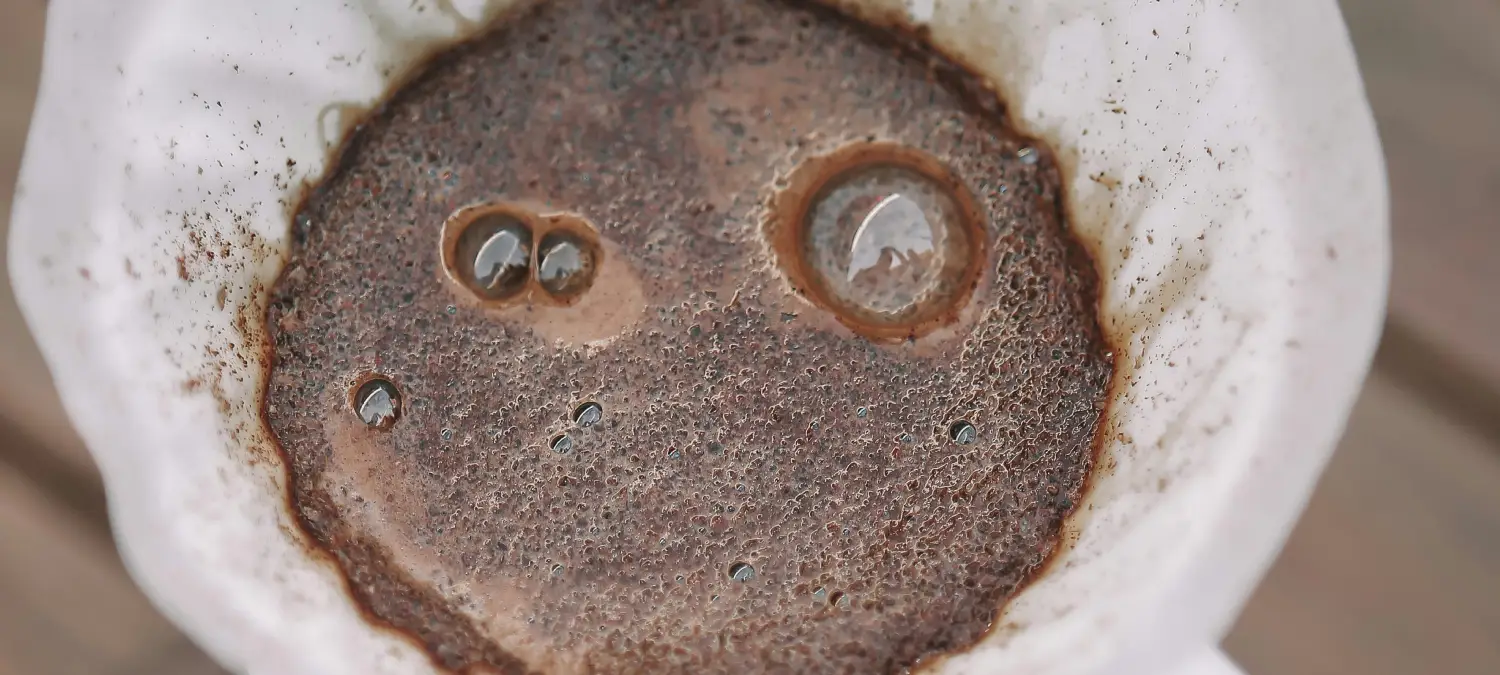
You’ll actually see the bloom—the grounds puff up and release bubbles.
✨ It’s one of the easiest ways to tell your coffee is fresh.
👀 What a Perfect Bloom Looks Like
A well-executed bloom should:
✔ Puff up evenly across the coffee bed
✔ Release visible bubbles (especially with fresh beans)
✔ Smell rich and aromatic
✔ Fully saturate all grounds (no dry patches)
If your bloom looks weak or uneven, your final cup will reflect it.
🧪 Step-by-Step: How to Master the Perfect Bloom
1. Use Fresh Coffee Beans
Freshness matters more here than anywhere else.
- Ideal: 3–14 days after roasting
- Too fresh (1–2 days): overly gassy
- Too old: weak or no bloom
👉 No bloom = stale coffee.
2. Get Your Coffee-to-Water Ratio Right
A standard starting point:
- 1:15 to 1:17 ratio
- Example: 20g coffee → 300–340g water
For blooming specifically:
👉 Use 2–3x the weight of your coffee in water
- 20g coffee → 40–60g water for bloom
3. Use the Right Water Temperature
- Ideal range: 92–96°C (197–205°F)
Too hot:
- Over-extraction, bitterness
Too cool:
- Weak bloom, under-extraction
4. Pour Slowly and Evenly
This is where many people go wrong.
✔ Pour in a gentle circular motion
✔ Start from the center and move outward
✔ Wet all grounds evenly
🚫 Avoid dumping water in one spot—it causes uneven blooming.
5. Let It Rest (Bloom Time)
- Ideal bloom time: 30–45 seconds
During this time:
- CO₂ escapes
- Grounds settle
- Extraction becomes more even
⏳ Don’t rush this step—it’s doing more than you think.
⚠️ Common Bloom Mistakes (and How to Fix Them)
❌ Skipping the Bloom
👉 Results in uneven extraction and flat taste
✔ Always bloom—even for “quick” brews
❌ Not Using Enough Water
👉 Dry pockets = uneven extraction
✔ Fully saturate all grounds
❌ Pouring Too Fast
👉 Disturbs the coffee bed
✔ Keep your pour controlled and steady
❌ Old Coffee Beans
👉 Little to no bloom
✔ Use fresher beans for better results
❌ Uneven Grind Size
👉 Some grounds over-extract, others under-extract
✔ Aim for a medium-coarse, consistent grind
☕ Pro Tips for Next-Level Blooming
Swirl or stir gently after pouring
Helps ensure all grounds are saturated
Use a gooseneck kettle
Gives you better control for precision pouring
Watch the bubbles
More bubbles = fresher coffee
Adjust bloom time slightly
- Fresh beans → longer bloom
- Older beans → shorter bloom
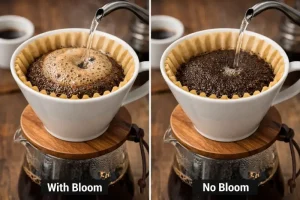
🆚 Bloom vs No Bloom: What’s the Difference?
| With Bloom | Without Bloom |
|---|---|
| Balanced flavor | Flat or sour |
| Even extraction | Uneven extraction |
| Better aroma | Muted aroma |
| Cleaner cup | Muddy taste |
🏡 Final Thoughts: Small Step, Big Difference
Mastering the bloom is one of the simplest upgrades you can make to your pour-over routine—but it delivers a huge payoff.
It’s not about fancy gear or complicated techniques…
👉 It’s about giving your coffee the chance to properly extract.
Once you dial this in, you’ll notice:
- Brighter flavors
- Better balance
- More consistent brews
And honestly… it just makes the whole process feel more like a craft ☕
👉 Next Step for Better Coffee
If you want to take your pour-over to the next level, pair this with:
👉 Grind size control
👉 Pouring technique
👉 Brew timing
Master these together, and you’ll be brewing café-quality coffee at home in no time.
❓ Frequently Asked Questions (FAQs)
☕ What is the bloom in pour-over coffee?
The bloom is the first stage of pour-over brewing where hot water is added to freshly ground coffee, causing it to bubble and expand. This happens because carbon dioxide is released from the coffee, helping prepare the grounds for better extraction.
⏱️ How long should you bloom pour-over coffee?
A bloom typically lasts 30 to 45 seconds. This gives enough time for gases to escape before continuing your pour.
💧 How much water should I use for the bloom?
A good rule is to use 2–3 times the weight of your coffee grounds.
For example:
20g coffee → 40–60g water for the bloom
🤔 What happens if you skip the bloom?
Skipping the bloom can lead to uneven extraction, resulting in coffee that tastes flat, sour, or overly bitter. The trapped gases prevent water from fully saturating the grounds.
🌱 Does coffee freshness affect the bloom?
Yes—fresh coffee blooms more because it contains more trapped carbon dioxide. Older beans produce little to no bloom, which can affect flavour.
🔥 What water temperature is best for blooming?
The ideal temperature is 90–96°C (195–205°F).
Too cool won’t release gases properly, while too hot can over-extract early.
🌀 Should I stir or swirl during the bloom?
Gently swirling or stirring can help ensure all grounds are evenly saturated, especially if you notice dry spots.
☕ You May Also Like
📖 Brewing & Technique
- Pour-Over Coffee Ratio: How to Get It Right Every Time
- How to Make Better Coffee at Home (Beginner’s Guide)