Wondering how often you should descale your espresso machine? The short answer is every 2–3 months for most home users, but the ideal schedule depends on your water hardness, how many coffees you make each day, and whether you use filtered water.
- Quick Answer
- Why Descaling Matters
- What Is Limescale?
- How Water Hardness Changes Everything
- How Often Should You Descale Based on Usage?
- Signs Your Espresso Machine Needs Descaling
- Should You Wait for the Descale Light?
- Can You Descale Too Often?
- How Long Does Descaling Take?
- How to Reduce Descaling Frequency
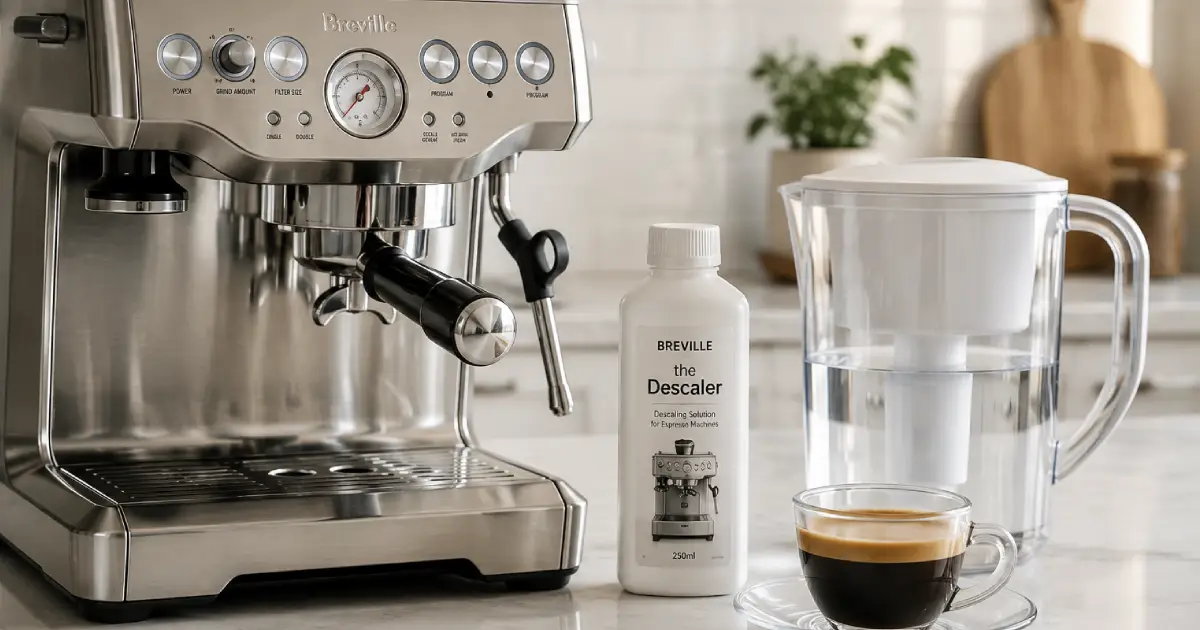
- Best Descaling Solutions
- Common Descaling Mistakes
- Frequently Asked Questions
- Final Verdict
Descaling removes mineral buildup (limescale) inside your machine. Without regular descaling, heating efficiency drops, coffee tastes worse, brewing becomes inconsistent, and expensive components may eventually fail.
In this guide, you’ll learn:
- The ideal descaling schedule
- Signs your machine needs descaling
- How water hardness affects maintenance
- How to reduce descaling frequency
- Common mistakes to avoid
By the end, you’ll know exactly when to descale your espresso machine—and how to keep it brewing like new.
Quick Answer
For most home espresso machines:
| Usage | Water Type | Descale Every |
|---|---|---|
| 1–2 coffees/day | Filtered water | 4–6 months |
| 2–5 coffees/day | Moderate hardness | 2–3 months |
| 5+ coffees/day | Hard water | Every 4–8 weeks |
| Very hard water | Unfiltered | Monthly |
Always follow your manufacturer’s recommendations if they differ.
How often should you descale an espresso machine?
Most home espresso machines should be descaled every 2–3 months. If you use filtered water, every 4–6 months may be enough. Homes with hard water or heavy daily use may need descaling every 4–8 weeks to prevent limescale buildup and maintain brewing performance.
👉 Why Fresh Coffee Beans Matter More Than You Think
Why Descaling Matters
Every time your machine heats water, tiny amounts of dissolved minerals are left behind.
These minerals gradually build into hard deposits called limescale.
Over time, limescale can:
- Slow heating
- Restrict water flow
- Reduce brewing pressure
- Affect steam power
- Increase energy use
- Cause expensive repairs
A neglected machine often produces weaker espresso with less crema and inconsistent extraction.
Think of descaling as preventative maintenance rather than fixing a problem.
👉 Espresso Machine Maintenance Guide
What Is Limescale?
Limescale is made primarily from calcium and magnesium minerals naturally found in water.
When water is heated:
- Minerals separate from the water.
- They stick to internal components.
- Layers gradually become thicker.
- Heat transfer becomes less efficient.
The boiler, thermoblock, pipes, valves and steam system are especially vulnerable.
👉 Best Water Filters for Coffee Brewing
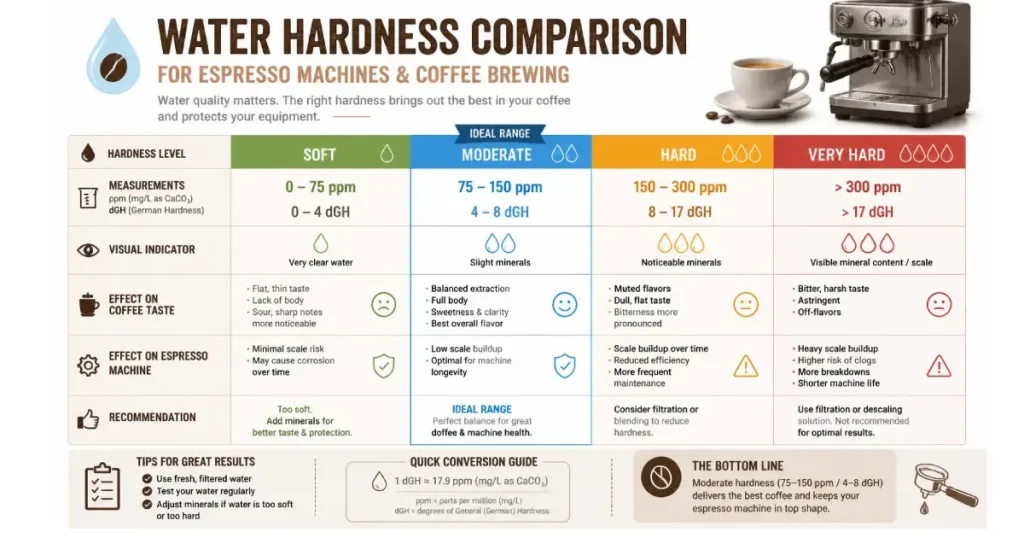
How Water Hardness Changes Everything
Not everyone needs the same descaling schedule.
Water hardness is the biggest factor.
Soft Water
Soft water contains fewer dissolved minerals.
Machines accumulate scale much more slowly.
Typical schedule:
- Every 4–6 months
Moderately Hard Water
This is common in many cities.
Recommended schedule:
- Every 2–3 months
Hard Water
Hard water creates scale rapidly.
Recommended schedule:
- Every 1–2 months
Using untreated hard water is one of the fastest ways to shorten an espresso machine’s lifespan.
👉 Best Manual Espresso Machine
How Often Should You Descale Based on Usage?
Occasional Coffee Drinkers
1–2 coffees daily
Recommended:
- Every 4–6 months (filtered water)
- Every 3 months (tap water)
Average Home Users
2–5 coffees daily
Recommended:
- Every 2–3 months
This is the schedule recommended for most households.
Heavy Coffee Drinkers
5–10 drinks daily
Recommended:
- Every 4–8 weeks
Heavy usage means more heated water and faster mineral buildup.
Small Offices
Multiple users every day
Recommended:
- Monthly
- Sometimes every 2–4 weeks depending on water quality
Signs Your Espresso Machine Needs Descaling
Don’t wait until your machine completely clogs.
Common warning signs include:
Coffee Takes Longer to Brew
Restricted water flow often indicates scale buildup.
Water Temperature Drops
Scale insulates heating elements.
The machine struggles to reach brewing temperature.
Steam Wand Loses Power
Reduced steam pressure often results from internal mineral deposits.
Espresso Tastes Flat
Poor extraction affects flavor.
Coffee may taste:
- Sour
- Bitter
- Weak
- Under-extracted
Noisy Operation
Popping, sputtering or excessive vibration may indicate mineral buildup around heating components.
Descale Light Turns On
Many modern machines monitor usage and automatically remind you.
Never ignore the descale warning.
Should You Wait for the Descale Light?
No.
The descale light estimates usage.
It does not measure mineral buildup.
If you live in a hard water area, you may need to descale sooner.
If you always use filtered water, you may safely wait longer.
👉 Espresso Machine Cleaning Checklist
Can You Descale Too Often?
Yes.
Unnecessary descaling:
- Wastes solution
- Takes time
- Exposes seals to additional chemical cleaning
Modern descaling products are safe, but excessive cleaning isn’t beneficial.
Stick to an appropriate schedule.
👉 Specialty Coffee Association (SCA)
How Long Does Descaling Take?
Typical times:
| Machine Type | Time |
|---|---|
| Capsule machine | 20–30 minutes |
| Thermoblock espresso machine | 30–40 minutes |
| Boiler machine | 30–60 minutes |
| Dual boiler machine | 45–60 minutes |
Always include several fresh-water rinse cycles afterward.
👉 Best Coffee Water for Espresso Machines
How to Reduce Descaling Frequency
Preventing scale is easier than removing it.
Use Filtered Water
This is the biggest improvement you can make.
Quality water filters remove much of the calcium responsible for scale.
Replace Water Filters Regularly
Many machines include replaceable tank filters.
Don’t leave expired filters installed.
Empty the Water Tank
Avoid leaving water sitting for extended periods.
Fresh water helps maintain better overall hygiene.
Clean the Steam Wand Daily
Milk residue is separate from scale but equally important.
Clean after every use.
Follow Routine Maintenance
Regular cleaning prevents multiple maintenance issues from building up together.
Best Descaling Solutions
Use products specifically designed for espresso machines.
Avoid:
- Vinegar
- Lemon juice
- Homemade acids
These can:
- Leave odors
- Damage seals
- Void warranties
- Fail to remove scale effectively
Manufacturer-approved descalers are generally the safest option.
👉 How to Choose a Coffee Machine for Your Home
Common Descaling Mistakes
Avoid these common errors.
Ignoring the Machine for Years
Heavy buildup becomes much harder to remove.
Using Vinegar
It isn’t recommended by most espresso machine manufacturers.
Forgetting the Rinse Cycle
Residual descaling solution can ruin coffee flavor.
Skipping Maintenance Because Coffee “Still Tastes Fine”
Scale often builds long before noticeable problems appear.
Using Hard Water Again Immediately
You’ll quickly undo your maintenance.
👉 How Long Do Espresso Machines Last?
Frequently Asked Questions
Can I use vinegar to descale my espresso machine?
Most manufacturers advise against vinegar because it can damage seals, leave unpleasant odors, and may not effectively remove all mineral deposits.
How do I know if my water is hard?
Many local water suppliers publish water hardness reports. You can also use inexpensive water hardness test strips for accurate results.
Does filtered water eliminate the need for descaling?
No. It usually slows mineral buildup significantly but doesn’t eliminate it entirely.
What happens if I never descale my espresso machine?
Limescale can clog internal components, reduce brewing temperature and pressure, increase energy consumption, and eventually lead to costly repairs or machine failure.
Is descaling the same as cleaning?
No. Cleaning removes coffee oils and milk residue, while descaling removes mineral deposits inside the machine. Both are essential parts of regular maintenance.
Final Verdict
For most home baristas, descaling your espresso machine every two to three months strikes the right balance between protecting your investment and avoiding unnecessary maintenance.
If you use filtered water, you may only need to descale every four to six months. On the other hand, households with hard water or heavy daily use should descale as often as every month.
Regular descaling improves coffee flavor, keeps brewing temperatures consistent, protects internal components, and can add years to the life of your espresso machine.
Pair it with routine cleaning, fresh filtered water, and good daily maintenance, and your machine will continue producing café-quality espresso for years to come.
☕ Just a heads up—this post contains affiliate links. If you buy through them, Frothy Fusion may earn a small commission (at no cost to you). Thanks for supporting our coffee-fueled content!