Improve Your Espresso With Better Water ☕💧
Most home baristas spend hours choosing the perfect beans and dialing in their grinder—but many overlook the single ingredient that makes up around 98% of every espresso shot: water.
- Improve Your Espresso With Better Water ☕💧
- ☕ Quick Summary of Best Coffee Water
- Best Water Types for Espresso Machines
- What Is the Best Water for Espresso Machines?
- Why Water Quality Matters
- What Minerals Does Espresso Water Need?
- Understanding Coffee Water Minerals
- Is Filtered Tap Water Good Enough?
- Can You Use Bottled Water?
- Should You Use Distilled Water?
- Is Reverse Osmosis Water Good?
- Best Coffee Water Options
- 1. Filtered Tap Water ⭐ Best Overall
- 2. Third Wave Water ⭐ Best Premium Option
- 3. Balanced Spring Water
- 4. Espresso Machine Water Filters
- Pros and Cons
- Pros of Using Proper Coffee Water
- Cons
- Who It's Best For
- How to Know If Your Water Is Too Hard
- Quick Espresso Water Checklist ☕
- Alternatives
- FAQs for Best Coffee Water for Espresso Machines
- ☕ Verdict on Best Coffee Water for Espresso Machines
- You May Also Like
Using the wrong water can lead to flat flavors, excessive bitterness, scale buildup, and expensive repairs. The good news? You don’t need expensive specialty water to brew incredible espresso.
In this Best Coffee Water for Espresso Machines guide, you’ll learn what makes the best coffee water for espresso machines, which bottled and filtered waters work well, what mineral levels to aim for, and how to protect your machine while making better coffee every day.
☕ Quick Summary of Best Coffee Water
The best coffee water for espresso machines is clean, low in chlorine, and contains balanced minerals—not distilled, softened, or heavily mineralized water.
Ideal water should have:
- Total Hardness: 50–175 ppm
- Alkalinity: 40–70 ppm
- pH: 6.5–7.5
- Low chlorine
- Low sodium
A quality carbon filter or mineral-balanced bottled water is usually the easiest solution for most home baristas.
Best Water Types for Espresso Machines
| Water Type | Espresso Flavor | Scale Risk | Machine Safe? | Recommended |
|---|---|---|---|---|
| Filtered Tap Water | ⭐⭐⭐⭐⭐ | Low | ✅ Yes | ⭐ Best Overall |
| Specialty Coffee Water | ⭐⭐⭐⭐⭐ | Very Low | ✅ Yes | ⭐ Premium Choice |
| Spring Water (balanced minerals) | ⭐⭐⭐⭐ | Moderate | ✅ Usually | Good |
| Distilled Water | ⭐ | None | ❌ No | Avoid |
| Reverse Osmosis (without remineralization) | ⭐⭐ | Very Low | ❌ Usually | Avoid |
| Softened Water | ⭐⭐ | Low | ⚠ Sometimes | Not Ideal |
| Hard Tap Water | ⭐⭐⭐ | High | ❌ No | Avoid |
What Is the Best Water for Espresso Machines?
The best water contains enough minerals to properly extract coffee while remaining low enough to minimize limescale.
Coffee professionals often reference the Specialty Coffee Association’s recommended water standards because they strike an excellent balance between flavor and machine protection.
Ideal espresso water should be:
- Clean tasting
- Odor free
- Chlorine free
- Moderately hard
- Low in sodium
- Neutral pH
Water with balanced calcium and magnesium helps dissolve the flavorful compounds inside coffee grounds while preventing excessive scale buildup.
Why Water Quality Matters
Many people assume beans determine all the flavor.
In reality, poor water can ruin excellent coffee.
Water affects:
- Extraction quality
- Sweetness
- Acidity
- Mouthfeel
- Crema
- Aroma
- Espresso consistency
- Machine lifespan
Even premium beans can’t overcome poor-quality water.
What Minerals Does Espresso Water Need?
The best espresso water contains moderate levels of calcium and magnesium, low sodium, low chlorine, and balanced alkalinity. These minerals help extract sweetness while protecting espresso machines from excessive limescale buildup.
Understanding Coffee Water Minerals
Calcium
Calcium improves extraction and body.
Too much causes heavy scale.
Too little creates flat espresso.
Magnesium
Magnesium is often considered the “flavor mineral.”
It enhances:
- Sweetness
- Fruity notes
- Chocolate flavors
- Complexity
Many specialty coffee waters intentionally include magnesium.
Bicarbonates (Alkalinity)
Alkalinity buffers acidity.
Too much:
- Mutes flavors
- Creates dull coffee
Too little:
- Makes espresso overly sour
Balance is key.
Sodium
High sodium isn’t ideal for espresso.
Water softened through ion-exchange systems often replaces calcium with sodium, which can negatively affect flavor.
Is Filtered Tap Water Good Enough?
For most people, yes.
A quality activated carbon filter removes:
- Chlorine
- Bad odors
- Unpleasant tastes
- Some contaminants
If your local water isn’t extremely hard, filtered tap water usually produces excellent espresso.
This is why many espresso machine manufacturers recommend filtration rather than distilled water.
Can You Use Bottled Water?
Yes—but choose carefully.
Good bottled water has:
- Moderate mineral content
- Low sodium
- No added flavors
- Balanced hardness
Avoid waters marketed as “high mineral” because they often create scale inside espresso boilers.
✅ 👉 Look for Water Hardness Test Strips on Amazon
Should You Use Distilled Water?
No.
Although distilled water contains almost no minerals, it’s not recommended for most espresso machines.
Reasons include:
- Poor extraction
- Flat tasting coffee
- Some machines rely on mineral conductivity to detect water levels
- Manufacturer warranties may discourage its use
If using reverse osmosis or distilled water, it should generally be remineralized first.
Is Reverse Osmosis Water Good?
Reverse osmosis (RO) removes almost everything—including beneficial minerals.
Without remineralization:
❌ Espresso tastes dull.
❌ Extraction becomes inconsistent.
❌ Some espresso machines may not function correctly.
Many cafés using RO systems add minerals back through remineralization cartridges.
Best Coffee Water Options
1. Filtered Tap Water ⭐ Best Overall
Best for:
- Most homes
- Daily espresso
- Affordable brewing
Pros
- Inexpensive
- Consistent
- Easy to obtain
- Great flavor
2. Third Wave Water ⭐ Best Premium Option
Mineral packets mixed with distilled water create water specifically designed for specialty coffee brewing.
Best for:
- Espresso enthusiasts
- Premium beans
- Consistency
✅ 👉 Find Third Wave Water mineral packets on Amazon
3. Balanced Spring Water
Some spring waters naturally contain suitable mineral levels.
Always check the mineral analysis before choosing a brand.
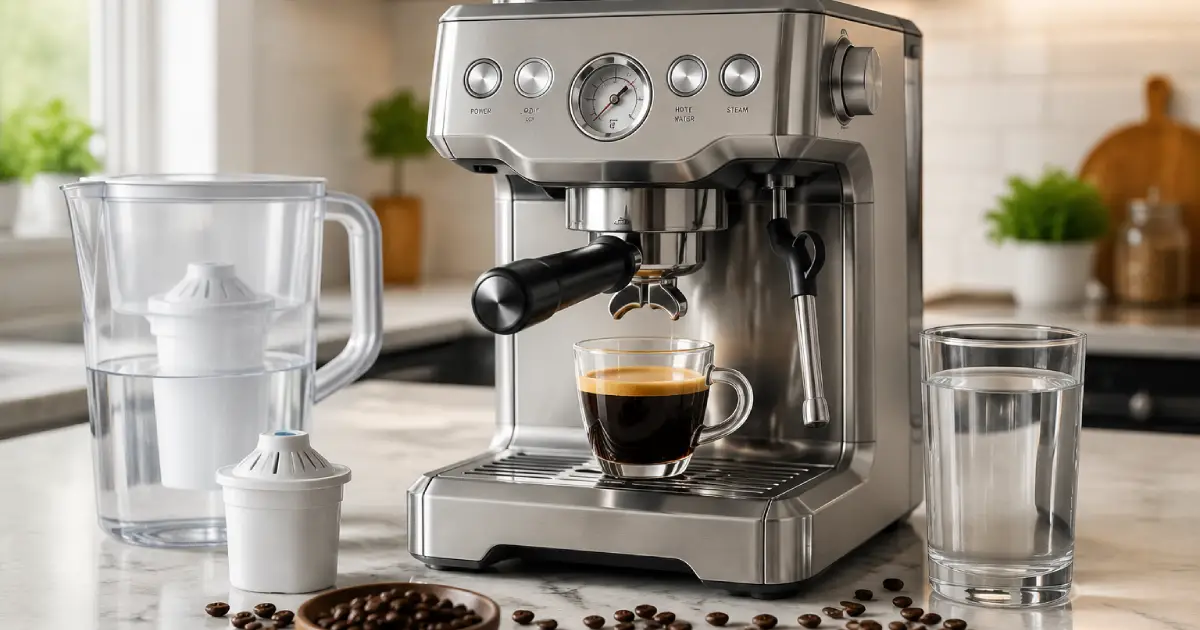
4. Espresso Machine Water Filters
Many manufacturers sell water filters that fit directly inside their reservoirs.
Benefits include:
- Better tasting coffee
- Less scaling
- Longer machine life
- Reduced maintenance
✅ 👉 Check out the in-tank espresso machine water filters on Amazon
Pros and Cons
Pros of Using Proper Coffee Water
✅ Better espresso flavor
✅ Improved sweetness
✅ Richer crema
✅ Longer machine lifespan
✅ Less descaling
✅ More consistent shots
👉 Espresso Machine Descaling Solutions on Amazon
Cons
❌ Requires a little research
❌ Some specialty waters cost more
❌ Water composition varies by location
Who It’s Best For
Choosing better coffee water is especially worthwhile if you:
- Own a premium espresso machine
- Drink espresso daily
- Use specialty coffee beans
- Want café-quality coffee at home
- Want to reduce descaling frequency
If you only make occasional coffee with an entry-level machine, filtered tap water is usually sufficient.
How to Know If Your Water Is Too Hard
Signs include:
- White chalky deposits
- Slow steam performance
- Reduced brewing temperature
- Bitter espresso
- Frequent descaling alerts
If you notice these symptoms, consider testing your tap water or switching to filtered water.
👉 Find an array of Filter Pitchers on Amazon
Quick Espresso Water Checklist ☕
Before filling your machine, ask:
✔ Does it taste clean?
✔ Is chlorine removed?
✔ Is hardness moderate?
✔ Is sodium low?
✔ Is it not distilled?
✔ Is it suitable for coffee machines?
If the answer is yes to all of these, you’re likely using excellent coffee water.
Alternatives
If you’re exploring ways to improve your espresso setup, these guides can help:
- How to Choose the Right Espresso Machine for Your Home
- Best Coffee Grinders for Espresso
- How to Dial In Espresso Like a Home Barista
- Why Fresh Coffee Beans Matter More Than You Think
- How Often Should You Descale an Espresso Machine?
- Best Water Filters for Coffee Brewing
- Espresso Machine Maintenance Guide
FAQs for Best Coffee Water for Espresso Machines
What is the best bottled water for espresso machines?
Look for bottled water with moderate mineral content, low sodium, and balanced hardness. Avoid distilled and heavily mineralized waters.
Is filtered tap water better than bottled water?
In many homes, yes. A quality carbon filter removes chlorine while retaining beneficial minerals, making filtered tap water an excellent everyday choice.
Can hard water damage an espresso machine?
Yes. Hard water causes limescale buildup inside boilers, heating elements, and pipes, reducing efficiency and potentially leading to expensive repairs.
Can you use distilled water in a Breville or Gaggia espresso machine?
Most manufacturers recommend against using pure distilled water because it lacks minerals needed for proper extraction and, in some machines, water-level sensors.
Does water really change espresso flavor?
Absolutely. Water influences extraction, sweetness, acidity, body, crema, and aroma. It’s one of the biggest factors affecting espresso quality after fresh beans and grinder consistency.
☕ Verdict on Best Coffee Water for Espresso Machines
Best Overall: Filtered tap water with balanced mineral content
Best Premium Option: Third Wave Water or another coffee-specific remineralization product
Best Budget Choice: A quality activated carbon filter on your home tap
Improving your coffee water is one of the easiest and most affordable ways to make noticeably better espresso. Combined with fresh beans, a capable grinder, and proper machine maintenance, balanced water helps produce sweeter, cleaner, and more consistent shots while extending the life of your espresso machine.
You May Also Like
If you’re building your home barista skills, continue with these guides:
- How to Dial In Espresso for Better Shots
- Best Espresso Grinders for Home Baristas
- How Often Should You Descale Your Espresso Machine?
- Espresso Machine Cleaning Checklist
- How Fresh Should Coffee Beans Be for Espresso?
☕ Just a heads up—this post contains affiliate links. If you buy through them, Frothy Fusion may earn a small commission (at no cost to you). Thanks for supporting our coffee-fueled content!