
Latte Art for Beginners ☕✨
Ever wondered how baristas create those beautiful hearts, tulips, and rosettas floating on top of a latte?
- Latte Art for Beginners ☕✨
- Quick Summary on Latte Art for Beginners
- What Is Latte Art?
- Why Learn Latte Art?
- Equipment You'll Need
- The Secret to Great Latte Art: Microfoam
- How to Steam Milk for Latte Art
- Easy Latte Art Designs for Beginners
- Latte Art Difficulty Comparison
- Common Latte Art Mistakes
- Pros and Cons of Learning Latte Art
- Who Is Latte Art Best For?
- Alternatives to Latte Art
- Quick Tips for Faster Improvement ☕
- FAQs on Latte Art for Beginners
- Verdict: Is Latte Art Worth Learning?
- You May Also Like

The good news is that latte art isn’t reserved for professional cafés.
With the right milk texture, a decent espresso shot, and a little practice, anyone can learn the basics at home.
In this beginner-friendly guide, you’ll learn:
✅ What latte art is
✅ The equipment you need
✅ How to steam milk correctly
✅ Easy latte art designs to start with
✅ Common mistakes to avoid
✅ Tips for improving faster
By the end, you’ll have everything you need to begin your latte art journey.
Quick Summary on Latte Art for Beginners
What is latte art?
Latte art is the process of pouring steamed milk into espresso to create patterns and designs on the surface of the drink.
Best beginner design: Heart ❤️
Most important skill: Proper milk texture
Can you learn at home? Absolutely. Many home baristas master latte art with practice and a basic espresso setup.
What Is Latte Art?
Latte art is created when microfoam milk is poured into freshly brewed espresso.
The contrast between the dark espresso crema and silky white milk forms patterns on the surface of the drink.
Popular latte art designs include:
- Hearts
- Tulips
- Rosettas
- Swans
- Ripples
- Free-pour designs
While it looks artistic, latte art is actually a reflection of good espresso extraction and properly textured milk.
Why Learn Latte Art?
Latte art does more than make coffee look beautiful.
Benefits include:
- Improves milk steaming skills
- Helps create better-textured drinks
- Makes homemade coffee feel more professional
- Enhances the overall café experience at home
- Adds a fun and creative element to coffee making
For many coffee enthusiasts, latte art becomes a rewarding hobby alongside learning espresso preparation.
If you’re new to espresso, start with our guide to What Is a Latte before diving deeper into latte art.
Equipment You’ll Need
You don’t need a commercial coffee shop setup, but a few essentials help.
| Equipment | Why It’s Important |
|---|---|
| Espresso machine with steam wand | Creates microfoam milk |
| Milk pitcher | Provides control during pouring |
| Fresh espresso | Creates crema for contrast |
| Whole milk | Easiest for beginners |
| Thermometer (optional) | Helps monitor milk temperature |
Many home baristas start with machines like the Jura E8, Rocket Mozzafiato, or Bosch VeroCafe, which provide excellent milk-steaming capabilities.
The Secret to Great Latte Art: Microfoam
Before learning designs, you must learn milk texture.

Microfoam is silky milk filled with tiny, uniform bubbles.
Good microfoam should look like:
✅ Wet paint
✅ Glossy and shiny
✅ Smooth texture
Bad milk texture looks:
❌ Dry and frothy
❌ Large bubbles
❌ Stiff foam
Without proper microfoam, latte art becomes extremely difficult.
How to Steam Milk for Latte Art
Step 1: Start with Cold Milk
Cold milk provides more time for stretching and texturing.
Fill your pitcher about one-third full.
Step 2: Stretch the Milk
Position the steam wand just below the milk surface.
You’ll hear a gentle paper-tearing sound.
Add air for approximately:
- 3–5 seconds for lattes
- Slightly longer for cappuccinos
Step 3: Create a Whirlpool
Lower the steam wand slightly.
The milk should spin smoothly inside the pitcher.
This whirlpool breaks down larger bubbles and creates silky microfoam.
Step 4: Heat to the Correct Temperature
Aim for:
- 55–65°C (130–150°F)
Avoid overheating, which can damage sweetness and texture.
Step 5: Polish the Milk
Gently tap the pitcher on the counter.
Swirl continuously until the milk looks glossy and smooth.
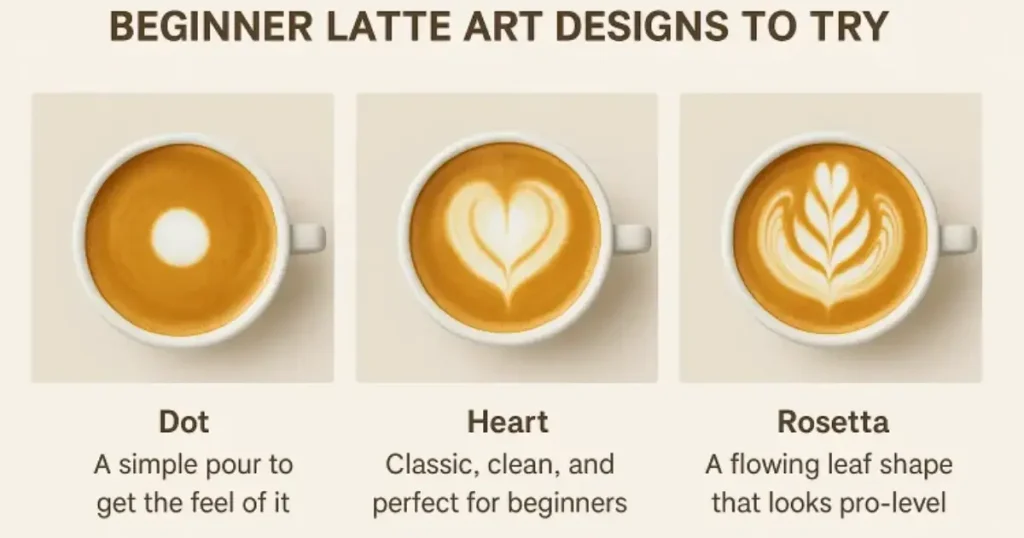
Easy Latte Art Designs for Beginners
1. Heart Latte Art ❤️
The heart is the perfect beginner design.
How to Pour
- Pour from a higher position initially.
- Lower the pitcher close to the surface.
- Allow white milk to form a circle.
- Push forward slightly.
- Lift and cut through.
Why it’s great:
- Simple
- Teaches pouring control
- Builds foundational skills
2. Stacked Heart
Once you’ve mastered a single heart, try stacking multiple hearts.
This helps develop:
- Timing
- Flow control
- Pitcher movement
It’s also the foundation for tulip designs.
3. Tulip 🌷
The tulip consists of several small hearts layered together.
Begin with:
- Two-layer tulips
- Three-layer tulips
- Larger multi-stack tulips later
Tulips teach precision and consistency.
4. Rosetta 🌿
Rosettas are among the most recognizable latte art designs.
This pattern resembles a fern leaf.
Although more difficult, it develops:
- Wrist movement
- Pouring rhythm
- Milk flow control
Most beginners learn hearts and tulips first before attempting rosettas.
Latte Art Difficulty Comparison
| Design | Difficulty | Beginner Friendly? |
|---|---|---|
| Heart | Easy | ✅ Yes |
| Stacked Heart | Easy-Medium | ✅ Yes |
| Tulip | Medium | ✅ Yes |
| Rosetta | Medium-Hard | ⚠️ Practice Needed |
| Swan | Advanced | ❌ Not Yet |
Common Latte Art Mistakes
Milk Too Foamy
Large bubbles prevent clean designs.
Focus on creating silky microfoam.
Espresso Has No Crema
Freshly roasted beans help create stable crema.
Without crema, contrast is reduced.
Pouring Too High
Begin high, but lower the pitcher when creating the design.
Pouring Too Fast
Rushing often distorts patterns.
Consistency matters more than speed.
Not Swirling the Milk
Milk separates quickly after steaming.
Always swirl before pouring.
Pros and Cons of Learning Latte Art
Pros ✅
- Makes coffee visually appealing
- Improves milk steaming technique
- Fun and creative hobby
- Enhances home café experience
- Builds overall barista skills
Cons ❌
- Requires practice and patience
- Can be frustrating initially
- Needs an espresso machine with a steam wand
- Milk quality and freshness matter
Who Is Latte Art Best For?
Latte art is ideal for:
- New home baristas
- Espresso enthusiasts
- Coffee hobbyists
- Café owners in training
- Content creators and coffee influencers
It may be less important for people who primarily drink black coffee or use brewing methods such as pour-over or French press.
Alternatives to Latte Art
If latte art isn’t your main goal, you may enjoy other home barista skills:
- Learn how a Ristretto differs from traditional espresso
- Improve milk-based drinks with our guide to Triple Shot Lattes
- Explore espresso preparation techniques for better extraction
- Learn coffee bean selection and roasting basics
- Build a complete home coffee station setup
Mastering espresso quality often improves latte art results naturally.
Quick Tips for Faster Improvement ☕
- Practice daily, even with water and dish soap
- Use whole milk while learning
- Focus on milk texture before designs
- Record your pours to spot mistakes
- Learn one pattern at a time
- Keep your pitcher moving smoothly
Most beginners see noticeable improvement within a few weeks of regular practice.
FAQs on Latte Art for Beginners
Is latte art difficult to learn?
The basics are relatively easy, but consistency takes practice. Most beginners can pour simple hearts within a few sessions.
What milk is best for latte art?
Whole milk is usually easiest because it creates stable, silky microfoam.
Can I make latte art without an espresso machine?
It’s difficult. A steam wand is the easiest way to create proper microfoam.
How long does it take to learn latte art?
Many people learn basic hearts within days, while more advanced designs may take months.
Why does my latte art disappear?
Poor crema, overly thin milk, or pouring too aggressively can cause designs to fade.
What’s the easiest latte art design?
The heart is widely considered the easiest design for beginners.
Verdict: Is Latte Art Worth Learning?
☕ Yes—especially for home baristas.
Latte art for beginners isn’t just about appearance. Learning it improves milk steaming, pouring control, and overall coffee-making skills.
If you’re just starting, focus on creating silky microfoam and mastering the classic heart. Once you can consistently pour hearts, tulips and rosettas become much easier.
Best For: Home baristas, espresso lovers, and coffee enthusiasts who want café-quality drinks at home.
Not Ideal For: Those who primarily drink black coffee or don’t use milk-based espresso drinks.
You May Also Like
- What Is a Latte? A Beginner’s Guide to the World’s Most Popular Espresso Drink
- Ristretto vs Espresso: What’s the Difference?
- Triple Shot Latte Explained: Caffeine, Taste, and Benefits
- Best Home Espresso Machines for Beginners
- Essential Barista Accessories Every Coffee Lover Should Own
Final Thoughts
Latte art is one of the most enjoyable skills a coffee lover can learn. While beautiful designs take time, the process teaches valuable barista techniques that improve every milk-based coffee you make.
Start with great milk texture, practice simple hearts, and enjoy the journey. Before long, you’ll be pouring café-worthy creations right from your own kitchen. ☕✨
☕ Just a heads up—this post contains affiliate links. If you buy through them, Frothy Fusion may earn a small commission (at no cost to you). Thanks for supporting our coffee-fueled content!