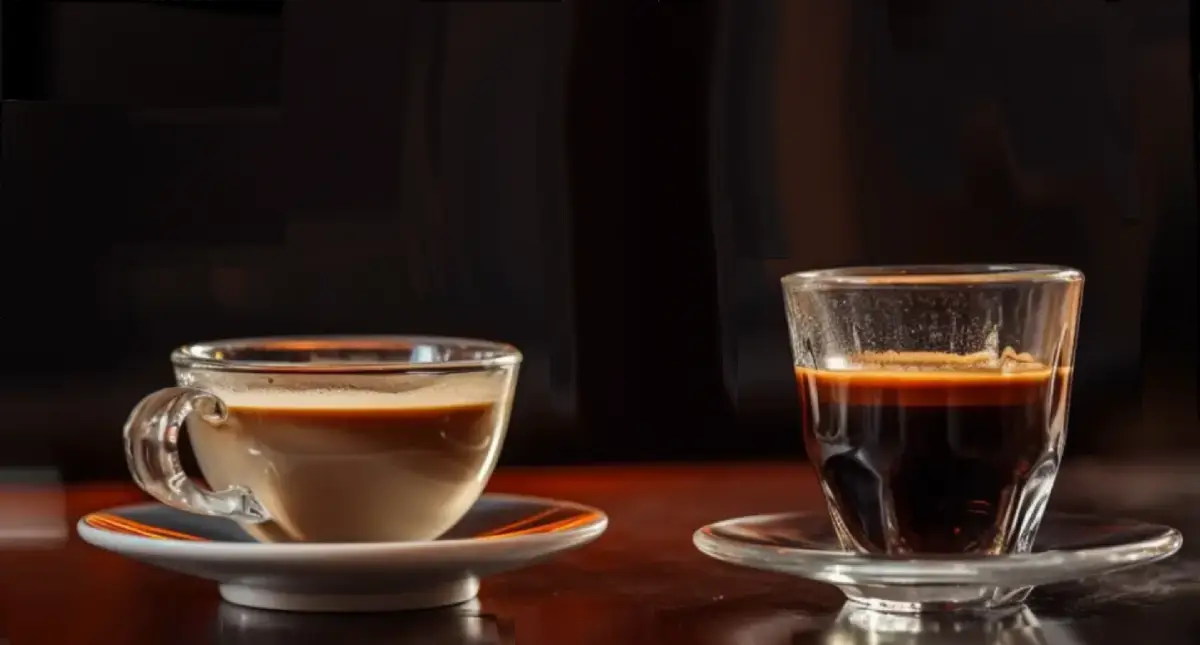
Ristretto vs espresso is one of those coffee-shop questions that sounds simple until you try to answer it.
- Key Takeaways
- Ristretto vs Espresso at a Glance
- What Is Espresso?
- What Is a Ristretto?
- Ristretto vs Espresso: The Key Differences Explained
- How to Make a Ristretto at Home
- Which Should You Choose? Pros, Cons and Real-World Use
- Ristretto vs Espresso FAQs
- What is the difference between ristretto and espresso?
- Is ristretto stronger than espresso?
- Does ristretto have more caffeine than espresso?
- Is ristretto less bitter than espresso?
- How many ml is a ristretto?
- What is a ristretto shot at Starbucks?
- Can I make a ristretto without an espresso machine?
- Is a ristretto good for a flat white?
- Final Verdict: Ristretto or Espresso?
- What to Read Next
The short answer: a ristretto is a “restricted” espresso, pulled with the same dose of coffee but roughly half the water. The result is a smaller, sweeter, more syrupy shot.
This guide breaks down exactly how the two differ in taste, ratio, timing, crema and caffeine, how to make each at home, and which one suits your cup.
Both come from the same beans, the same machine and the same 9 bar of pressure, so why do they taste so different?
Quick Answer: A ristretto is a shorter, more concentrated espresso. It uses the same amount of ground coffee but about half the water (roughly a 1:1 to 1:1.5 brew ratio, versus 1:2 for a standard espresso), and it finishes sooner. That tighter extraction tastes sweeter, heavier and less bitter than espresso, which is longer, more balanced and slightly brighter.
Key Takeaways
- Same coffee, less water: a ristretto uses the same dose as espresso but roughly 1:1 to 1:1.5 yield instead of 1:2.
- Taste: ristretto is sweeter, thicker and less bitter; espresso is more balanced, with more acidity and a longer finish.
- Volume: a ristretto is about 15 to 25 ml; a standard espresso is about 30 to 40 ml.
- Caffeine: the difference per shot is small, so don’t pick one for the buzz.
- Best for beginners: standard espresso is more forgiving. Ristretto rewards a good grinder and fresh beans.
- Best in milk: ristretto cuts through milk well and is popular in flat whites and other small milk drinks.
- Nespresso owners: the Original line has a dedicated Ristretto capsule (25 ml) alongside Espresso (40 ml).
Ristretto vs Espresso at a Glance
The figures below assume a typical 18 g dose in a double basket. Exact numbers shift with your beans, roast and machine, so treat them as starting points.
| Ristretto | Espresso | |
|---|---|---|
| Brew ratio (dose : yield) | 1:1 to 1:1.5 | 1:2 (up to 1:2.5) |
| Yield from 18 g dose | 18 to 27 g | 36 to 45 g |
| Typical single-shot volume | 15 to 25 ml | 30 to 40 ml |
| Extraction time | 15 to 22 seconds | 25 to 30 seconds |
| Grind size | Fine to slightly finer | Fine |
| Taste | Sweet, syrupy, intense, low bitterness | Balanced, brighter, longer finish |
| Body | Heavy, thick | Medium to full |
| Acidity | Softer | More noticeable |
| Crema | Thick, dark, can be thinner in volume | Golden-brown, more volume |
| Best for | Sweet-tooth sippers, small milk drinks | All-rounders, Americanos, most espresso drinks |
| Difficulty | Harder to dial in | More forgiving |
What Is Espresso?
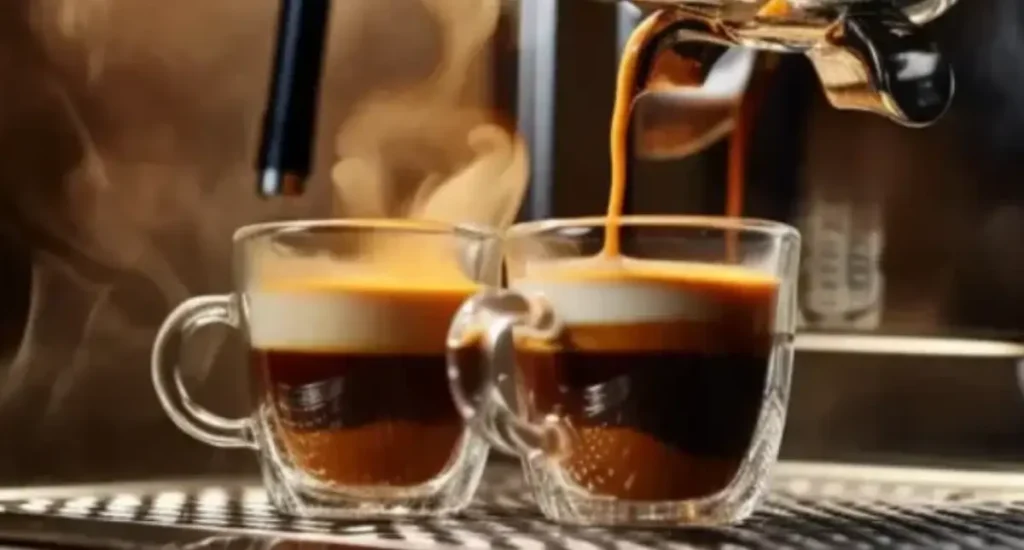
Espresso is a concentrated coffee made by forcing hot water, at around 9 bar of pressure, through finely ground coffee in roughly 25 to 30 seconds. A standard shot uses a 1:2 ratio, so 18 g of coffee produces about 36 g of liquid. It is topped with crema, the golden-brown foam that forms when pressurised water emulsifies the coffee’s oils.
Espresso is both a drink and a method. You can sip it straight, stretch it into an Americano, or use it as the base for a latte, cappuccino or flat white. That flexibility is why it became the foundation of café coffee worldwide.
How Espresso Tastes
A well-pulled espresso balances sweetness, acidity and bitterness. You should taste the roast and the origin of the beans, with a lingering finish. Pull it too fast and it turns sour and thin; pull it too slow and it turns harsh and bitter. The 1:2 ratio is popular because it sits in the middle of that range.
☕ Frothy Fusion Tip: Preheat your cup and portafilter before pulling any shot. A cold cup can drop the temperature of a small shot quickly and dull its sweetness.
What Is a Ristretto?
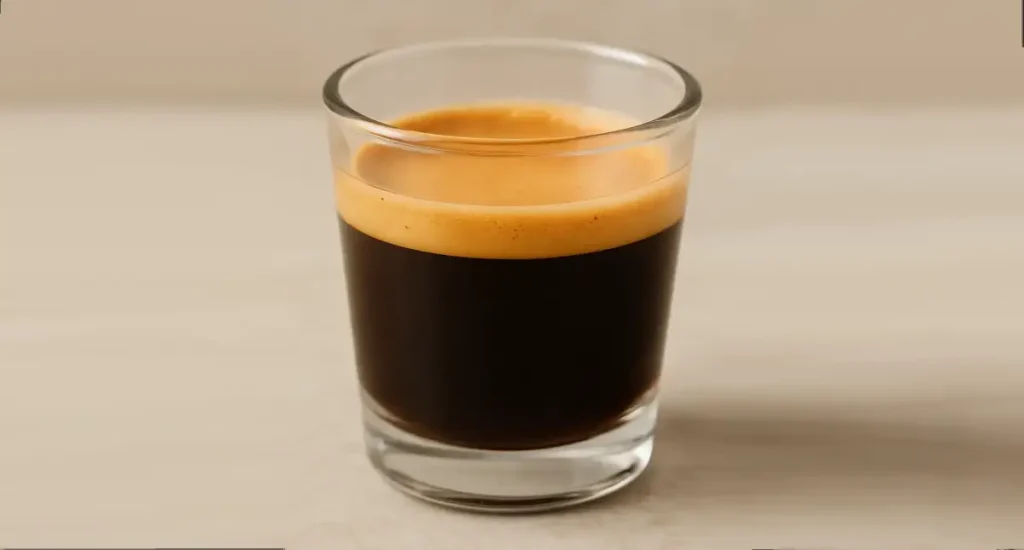
A ristretto is an espresso shot pulled with the same amount of coffee but about half the water, so the yield is roughly 1:1 to 1:1.5. The word is Italian for “restricted” or “limited”, which describes the shot well: the extraction is cut short, leaving a small, dense, concentrated drink of around 15 to 25 ml.
Because the water spends less time in contact with the coffee, the shot is made mostly of the early, sweeter compounds. Many of the later, more bitter and astringent flavours never reach the cup. That is the whole idea behind the ristretto.
How a Ristretto Tastes
Expect a heavier, syrupy texture and a sweeter, rounder flavour with chocolate or caramel notes, depending on the beans. Acidity is more muted than in espresso and the finish is shorter. It is intense but not harsh, which is why people who find espresso too bitter often enjoy it.
Where Does the Ristretto Come From?
The ristretto grew out of Italian espresso culture, where baristas adjust the shot to suit the beans and the drink. It is not a separate type of coffee or a different roast. It is the same espresso technique with a shorter pull.
Quick definition: A ristretto is a short espresso made with less water, giving a sweeter, thicker and less bitter shot.
Ristretto vs Espresso: The Key Differences Explained
The two shots share a machine, a dose and a method. Five things set them apart: how much water they use, how long they run, how they taste, how the crema looks and how much caffeine ends up in the cup.
1. Water and Brew Ratio
This is the defining difference. A ristretto stops the shot early, at about a 1:1 to 1:1.5 ratio. A standard espresso runs to 1:2. With an 18 g dose, that is roughly 18 to 27 g of liquid versus 36 g. Some cafés and roasters pull espresso longer, up to 1:2.5, which widens the gap further.
2. Extraction Time and Grind
A ristretto is not simply an espresso you stop early. Stopping a normal shot at half volume tends to taste sour and thin, because the flow was fast. To get a proper ristretto, most baristas grind a little finer so the water flows slowly and extracts enough sweetness in a short time. A finer grind is why a ristretto often finishes in around 15 to 22 seconds, while a standard espresso takes 25 to 30.
3. Taste and Mouthfeel
Espresso tastes balanced: sweetness, acidity and a touch of bitterness together. Ristretto leans sweet and heavy, with muted acidity and little bitterness. If you describe espresso as “bright” or “bold”, you will probably describe a ristretto as “rich” or “syrupy”.
4. Crema
Both shots should be topped with crema. A ristretto’s crema is often darker and denser, though there is less liquid underneath it, so the overall volume looks smaller. Fresh beans and a good grinder matter more than the shot style when it comes to crema.
5. Caffeine
The difference in caffeine per shot is small. A ristretto uses the same dose of coffee but extracts less of it, so it may contain slightly less caffeine than a full espresso, though exact figures vary by beans, dose and machine. A single espresso is commonly cited at around 60 to 75 mg of caffeine. If caffeine is your priority, the number of shots matters far more than the style.
Ristretto vs Espresso vs Lungo
The three shots sit on a spectrum, with the same coffee dose and different amounts of water:
| Shot | Typical ratio | Typical volume | Taste |
|---|---|---|---|
| Ristretto | 1:1 to 1:1.5 | 15 to 25 ml | Sweet, thick, intense |
| Espresso | 1:2 | 30 to 40 ml | Balanced, classic |
| Lungo | 1:3 or more | 60 to 110 ml | Lighter, more bitter |
How to Make a Ristretto at Home
You can pull a ristretto on any espresso machine that lets you control the shot, whether it is a manual lever, a semi-automatic or a machine with programmable volume. You will also need a grinder that can go fine and make small adjustments, and a scale. These steps assume an 18 g double basket.
- Start with fresh beans. Use beans roasted within the last 2 to 4 weeks. Medium roasts are the easiest place to start, and many people find that darker roasts taste even more chocolatey as ristretto.
- Weigh your dose. Grind 18 g of coffee. Weighing each time is the single best habit for consistent shots.
- Grind slightly finer than your espresso setting. Move your grinder one or two steps finer. This slows the flow so a short shot can still extract sweetness.
- Distribute and tamp evenly. Level the grounds, then tamp firmly and flat. Uneven tamping causes channelling, which ruins a short shot quickly.
- Preheat and place your cup on a scale. A warm cup and a scale under it let you stop at the right weight.
- Start the shot and stop at about 1:1 to 1:1.5. For 18 g in, aim for 18 to 27 g out in about 15 to 22 seconds. Stop the shot when the scale reaches your target, not when the clock does.
- Taste and adjust. Sour and thin means grind finer or run slightly longer. Harsh and bitter means grind a touch coarser or stop sooner.
☕ Frothy Fusion Tip: Change only one variable at a time. If you alter the grind, dose and yield together, you will not know which change fixed the taste.
Using a Nespresso or pod machine? You do not need to grind anything. See the Nespresso section below for the capsule version.
Which Should You Choose? Pros, Cons and Real-World Use
Ristretto: Pros and Cons
Pros
- ✔ Sweeter and less bitter than espresso
- ✔ Thick, syrupy mouthfeel
- ✔ Holds its flavour in milk drinks
- ✔ Uses less water, so it is quick to drink
Cons
- ✘ Harder to dial in, and less forgiving of stale beans or poor grinding
- ✘ Muted acidity can hide the interesting fruity notes in light roasts
- ✘ Tiny serving, so it is gone in a sip or two
Espresso: Pros and Cons
Pros
- ✔ Balanced flavour that shows off the beans
- ✔ More forgiving to dial in
- ✔ Works in every espresso-based drink, including Americanos and long macchiatos
Cons
- ✘ Can taste sharp or bitter if over-extracted
- ✘ Less intense sweetness than a ristretto
Who Each Shot Is Best For
- Choose ristretto if you like strong, sweet, low-bitterness coffee, drink small milk drinks, or want a richer base for a flat white.
- Choose espresso if you are new to espresso, enjoy a balanced cup, or make Americanos and larger milk drinks.
- Not sure? Pull both from the same beans and taste them side by side. It is the quickest way to learn your preference.
Common Mistakes to Avoid
Avoid
❌ Stopping a normal espresso early and calling it a ristretto. Without a finer grind, it will taste sour.
❌ Using stale beans. A short shot has nowhere to hide flat flavours.
❌ Skipping the scale. Guessing the yield makes ristretto impossible to repeat.
❌ Ignoring cleaning. Old oils make short shots taste dull and bitter.
Ristretto in Milk Drinks
A ristretto’s concentrated sweetness stands up well to milk, so some cafés use it in flat whites, small lattes and cortados. Ask your barista which shot style they use by default. If you make drinks at home and find your flat white tastes watery, switching to a ristretto base is one of the easiest upgrades to try.
Ristretto vs Espresso on Nespresso Machines
If you own a Nespresso Original machine, the capsule range includes both a Ristretto capsule, programmed for roughly 25 ml, and an Espresso capsule, programmed for roughly 40 ml.
Pod machines control the grind and dose for you, so the difference comes mainly from blend and volume. The capsule shot will be easier than a manual ristretto, but it will not have the same level of control. Check your machine’s manual for exact cup sizes, as they vary by model and line.
Disclosure: This guide is based on widely used barista ratios and published brewing guidance rather than lab testing. Your results will vary with your beans, grinder and machine.
Ristretto vs Espresso FAQs
What is the difference between ristretto and espresso?
A ristretto uses the same dose of coffee as an espresso but about half the water, usually a 1:1 to 1:1.5 ratio compared with 1:2. It is shorter, sweeter and thicker, with less bitterness and softer acidity. Espresso is longer, more balanced and slightly brighter.
Is ristretto stronger than espresso?
A ristretto tastes stronger because it is more concentrated, but it does not necessarily contain more caffeine. Caffeine depends on dose, bean type and total extraction, and a ristretto may contain slightly less than a full shot. “Strong” here describes flavour intensity, not caffeine.
Does ristretto have more caffeine than espresso?
Not usually. With the same coffee dose, a ristretto stops extracting earlier, so slightly less caffeine reaches the cup. The difference is small and varies by beans and technique. If you want more caffeine, a double shot of either style does more than switching from one to the other.
Is ristretto less bitter than espresso?
Yes, in most cases. The short extraction captures the sweeter early compounds and leaves most of the bitter, astringent ones behind. A well-made ristretto tastes rounder and sweeter. A badly made one, with a coarse grind or fast flow, can taste sour instead.
How many ml is a ristretto?
A single ristretto is typically 15 to 25 ml, and a double is around 30 to 45 ml depending on dose. Nespresso’s Original Ristretto capsule is programmed for about 25 ml. A standard single espresso is closer to 30 to 40 ml.
What is a ristretto shot at Starbucks?
Starbucks lists ristretto shots as an option on many espresso drinks. They use the same coffee but a shorter pull, which makes the drink taste sweeter and less bitter. Menus and options vary by country, so check the app or ask your barista.
Can I make a ristretto without an espresso machine?
Not a true one. A ristretto needs pressure and fine grinding, so it is hard to match with a moka pot, AeroPress or French press. A moka pot or AeroPress can give you a strong, concentrated coffee, but it will not be a ristretto.
Is a ristretto good for a flat white?
Many people think so. The concentrated, sweet shot holds its flavour against steamed milk and avoids the sharpness that can come through in a longer shot. It is a matter of taste, so try both and see which you prefer.
Final Verdict: Ristretto or Espresso?
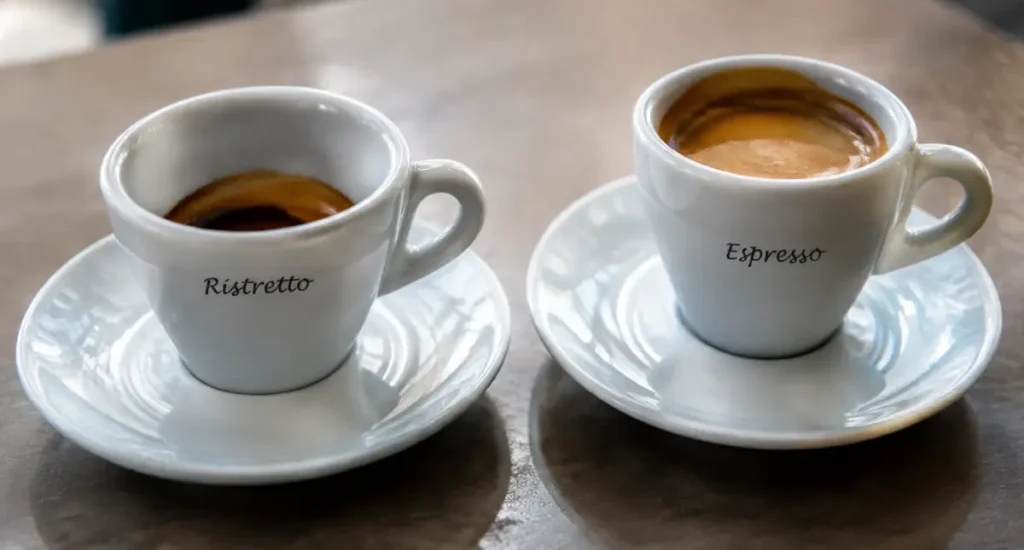
Choose espresso if you want a balanced, versatile shot that works in every drink and is easier to get right. Choose ristretto if you love a sweet, syrupy, low-bitterness shot and are happy to invest in fresh beans and a decent grinder. Neither is better.
They are two points on the same spectrum, and the best one is the one you enjoy drinking.
- Ristretto is for: sweet-tooth sippers, flat white fans and anyone who finds espresso too bitter.
- Ristretto is not for: beginners still learning to dial in, or anyone who wants a long, bright, fruity cup.
- Best alternatives: a standard espresso for balance, a lungo for a longer lighter drink, or a cortado for a smoother milk drink.
The best next step is simple: pull one of each from the same beans, taste them side by side and adjust from there.
What to Read Next
- Compare milk drinks in our guide to Latte vs Flat White
- Learn the right dose and yield in our Espresso Ratios guide
- Explore a longer shot in What Is a Lungo?
- Improve your puck prep in our guide to How to Tamp Espresso
☕ Just a heads up—this Ristretto vs Espresso post contains affiliate links. If you buy through them, Frothy Fusion may earn a small commission (at no cost to you). Thanks for supporting our coffee-fueled content!