Love the clean, nuanced flavor of pour over coffee but not sure how to nail it at home? Don’t worry — you don’t need to be a pro barista or have fancy café gear to brew an incredible cup.
- 🛠️ What You’ll Need to learn How to Make Pour Over Coffee
- 📏 Recommended Coffee-to-Water Ratio
- ☕ Step-by-Step: How to Make Pour Over Coffee
- ⚖️ Pro Tips for Barista-Level Pour Over
- 🧰 Recommended Gear for Pour Over Perfection
- 🙌 Why Pour Over Coffee Is Worth It
- ❓FAQs on How to Make Pour Over Coffee
- You May Also Like
Let’s learn how to make pour over coffee like a Barista
With the right tools, a few easy steps, and a bit of technique, you’ll be sipping rich, balanced coffee in no time.
Let’s walk through everything you need to know on how to make pour over coffee like a barista — from gear to grind size to the perfect pour.
🛠️ What You’ll Need to learn How to Make Pour Over Coffee
Here’s what you’ll need to brew pour over coffee at home:
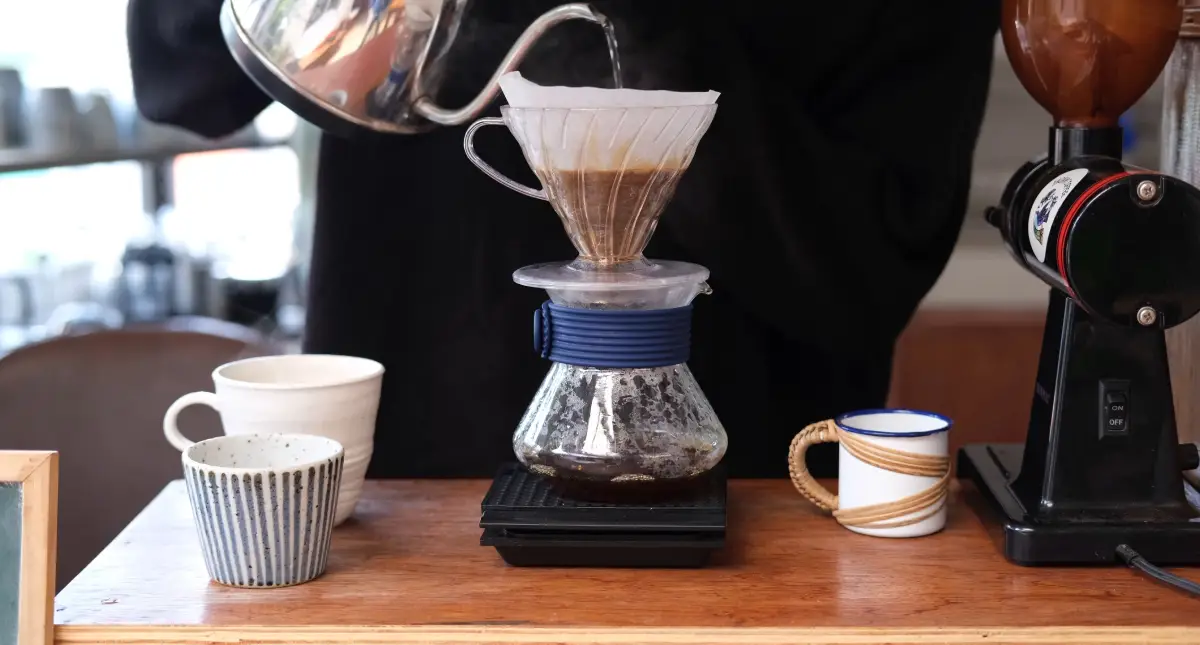
- Pour Over Brewer – Hario V60, Chemex, or Kalita Wave are popular choices.
- Coffee Grinder – A burr grinder gives you even, consistent results.
- Gooseneck Kettle – For a slow, controlled pour.
- Coffee Scale – Essential for measuring your grounds and water accurately.
- Paper Filter – Specific to your brewer style.
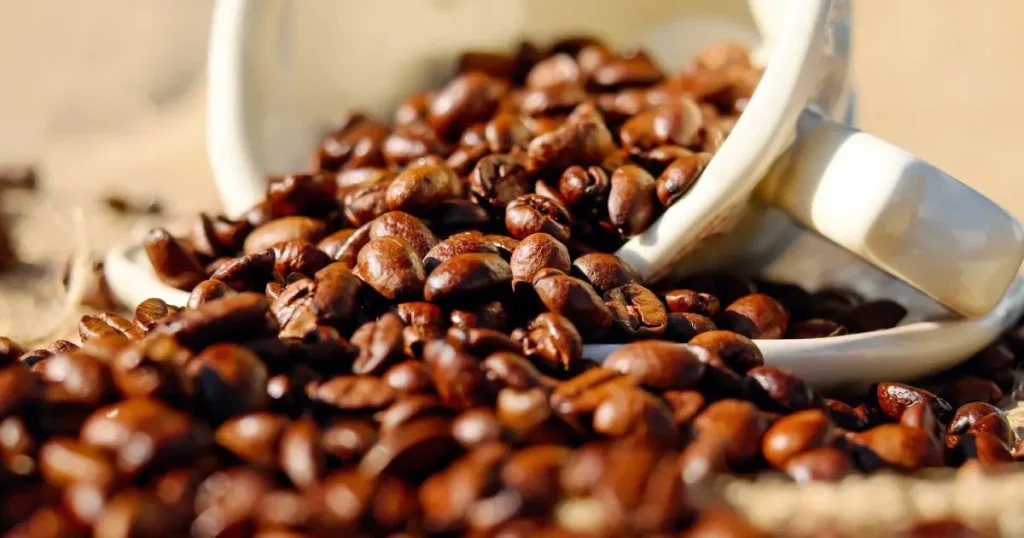
- Fresh Coffee Beans – Medium roast single-origin beans work beautifully.
- Timer – Your phone works just fine!
📏 Recommended Coffee-to-Water Ratio
Baristas typically use a 1:15 to 1:17 ratio of coffee to water. A common starting point is:
- 20g coffee : 300g water
Use a scale for accuracy — it’s the secret to repeatable results.
☕ Step-by-Step: How to Make Pour Over Coffee
Follow these easy steps to brew a flavorful, balanced cup:
1. Heat Your Water
Bring your water to around 195–205°F (90–96°C) — just off the boil. Use filtered water if possible.
2. Grind Your Coffee
Grind your beans medium-fine, like table salt. Too coarse and your brew will be weak; too fine and it’ll be bitter or over-extracted.
3. Prep Your Filter & Brewer
Place the filter in your brewer and rinse with hot water to remove any paper taste and preheat the brewer. Discard rinse water.
4. Add Ground Coffee
Place the brewer on your scale, add your freshly ground coffee, and tare the scale to zero.
5. Bloom (First Pour)
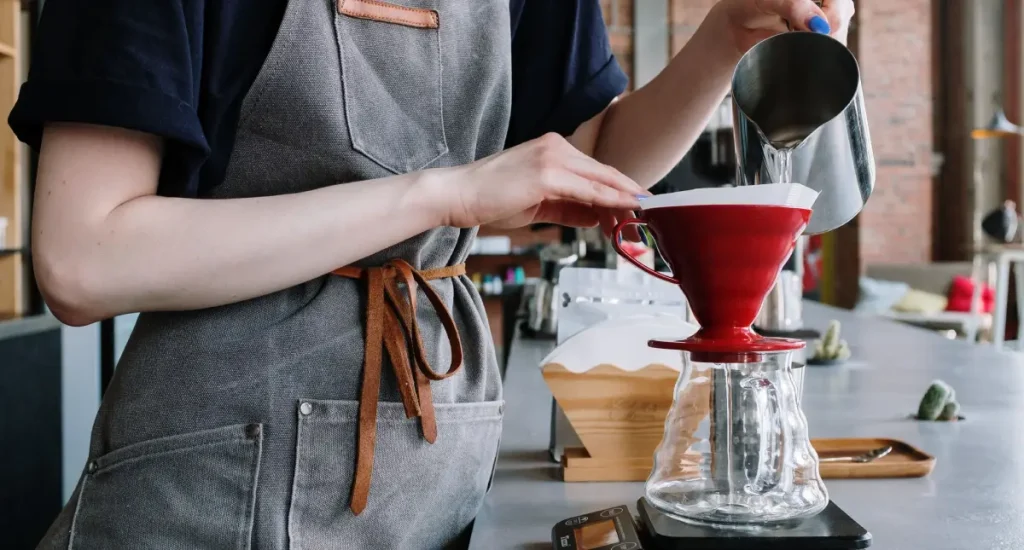
Start your timer. Pour twice the weight of water to coffee (e.g., 40g if using 20g of coffee). Let it bloom for 30–45 seconds. This allows gases to escape for a cleaner cup.
6. Pour Slowly in Circles
In 3–4 stages, pour in a spiral motion, avoiding the edges. Let water draw down slightly between pours. Aim to finish pouring by the 2:30–3:00 mark.
7. Let It Finish Dripping
Allow the last water to drip through completely. The whole brew should take around 3–4 minutes total.
8. Enjoy!
Remove the brewer, swirl your coffee, and taste. That’s it — you just brewed like a barista!
👉 Do You Have Coffee Brewing Problems
⚖️ Pro Tips for Barista-Level Pour Over
- Use a gooseneck kettle: It’s a game-changer for control.
- Time and weigh everything: Consistency is key to better results.
- Experiment with grind and flow rate: If it tastes too sour, try a finer grind; if bitter, go coarser.
- Try blooming longer for fresher beans: More gas = longer bloom time.
🧰 Recommended Gear for Pour Over Perfection
| Product | Description |
|---|---|
| Hario V60 (02 Size) | A favorite among baristas for its precision and clarity. |
| Fellow Stagg Kettle | Sleek, accurate, and ideal for pour over control. |
| Timemore Chestnut C2 Grinder | Affordable hand grinder with consistent burrs. |
| Brewista Smart Scale II | Measures weight and time in one handy device. |
| Chemex 6-Cup Classic | Elegant and perfect for making coffee for two. |
🙌 Why Pour Over Coffee Is Worth It
- Clean, vibrant flavor – You taste more of the bean’s natural character.
- No bitterness or muddiness – If done right, it’s incredibly smooth.
- Customizable and meditative – It’s a calming ritual that’s easy to tweak.
→ How Coffee Grind Size Affects Flavor
❓FAQs on How to Make Pour Over Coffee
What grind size is best for pour over coffee?
A medium-fine grind, like table salt, usually works well. You may need to adjust slightly based on your specific brewer.
Do I need a gooseneck kettle?
It’s highly recommended! It gives you much better control over the pour speed and pattern.
Can I make pour over without a scale?
Yes, but a scale helps a lot with consistency. If you’re measuring by volume, use about 3 tablespoons of coffee to 10 oz of water.
Why does my pour over taste sour or bitter?
Sour usually means under-extracted (grind too coarse or brew too fast). Bitter means over-extracted (grind too fine or brew too slow).
You May Also Like
- French Press Brewing – How to Brew French Press Coffee Perfectly
- Aeropress Brewing Guide – How to Make AeroPress Coffee (Step-by-Step)
- Best Coffee Beans – Best Coffee Beans for Espresso & More
☕ Just a heads up—this how to make pour over coffee post contains affiliate links. If you buy through them, Frothy Fusion may earn a small commission (at no cost to you). Thanks for supporting our coffee-fueled content!