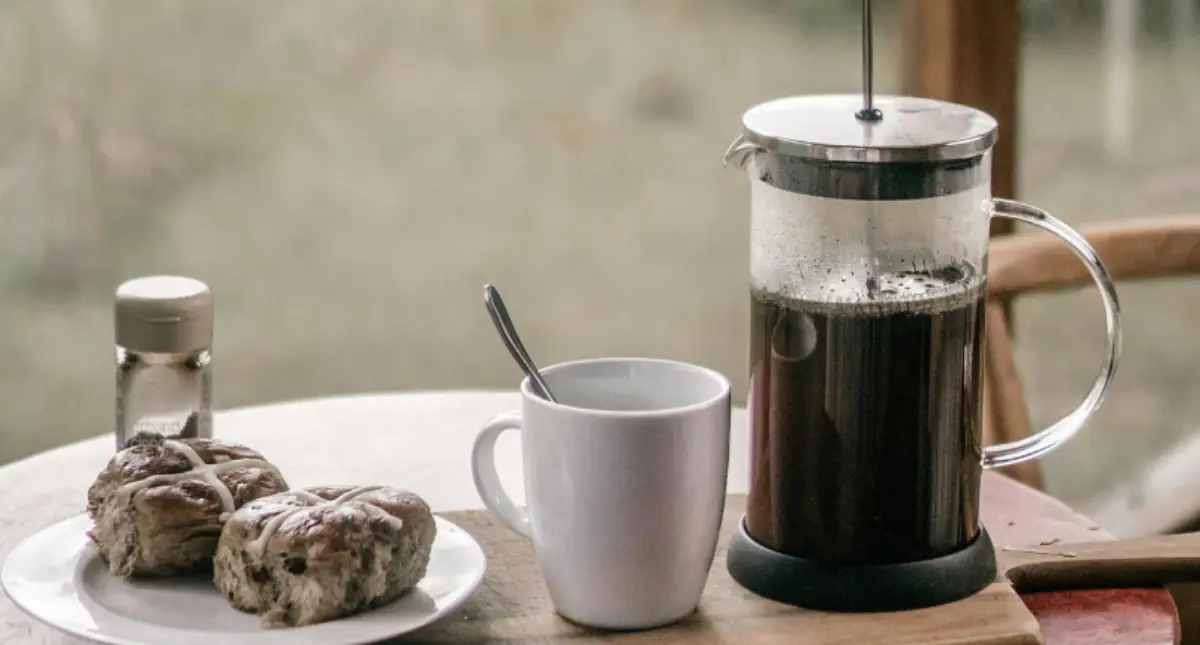
How To Brew French Press Coffee perfectly involves using a simple immersion-brewing method that produces a rich, full-bodied cup using coarse coffee grounds, hot water and a few minutes of steeping.
- What You’ll Need
- French Press Brew Ratio
- What Grind Size Is Best for French Press?
- What Water Temperature Should You Use?
- French Press Recipe at a Glance
- How to Brew French Press Coffee
- French Press Troubleshooting
- How to Clean a French Press
- French Press Tips for Better Coffee
- Recommended French Press Coffee Makers
- Can You Make Cold Brew in a French Press?
- 🙋♀️ Frequently Asked Questions
- How much coffee do I use for French press?
- What grind size is best for French press coffee?
- How long should French Press coffee steep ?
- What temperature should French Press water be?
- Can I use boiling water in a French press?
- Why is my French press coffee bitter or gritty?
- Do I need to stir French press coffee before steeping?
- Can I make cold brew in a French press?
- ☕ You May Also Like
If you’re after a rich, bold, and full-bodied cup of coffee, the French press is ideal. It’s simple, satisfying, and doesn’t need any paper filters or fancy gadgets. Just hot water, fresh coffee, and a few minutes of your time.
Whether you’re brand new to French press brewing or just want to perfect your morning cup, this guide has you covered.
What You’ll Need
Before you start, make sure you’ve got:
- A French press (8-cup or 4-cup size depending on servings) Its metal mesh filter lets natural oils and fine particles through, which is what gives French press coffee its full body and rich flavor
- Freshly Whole Coffee Beans: (medium-dark roast works beautifully) Coffee starts losing aroma and flavor within days of grinding. Using whole beans and grinding just before brewing keeps things fresh
- Burr Grinder: Produces a more consistent coarse grind, helping extraction remain more even. –> Discover the best burr grinders
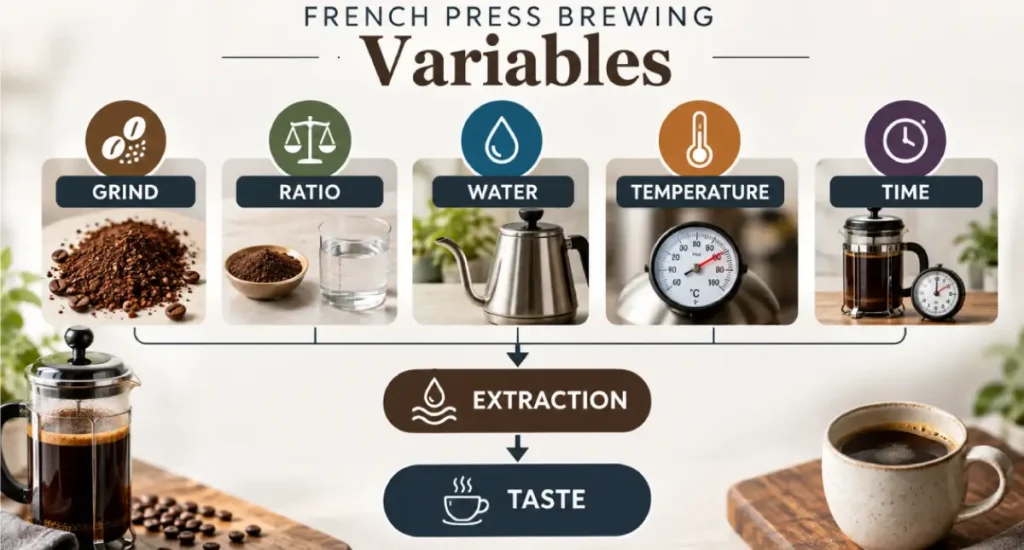
- Hot water: Water that’s too cool under-extracts the coffee (weak, sour taste), while boiling water can scorch it (bitter taste). The ideal range is just off the boil, around 195–205°F (90–96°C).
- Stirring spoon or paddle: Used to stir the grounds and water together right after pouring, ensuring even saturation, and later to break up the crust that forms on top before pressing down the plunger
- Timer: Steep time is one of the biggest factors in flavor. Too short and the coffee is weak/sour; too long and it turns bitter. A timer keeps your brew consistent every time (typically around 4 minutes)
- Digital scale: Coffee-to-water ratio matters a lot for taste consistency. A scale lets you measure precisely (e.g., 1:15 ratio) rather than eyeballing scoops, so you get the same quality cup every time. –> What are the Best Coffee Scales
- Your favorite coffee mug
French Press Brew Ratio
Starting ratio
1:15 coffee-to-water
| Water | Coffee |
|---|---|
| 350 ml | 24 g |
| 500 ml | 33 g |
| 1 litre | 66 g |
A 1:15 ratio is a useful starting point, but you can adjust the amount of coffee to suit your preferred strength.
What Grind Size Is Best for French Press?
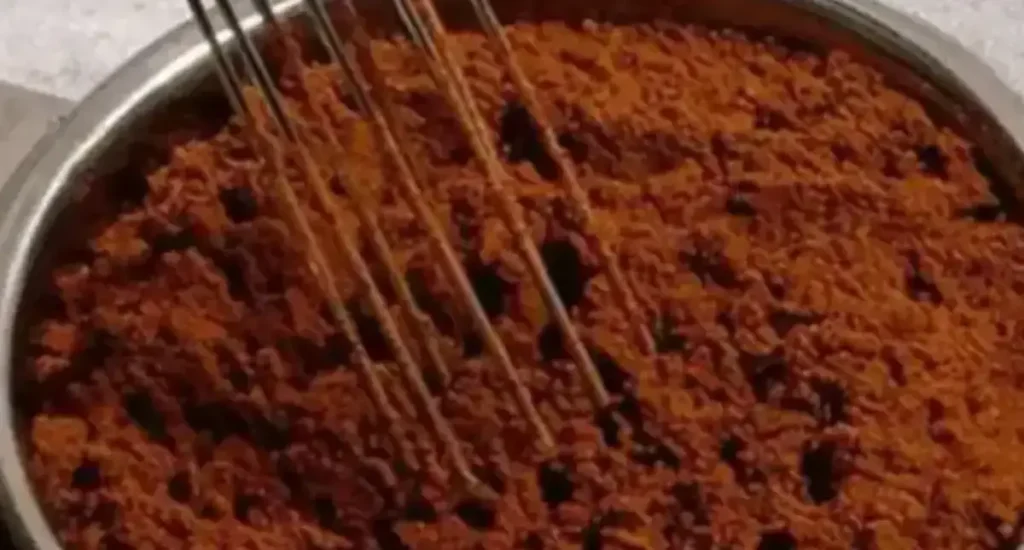
Coarse Grind is the target for French press. Because the grounds sit steeping directly in the water for several minutes (rather than having water quickly pass through them like in a drip machine), you need a coffee grind size that resists over-extraction and doesn’t slip through the mesh filter.
Sea-Salt-Like Texture is the go-to visual/tactile benchmark. If you rub the grounds between your fingers, they should feel gritty and chunky — similar to coarse sea salt or breadcrumbs — rather than powdery like table salt or flour.
This texture gives water enough surface area to extract flavor without extracting too much too fast.
Consistency matters just as much as the size itself. You want as many grounds as possible to be roughly the same size. A burr grinder is essential here because it shears beans uniformly, while a blade grinder chops erratically, leaving a mix of fine dust and large chunks in the same batch — which causes uneven extraction (some grounds over-extracted, some under-extracted) no matter what “average” size you’re aiming for.
Why Too Fine Creates Excessive Sediment and Resistance:
- Sediment: The French press’s mesh filter is designed to catch coarse particles, not fine ones. Grounds that are too fine slip through the mesh, ending up as gritty sediment at the bottom of your cup.
- Resistance: Fine grounds pack together densely and clog the mesh filter, making the plunger hard to push down. This can also cause the fine particles to be forced through the filter rather than staying trapped, adding to the sediment problem.
- Fine grounds also have more surface area exposed to water, so they extract faster and more intensely — often leading to a bitter, over-extracted cup during the (comparatively long) 4-minute steep time.
Why Too Coarse Can Produce Weaker Extraction:
- Larger grounds have less surface area in contact with the water, so less flavor and fewer soluble compounds get extracted in the same amount of time.
- The result is often a thin, weak, watery, or sour-tasting cup, since the coffee didn’t have enough contact time/surface area to fully develop.
- You could compensate by steeping longer, but that starts to work against the standard 4-minute brewing window and can throw off the rest of your recipe (ratio, timing).
The sweet spot is a grind coarse enough to avoid sediment and resistance, but fine enough to still extract fully within a normal steep time — sea-salt-like and evenly sized being the key markers to check for.
👉 Best Coffee Grinders for French Press
👉 How Coffee Grind Size Affects Flavor
What Water Temperature Should You Use?
Target:
195–205°F / 90–96°C
Freshly boiled water can be allowed to cool briefly before brewing.
Bring water to a boil, then let it cool slightly (aim for 195–205°F / 90–96°C). This keeps your coffee from tasting burnt or bitter.
FAQ
Can I use boiling water in a French press?
Let boiling water cool for 30–45 seconds before pouring. Aim for around 200°F (93°C) to avoid scalding the coffee and creating bitterness.
French Press Recipe at a Glance
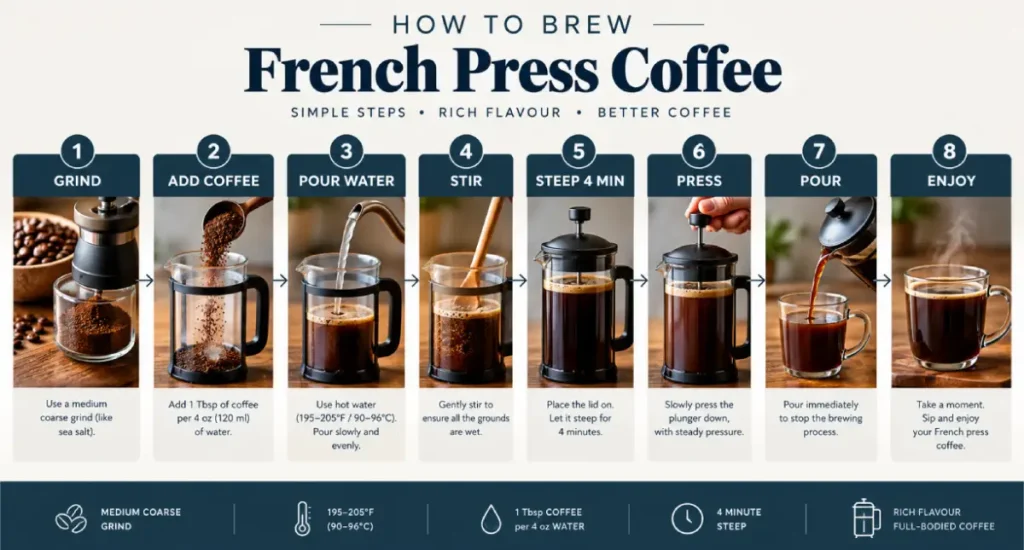
How to Brew French Press Coffee
Step 1 — Preheat the French Press
Bring hot water into the empty press, swirl, discard.
Step 2 — Grind Your Coffee
Coarse and consistent.
Step 3 — Add the Coffee
Use your chosen ratio.
Step 4 — Add Hot Water
Fully saturate the grounds.
Step 5 — Stir Gently
Ensure the grounds are evenly wet.
Step 6 — Steep for 4 Minutes
Plunger remains raised.
Step 7 — Press Slowly
Gentle, steady pressure.
Step 8 — Pour Immediately
Don’t leave the finished coffee sitting on the grounds.
French Press Troubleshooting
| Problem | Possible Cause | First Adjustment |
|---|---|---|
| Bitter coffee | Over-extraction — too much steep time, too fine a grind, or water too hot | Shorten brew time (try 3–3.5 min), use a coarser grind, or let water cool slightly (195–205°F) |
| Weak/Watery coffee | Under-extraction or too little coffee relative to water | Grind slightly finer, increase coffee-to-water ratio, or extend steep time |
| Sour coffee | Under-extraction — often from cool water, too coarse a grind, or too short a steep | Grind slightly finer, extend brew time, or check water temp isn’t too low |
| Gritty coffee | Grind too fine, inconsistent grind, or worn/damaged mesh filter | Use a coarser and more consistent grind (check burr grinder settings); inspect filter for damage |
| Plunger is hard to press | Grind too fine, clogging the mesh | Use a coarser grind; avoid pressing too forcefully |
| Coffee turns bitter in the press | Continued extraction from grounds sitting in contact with brewed coffee | Decant immediately into a separate carafe or cups after pressing |
| Flat or dull flavor | Stale beans or old grind sitting too long before brewing | Use freshly roasted beans, grind right before brewing |
| Inconsistent results between brews | Eyeballing measurements instead of using a scale/timer | Use a digital scale for coffee-to-water ratio and a timer for steep time |
👉 Learn more on Coffee Brewing Fundamentals
👉 Why Your Coffee Tastes Bitter
How to Clean a French Press
- Empty the grounds. (use a spoon or spatula, not your sink).
- Rinse the carafe. (to remove coffee oils and residue).
- Wash the plunger and filter.
- Use mild dish soap when needed.
- Dry thoroughly.
French Press Tips for Better Coffee
- Use fresh beans.
- Grind immediately before brewing.
- Preheat the press.
- Use good-quality/filtered water.
- Fully saturate the grounds.
- Don’t over-stir.
- Decant immediately.
- Adjust one variable at a time.
👉 Espresso vs French Press vs Pour Over
Recommended French Press Coffee Makers
Looking for the perfect press? Here are a few top picks we love for their quality, durability, and brew results:
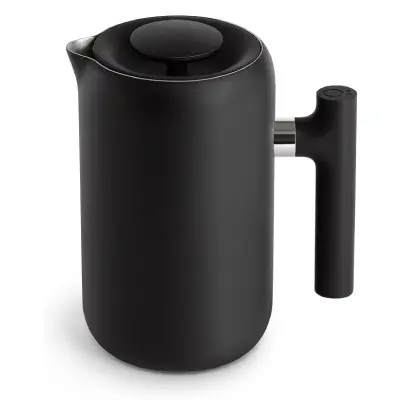
Fellow Clara French Press
This minimalist, insulated press is made for both form and function. It retains heat incredibly well and has a non-stick interior that’s easy to clean. Perfect for design lovers who want café-quality results.
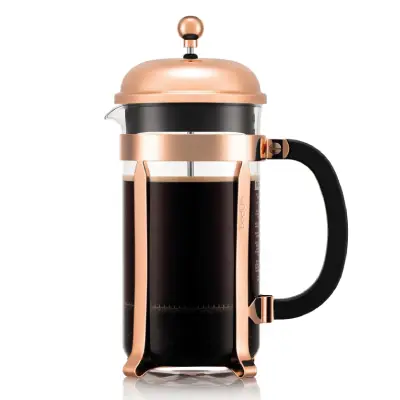
Bodum Chambord French Press
This iconic design has stood the test of time. Great for beginners or anyone who wants a classic French press experience without breaking the bank.
Want to compare more options? See our guide to the Best French Press Coffee Makers.
Can You Make Cold Brew in a French Press?
Yes. A French Press can be used to make cold brew because its coarse filter makes it easy to separate the grounds after a long cold-water steep.
Read our full guide → How to Make Cold Brew in a French Press
🙋♀️ Frequently Asked Questions
How much coffee do I use for French press?
A good rule of thumb is to use a 1:15 coffee-to-water ratio. That’s about 1 gram of coffee for every 15 grams (or ml) of water—so for a 350 ml cup, use around 23 grams (about 3–4 tablespoons) of coarse ground coffee.
What grind size is best for French press coffee?
Use a coarse grind, similar to sea salt. This prevents over-extraction and keeps grounds from slipping through the metal mesh filter.
How long should French Press coffee steep ?
The ideal steep time is 4 minutes. This gives the coffee enough time to fully extract flavor without becoming bitter.
What temperature should French Press water be?
Water that’s too cool under-extracts the coffee (weak, sour taste), while boiling water can scorch it (bitter taste). The ideal range is just off the boil, around 195–205°F (90–96°C)
Can I use boiling water in a French press?
Let boiling water cool for 30–45 seconds before pouring. Aim for around 200°F (93°C) to avoid scalding the coffee and creating bitterness.
Why is my French press coffee bitter or gritty?
Common causes include:
Water that’s too hot
Steeping too long
Grind that’s too fine
Dirty mesh filter
Try adjusting one variable at a time to improve your brew!
Do I need to stir French press coffee before steeping?
Yes, give the coffee a quick stir after adding water to ensure all grounds are saturated and extraction is even.
Can I make cold brew in a French press?
Absolutely! Use coarse grounds and cold water, then let it steep in the fridge for 12–16 hours. Press and enjoy over ice.
☕ You May Also Like
- Best French Press Coffee Makers
- French Press vs AeroPress: Which One Is Right for You?
- How to Make Cold Brew in a French Press
☕ Just a heads up—this post contains affiliate links. If you buy through them, Frothy Fusion may earn a small commission (at no cost to you). Thanks for supporting our coffee-fueled content!