Learning how to drip coffee well comes down to four things: fresh beans, the right grind, a measured coffee-to-water ratio, and hot (not boiling) water.
- Key Takeaways on How To Drip Coffee
- Quick Comparison: Ways to Drip Coffee
- Why Extraction Matters
- Drip Coffee vs Other Brewing Methods
- 1. Fresh Whole Bean Coffee
- 2. A Burr Grinder
- 3. The Right Grind Size
- 4. Good Water
- 5. A Scale, Kettle, and Filters
- The Drip Coffee Ratio: How Much Coffee per Cup?
- Step 1: Start With a Clean Machine and Cold Water
- Step 2: Weigh and Grind the Coffee
- Step 3: Add and Rinse the Paper Filter
- Step 4: Add the Grounds and Level the Bed
- Step 5: Add the Water
- Step 6: Start the Brew Cycle
- Step 7: Stir, Serve, and Store Properly
- Pour-Over Recipe at a Glance
- Step-by-Step Pour-Over
- Automatic Drip vs Pour-Over: Which Should You Use?
- Automatic drip machine
- Manual pour-over
- Troubleshooting Guide: Why Does My Drip Coffee Taste Wrong?
- Practical Tips for Better Drip Coffee
- Cleaning Schedule
- How to Descale in 4 Steps
- How much coffee should I use for drip coffee?
- What grind size is best for drip coffee?
- What is the best water temperature for drip coffee?
- Is drip coffee the same as filter coffee?
- Why does my drip coffee taste bitter?
- How long should drip coffee take to brew?
- Can I use an espresso grind in a drip coffee maker?
- How much caffeine is in drip coffee?
- Best alternatives:
- Your Next Step
Get those four right and even a basic drip coffee maker will brew a clean, balanced cup. Get them wrong and the same machine makes coffee that tastes bitter, sour, or flat.
This guide walks you through both automatic drip machines and manual pour-over, with exact ratios, temperatures, and timings you can use tomorrow morning.
Quick Answer: To drip coffee, use about 1 gram of ground coffee for every 16 grams of water (roughly 2 tablespoons per 6 oz cup).
Grind the beans to a medium texture, add filtered water heated to 90–96°C (195–205°F), and let it filter through a paper-lined brew basket for about 5 to 8 minutes. Serve immediately or move the coffee to an insulated carafe.
Key Takeaways on How To Drip Coffee
- Best ratio to start with: 1:16 coffee to water, then adjust stronger (1:15) or lighter (1:17) to taste.
- Best grind for most drip machines: medium, similar to coarse sand.
- Best water: filtered, just off the boil, 90–96°C (195–205°F).
- Best way to improve fast: weigh your coffee and grind it fresh just before brewing.
- Ideal for beginners: an automatic drip machine with a flat-bottom basket, or a simple cone dripper.
- Biggest mistakes to avoid: stale beans, guessing the scoops, and leaving coffee on a hot plate for an hour.
Quick Comparison: Ways to Drip Coffee
| Method | Best For | Effort | Brew Time | Grind Size | Skill Level |
|---|---|---|---|---|---|
| Automatic drip machine | Busy mornings, brewing for a group | Low | 5–8 minutes | Medium | Beginner |
| Manual pour-over cone (V60 style) | Clean, bright, detailed flavour | High | 2.5–4 minutes | Medium-fine | Intermediate |
| Flat-bottom dripper (Kalita style) | Forgiving, even extraction | Medium | 3–4 minutes | Medium | Beginner to intermediate |
| Batch-brew pour-over carafe (Chemex style) | Sharing 2 to 4 cups with a very clean taste | Medium to high | 4–5 minutes | Medium-coarse | Intermediate |
What Is Drip Coffee and How Does It Work?
Drip coffee is brewed by pouring hot water over ground coffee held in a paper or mesh filter, so the water drips slowly through the grounds and into a carafe below. Gravity does the work.
No pressure is involved, which is why drip coffee tastes lighter and cleaner than espresso. In the UK and Australia it is often called filter coffee.
A drip coffee maker automates the process. A reservoir holds cold water, a heating element warms it, and a tube carries it up to a showerhead that sprinkles it over the grounds. The brewed coffee collects in a glass or thermal carafe.
A manual pour-over does the same job by hand, with you controlling the speed and pattern of each pour.
Why Extraction Matters
Every brewing method is really about extraction: dissolving the flavour compounds in the beans into the water. Too little extraction (under-extracted) tastes sour, thin, and salty. Too much (over-extracted) tastes bitter, harsh, and dry.
The goal of learning how to drip coffee is to land in the middle, where sweetness, acidity, and body are balanced. Four variables control extraction: grind size, water temperature, contact time, and the ratio of coffee to water.
Drip Coffee vs Other Brewing Methods
| Method | How Water Meets Coffee | Taste and Body | Typical Grind |
|---|---|---|---|
| Drip coffee | Water flows through grounds by gravity | Clean, balanced, medium body | Medium |
| Espresso | Hot water forced through grounds at high pressure | Concentrated, syrupy, with crema | Fine |
| French press | Grounds steep in water, then are pressed | Full body, more sediment and oils | Coarse |
| Moka pot | Steam pressure pushes water up through grounds | Strong, rich, between drip and espresso | Medium-fine |
| Cold brew | Grounds steep in cold water for 12–18 hours | Smooth, low acidity | Coarse |
Because the paper filter traps most of the coffee oils and fine particles, drip coffee is the cleanest of the common home methods. That clarity is why many people reach for it every day, and why small mistakes in grind or ratio are easy to taste.
☕ Frothy Fusion Tip If you already use an espresso machine, drip coffee is a useful second method. It handles big batches, it needs no milk steaming skills, and it makes a good base for iced coffee. If you want to compare the two styles in depth, see our guide on espresso vs coffee.
What You Need to Drip Coffee at Home
You do not need expensive gear, but a few small upgrades make the biggest difference to flavor. Here is the short list, in order of importance.
1. Fresh Whole Bean Coffee
Coffee starts losing aroma soon after roasting and goes stale quickly once ground. Buy whole beans with a roast date on the bag, aim to brew them within about 2 to 4 weeks of that date, and store them in an airtight container away from light, heat, and moisture.
Medium roasts are the classic choice for drip because they balance sweetness and acidity, but light and dark roasts both work if you adjust the grind and ratio.
2. A Burr Grinder
Grinding just before brewing is the single easiest upgrade. A burr grinder crushes beans into evenly sized pieces, while a blade grinder chops them into a mix of dust and boulders.
That uneven mix over-extracts the fine bits (bitter) and under-extracts the coarse bits (sour) in the same cup. If you can only buy one piece of equipment, make it a decent burr grinder.
3. The Right Grind Size
- Automatic drip machine (flat-bottom basket): medium, like coarse sand or sea salt.
- Cone dripper (V60 style): medium-fine, a little finer than table salt.
- Chemex or large batch brewer: medium-coarse, closer to kosher salt.
If your coffee tastes sour or weak, grind slightly finer. If it tastes bitter or harsh, grind slightly coarser. Change one variable at a time.
4. Good Water
Coffee is roughly 98 to 99 percent water, so water quality shows up in the cup. Use filtered water if your tap water tastes of chlorine or is very hard. Avoid distilled water, because the minerals in water help carry flavour out of the grounds.
For temperature, the Specialty Coffee Association’s home brewer standard calls for water between 90 and 96°C (194–205°F) during brewing (SCA Standard 310). If you heat water in a kettle, let it rest 30 to 45 seconds after it boils.
5. A Scale, Kettle, and Filters
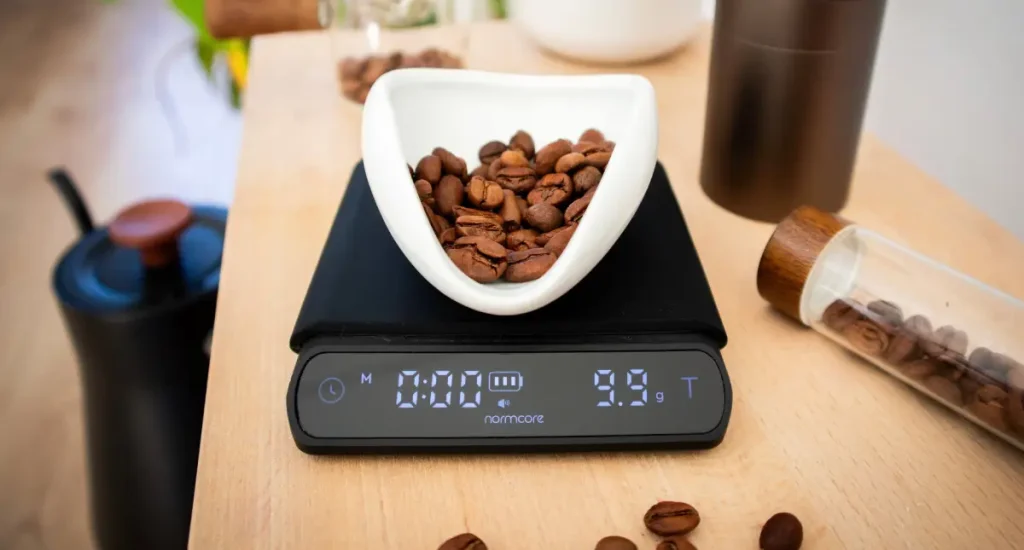
- Digital scale: weighing coffee and water beats scooping every time.
- Paper filters: match the shape (basket or cone) to your brewer. Rinse them first.
- Kettle: a gooseneck kettle gives you the control you need for pour-over. Our guide on how to use a gooseneck kettle covers pouring technique.
- Timer: your phone works fine.
- Thermal carafe (optional): keeps brewed coffee hot without a hot plate.
The Drip Coffee Ratio: How Much Coffee per Cup?
The Specialty Coffee Association’s standard brew ratio is 55 grams of coffee per litre of water, which is about 1:18 (SCA Standard 310). Many home brewers prefer a slightly stronger cup, so 1:15 to 1:17 is a popular working range. Start at 1:16 and adjust from there.
| Strength | Ratio (Coffee : Water) | Coffee for a 250 ml Mug | Coffee for 1 Litre of Water |
|---|---|---|---|
| Stronger | 1:15 | 16.7 g | 66.7 g |
| Balanced (our starting point) | 1:16 | 15.6 g | 62.5 g |
| Lighter | 1:17 | 14.7 g | 58.8 g |
| SCA standard | about 1:18 | 13.9 g | 55 g |
Two level tablespoons of medium-ground coffee weigh roughly 10 to 11 grams, but scoops vary with grind size and bean density, which is why a scale is more reliable.
Remember that ground coffee absorbs about twice its weight in water, so 1 litre of water yields a little under 900 ml of brewed coffee.
☕ Frothy Fusion Tip Write your recipe on a sticky note and keep it near the machine. Note the coffee weight, water amount, grind setting, and whether it tasted good. Within a week you will have a dialled-in recipe instead of guesswork.
How to Drip Coffee With an Automatic Coffee Maker (Step by Step)
This How to drip coffee method most people use every day. The whole process takes about 10 minutes, and most of that is the machine working. In short: measure, grind, add the filter and grounds, add water, brew, and serve.
- Start with a clean machine and fresh, cold water.
- Weigh and grind your beans to a medium grind.
- Place a rinsed paper filter in the basket.
- Add the grounds and level the surface.
- Fill the reservoir with measured water.
- Start the brew cycle.
- Stir the finished pot and serve right away.
Step 1: Start With a Clean Machine and Cold Water
Old coffee oils and mineral scale are the most common hidden cause of bitter drip coffee. Before you brew, check that the basket, carafe, and lid are clean and that the water tank has no film or odour.
Use fresh, cold, filtered water every time. Hot tap water can pick up metallic flavours from pipes and water heaters, so always start cold.
Step 2: Weigh and Grind the Coffee
Decide how much coffee you want to make, then weigh the beans. At the balanced 1:16 ratio, a 600 ml brew needs about 37.5 g of coffee, and a full 1 litre pot needs about 62.5 g.
Check your machine’s markings before you pour water in: the “cups” on many brewers are only about 150 ml (5 oz), so a 12-cup machine holds closer to 1.8 litres than the 3 litres you might expect from 12 mugs.
Grind the beans to a medium texture right before brewing. Medium should feel like coarse sand.
Step 3: Add and Rinse the Paper Filter
Place the filter in the basket and run hot water through it over the sink. This removes the papery taste that can leak into the cup and warms the basket. If your brewer comes with a permanent mesh filter, rinse it and expect a heavier body with a little more sediment.
Step 4: Add the Grounds and Level the Bed
Tip the grounds into the filter and give the basket a gentle shake so the surface is flat. A level bed helps the water saturate all the grounds evenly instead of tunnelling through a single channel.
☕ Frothy Fusion Tip Use the same grind setting and the same dose for a week before you change anything. If the coffee tastes off, adjust only the grind or only the ratio, so you know which change fixed it.
Step 5: Add the Water
Fill the reservoir to the line that matches your coffee dose. For a 1:16 ratio, that is 16 g of water for every 1 g of coffee. Pour in only cold water. The machine will heat it for you. If your machine allows it, run a short water-only cycle first to warm the carafe, then empty the carafe.
Step 6: Start the Brew Cycle
Press start and let the machine finish. A full pot generally takes around 5 to 8 minutes. Many home machines struggle to reach the SCA’s recommended brewing temperature, so a drip machine that finishes in under 4 minutes or brews noticeably weak coffee may be running too fast or too cool. If you are shopping for a new machine, look for one that lists SCA certification for home brewers.
Step 7: Stir, Serve, and Store Properly
The first coffee to drip is more concentrated than the last. Give the carafe a gentle swirl or stir before pouring so every cup tastes the same. Serve immediately, or transfer to a preheated thermal carafe.
Avoid leaving coffee on a hot plate for long, because the heat keeps cooking it and creates a burnt, stale flavour within about 30 minutes.
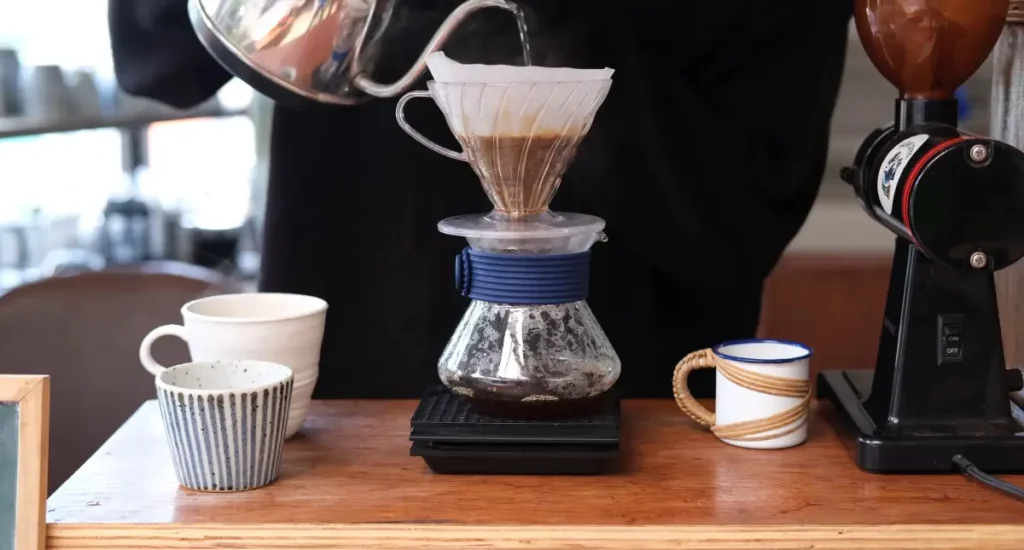
How to Drip Coffee by Hand: The Pour-Over Method
Pour-over is manual drip coffee: you heat the water and pour it over the grounds yourself, controlling the speed and pattern.
It gives you more control than an automatic machine and often tastes brighter and more detailed, but it takes a few minutes of attention.
This recipe makes one large mug (about 300 ml) using a cone dripper such as a V60 style or a flat-bottom dripper such as a Kalita style.
Pour-Over Recipe at a Glance
| Item | Amount |
|---|---|
| Ground coffee | 20 g (medium-fine for a cone, medium for a flat-bottom) |
| Water | 320 g (a 1:16 ratio) |
| Water temperature | 92–96°C (just off the boil) |
| Bloom | 40 g of water, wait 30–45 seconds |
| Total brew time | 2 minutes 30 seconds to 3 minutes 30 seconds |
Step-by-Step Pour-Over
- Heat the water. Bring about 400 ml of filtered water to the boil, then let it rest for 30 seconds.
- Rinse the filter. Place the paper filter in the dripper over your mug or server, pour hot water through it, and discard the rinse water. This removes paper taste and preheats your mug.
- Add the coffee. Add 20 g of ground coffee and gently shake the dripper to level the bed. Place everything on the scale and zero it.
- Bloom the coffee. Pour about 40 g of water, just enough to wet all the grounds. The coffee will puff up and release carbon dioxide. Wait 30 to 45 seconds. Fresh coffee blooms more, which is a good sign.
- Pour in slow circles. Starting in the centre, pour in gentle spirals out toward the edge, avoiding pouring directly onto the filter. Add water in two or three pours until the scale reads 320 g.
- Let it drain. The water should finish dripping through between 2:30 and 3:30 total time. Remove the dripper once the stream turns to drips.
- Swirl and serve. Give the coffee a gentle swirl and taste it before adding anything.
If it drains much faster than 2:30, grind finer. If it takes longer than 4 minutes, grind coarser.
☕ Frothy Fusion Tip Keep a slow, steady pour rather than dumping water in. Fast, high pours can dig channels in the coffee bed, which leaves some grounds under-extracted and others over-extracted in the same cup.
Automatic Drip vs Pour-Over: Which Should You Use?
Automatic drip machine
✔ Easy and hands-off
✔ Brews multiple cups at once
✔ Consistent results when the dose is weighed
✘ Less control over temperature and pour
✘ Hot plates can overcook coffee
✘ Needs regular descaling
Manual pour-over
✔ Full control over variables
✔ Cleaner, brighter flavour in the cup
✔ Low cost to start
✘ Needs a kettle, scale, and a few minutes of attention
✘ Harder to scale up for a crowd
✘ Results vary with your pouring technique
Best for: automatic drip suits busy households and anyone brewing 3 or more cups at a time. Pour-over suits people who enjoy the ritual and want to taste more nuance from lighter roasts and single-origin beans.
Common Drip Coffee Mistakes and How to Fix Them
Most disappointing drip coffee traces back to a handful of repeatable mistakes. Check this list before you blame the beans or buy a new machine.
Avoid
❌ Using stale or pre-ground beans that have sat open for weeks
❌ Scooping by eye instead of weighing
❌ Grinding with a blade grinder or the wrong grind size
❌ Brewing with water that is too hot, too cold, or off-tasting
❌ Skipping the filter rinse
❌ Leaving the carafe on a hot plate for an hour
❌ Never cleaning or descaling the machine
Troubleshooting Guide: Why Does My Drip Coffee Taste Wrong?
| Problem | Likely Cause | Fix |
|---|---|---|
| Bitter, harsh, or dry | Over-extraction: grind too fine, brew too long, or dirty machine | Grind slightly coarser, check brew time, clean the machine |
| Sour, thin, or salty | Under-extraction: grind too coarse, water too cool, or too little contact time | Grind slightly finer, use hotter water, slow the pour |
| Weak or watery | Too little coffee for the water | Use more coffee, for example move from 1:17 to 1:15 |
| Too strong or muddy | Too much coffee, or too many fine particles | Use less coffee, or switch from a blade to a burr grinder |
| Burnt or stale flavour | Coffee sitting on a hot plate, or old beans | Move to a thermal carafe and buy fresher beans |
| Basket overflows or drains very slowly | Grind too fine, too much coffee, or a folded filter | Grind coarser, check the dose, reseat the filter |
When in doubt, change one thing at a time. If the cup is bitter, go coarser. If it is sour, go finer. This simple rule fixes most problems.
Practical Tips for Better Drip Coffee
- Warm your mug. A cold ceramic mug pulls heat out of the coffee quickly. A splash of hot water first helps.
- Taste as it cools. Flavors change as coffee cools from hot to warm, and sweetness and acidity are often easier to judge once it is just warm.
- Do not overfill the basket. Grounds need room to swell during the bloom, especially with fresh beans.
- Use a consistent method. Write down your dose, grind setting, and result. Repeating a good brew is half the skill.
Note on testing: The temperatures, ratios, and timings in this guide follow the Specialty Coffee Association’s published home brewing standards and widely used brewing practice. Treat them as a reliable starting point, then adjust to your own beans, water, and taste.
How to Clean and Descale Your Drip Coffee Maker
A drip coffee maker needs a quick rinse after every use and a descaling every 1 to 3 months. Coffee oils turn rancid and limescale builds up inside the heating element and tubes.
Both change the flavor and slow the machine down, and scale can stop a heater from reaching the right temperature.
→ How Coffee Grind Size Affects Flavor
Cleaning Schedule
| How Often | What to Do |
|---|---|
| After every brew | Discard the grounds and filter, rinse the basket and carafe, and leave the lid open to dry |
| Weekly | Wash the basket, carafe, and lid in warm soapy water, and wipe the showerhead area |
| Every 1–3 months | Descale the machine, more often if you have hard water |
| When it changes | Replace the water filter if your machine has one, following the manufacturer’s schedule |
How to Descale in 4 Steps
- Fill the reservoir with your manufacturer’s recommended descaling solution. Many brewers accept a mix of white vinegar and water, and others recommend a citric acid solution. Check your manual first, since some makers advise against vinegar.
- Run a brew cycle with the basket empty and no filter, pausing halfway for about 30 minutes if your machine allows it so the solution can soften the scale.
- Finish the cycle and discard the solution.
- Rinse thoroughly by running two or three full cycles of clean water until there is no smell or taste left.
☕ Frothy Fusion Tip Do not forget the grinder. Old coffee grounds and oils build up in a burr grinder and add stale flavors to fresh beans. Brush it out weekly and follow the manufacturer’s deep-clean instructions every few months.
FAQs on How to Drip Coffee
How much coffee should I use for drip coffee?
Start with 1 gram of coffee for every 16 grams of water. That is about 62 g per litre, or roughly 15 to 16 g for a 250 ml mug. The Specialty Coffee Association’s standard is closer to 55 g per litre, which gives a slightly lighter cup. If you measure by volume, two level tablespoons per 6 oz (180 ml) is a common rule of thumb, but weighing is more accurate because scoops vary.
What grind size is best for drip coffee?
Use a medium grind, similar to coarse sand, for automatic drip machines with a flat-bottom basket. Cone-shaped pour-over drippers usually need medium-fine, while a Chemex works best with medium-coarse. If the coffee tastes sour or weak, grind a little finer. If it tastes bitter or harsh, grind a little coarser. Adjust in small steps and change only one thing at a time.
What is the best water temperature for drip coffee?
Aim for 90 to 96°C (194 to 205°F), which matches the Specialty Coffee Association’s brewing standard for home brewers. If you heat water in a kettle, let it rest for 30 to 45 seconds after boiling. Many budget machines struggle to reach this range, so if your drip coffee tastes consistently sour or flat, water temperature may be the cause.
Is drip coffee the same as filter coffee?
Mostly, yes. Both describe coffee made by passing hot water through ground coffee held in a filter, with gravity doing the work. “Filter coffee” is the common term in the UK and Australia, while “drip coffee” is more common in the United States. A pour-over is simply the manual version of drip coffee, and an automatic drip machine does the same job for you.
Why does my drip coffee taste bitter?
Bitter coffee is usually over-extracted. The common causes are a grind that is too fine, a brew that runs too long, too little coffee for the amount of water, a very dark roast, or a dirty machine with old oils and scale. Try a slightly coarser grind first, then check your ratio, then clean and descale the brewer. Water that is far too hot can also add harshness.
How long should drip coffee take to brew?
A full pot in an automatic drip machine usually takes about 5 to 8 minutes. A single-mug pour-over should finish draining in roughly 2 minutes 30 seconds to 3 minutes 30 seconds. If your brew finishes much faster, the grind may be too coarse. If it takes much longer, the grind may be too fine or the filter may be clogged.
Can I use an espresso grind in a drip coffee maker?
No. Espresso grind is too fine for a drip machine. It can clog the filter, cause the basket to overflow, and over-extract into bitter coffee. Beans sold as espresso roast are fine to use for drip, but grind them to a medium size first. For an overview of the differences, see our guide to espresso vs coffee.
How much caffeine is in drip coffee?
The FDA says an 8-ounce cup of coffee typically has about 80 to 100 mg of caffeine, though it varies with the beans, roast, and brew strength. The FDA also cites up to 400 mg a day, roughly four or five cups, as an amount not generally associated with dangerous effects for healthy adults (FDA: How Much Caffeine Is Too Much?). Individual sensitivity varies, so check with a health professional if you are unsure.
Final Verdict: Master How to Drip Coffee
Knowing how to drip coffee is mostly about consistency. Weigh fresh beans, grind them medium, use filtered water at 90–96°C, brew at roughly 1:16, and keep the machine clean.
Do that and a simple drip brewer or a pour-over cone will give you a smooth, balanced cup every day. When something tastes off, change one variable at a time: coarser for bitter, finer for sour, more coffee for weak.
Who drip coffee is best for: home coffee drinkers, beginners, households that brew several cups at a time, and anyone who likes a clean, lighter-bodied coffee without milk-based drinks or special equipment.
Who might want something else: if you love a concentrated, syrupy shot with crema, or you mainly drink flat whites and lattes, an espresso machine is a better fit. If you want a rich, full-bodied cup with natural oils, a French press suits you more.
Best alternatives:
- Moka pot: a stovetop option that makes strong, espresso-style coffee without an espresso machine. See our guide on how to use a Moka pot.
- French press: full body and easy to make in small batches.
- Cold brew: smooth, low-acid coffee that you steep overnight.
- Espresso: for café-style drinks at home. Start with our guide to espresso ratios.
Your Next Step
Pick one recipe from this guide, brew it three mornings in a row, and write down what you taste. Then explore more of our brewing guides: browse the Home Barista guide for the full home café setup, or try a Red Eye coffee, which combines a cup of drip coffee with a shot of espresso.
Related Reads to How to Drip Coffee
- How to Make Pour-Over Coffee (Beginner’s Guide)
- Best Coffee Makers for Home Brewing
- How to Clean Your Coffee Machine (Easy Guide)