

If you’ve ever stood in line at a café wondering whether to order a latte vs cappuccino, you’re not alone.
Both drinks start with the same ingredients — espresso and milk — but the way they’re made creates totally different textures, flavors, and experiences in the cup.
Whether you’re a curious beginner or leveling up your barista skills, this guide breaks it down simply so you can sip confidently.
🥛 The Ingredients: Same but Different
Latte vs Cappuccino, let’s start with the basics. Both drinks include:
- Espresso – A strong shot of coffee (usually 1–2 oz)
- Steamed milk – Heated milk that adds body
- Milk foam – Frothy, airy milk that sits on top
But what makes them different is how much of each goes into your cup.
☁️ What Is a Cappuccino?
A cappuccino is typically:
- 1/3 espresso
- 1/3 steamed milk
- 1/3 milk foam

This classic Italian drink has a stronger coffee flavor because it uses less milk overall. The foam on top is thick and airy — some baristas even aim for that “dry cappuccino” feel with extra foam.
Texture: Light and airy
Flavor: Bold and balanced
Size: Usually 5–6 oz
☕ Best Cappuccino Cups – Elevate Your Coffee Experience
🥄 What Is a Latte?
A latte (short for caffè latte) flips the script with more steamed milk and less foam:
- 1/6 espresso
- 4/6 steamed milk
- 1/6 milk foam

It’s creamier, smoother, and milder in taste. The larger amount of milk makes lattes perfect for flavor add-ins like vanilla or caramel.
Texture: Velvety and smooth
Flavor: Mellow and milky
Size: Usually 8–12 oz (or more in cafes!)
👀 Key Differences Between Latte Vs Cappuccino
| Feature | Cappuccino | Latte |
|---|---|---|
| Milk Texture | Thick foam | Smooth & silky |
| Coffee Strength | Stronger | Milder |
| Serving Size | Smaller (5–6 oz) | Larger (8–12 oz) |
| Mouthfeel | Airy & light | Creamy & rich |
| Best For | Espresso lovers | Milk-forward drinkers |
🏠 Can You Make Them at Home?
Yes — and it’s easier than you think with the right tools:
- Use an espresso machine or a stovetop moka pot for espresso.
- Steam or froth milk using a milk frother, steam wand, or even a French press.
- Pour carefully: For a cappuccino, hold back the foam until the end. For a latte, let more milk in before adding a touch of foam.
Want visuals? Check out our Milk Frothing Techniques for Lattes vs Cappuccinos guide!
💡 Latte Art vs Foam Cap
One thing you’ll notice: Latte art is often seen in lattes but not cappuccinos.
Why? The milk in lattes is more fluid, which makes it perfect for creating hearts, tulips, and rosettas. Cappuccinos, with their thick foam cap, don’t have the same flow for art — but some baristas get creative anyway.
🧠 Final Sip: Which Should You Choose?
- Craving a strong coffee hit with a light feel? Go cappuccino.
- Want a creamy, cozy drink you can sip slowly? Choose a latte.
Both are espresso-based icons — it just depends on your mood (or how much milk you want in the moment!).
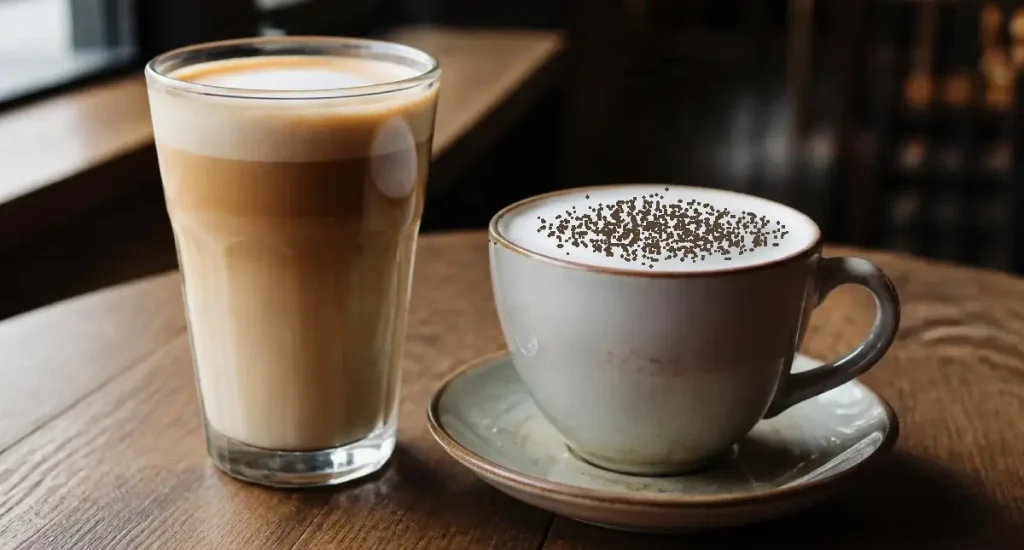
❓ FAQs on Latte vs Cappuccino
Can I get a flavored cappuccino or latte?
Yes! Most cafés offer syrup add-ins. Lattes are more commonly flavored because of the higher milk content.
Is a latte healthier than a cappuccino?
It depends on your milk choice and portion size. Cappuccinos often have fewer calories simply because they use less milk.
Which drink has more caffeine?
They’re usually the same — both use 1–2 shots of espresso. The difference is in the milk ratio, not the caffeine content.
🔄 Related Reads to Latte Vs Cappuccino
- Macchiato vs Latte – Explained Simply
- How to Froth Milk Without a Steam Wand
- Best Home Espresso Machines for Beginners
☕ Just a heads up—this Latte vs Cappuccino post contains affiliate links. If you buy through them, Frothy Fusion may earn a small commission (at no cost to you). Thanks for supporting our coffee-fueled content!