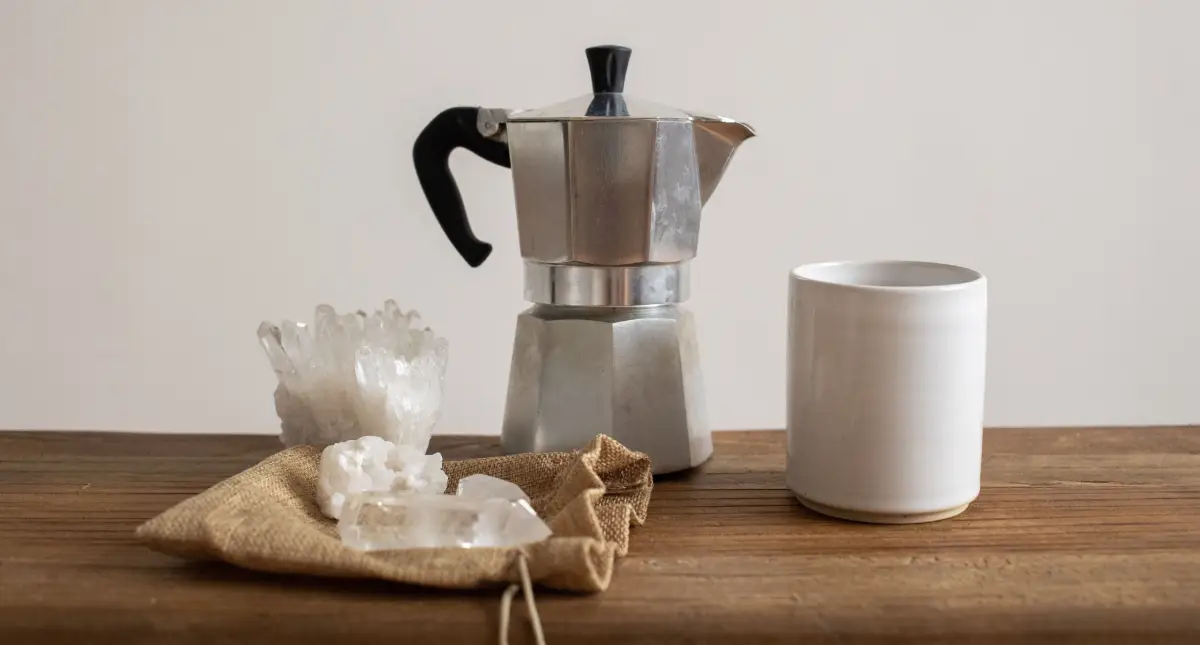
Learning how to use a moka pot is the easiest way to get strong, rich, espresso-style coffee at home without an expensive machine.
- Quick Answer: How to Use a Moka Pot
- Key Takeaways
- Moka Pot Quick Facts
- What Is a Moka Pot and How Does It Work?
- What You Need Before You Start
- How to Use a Moka Pot: Step-by-Step
- Common Moka Pot Mistakes and How to Fix Them
- Tips for Better Moka Pot Coffee
- Moka Pot vs Espresso Machine: What's the Difference?
- How to Clean and Maintain a Moka Pot
- Frequently Asked Questions About Using a Moka Pot
- Do you use hot or cold water in a moka pot?
- How much coffee do you put in a moka pot?
- What grind size is best for a moka pot?
- Can you use a moka pot on an induction hob?
- Is moka pot coffee the same as espresso?
- Should you tamp coffee in a moka pot?
- How long does a moka pot take to brew?
- Is moka pot coffee stronger than regular coffee?
- Final Verdict: Is Learning How to Use a Moka Pot Worth It?
- Keep Learning: What to Read Next
- 👉 Related Reads
Many beginners end up with bitter, burnt or watery results, but nearly every problem comes down to heat, grind size and timing.
This guide walks you through each step, the mistakes to avoid, how to fix common problems and how to keep your moka pot working for years.
Quick Answer: How to Use a Moka Pot
To use a moka pot, fill the bottom chamber with hot water to just below the safety valve, add a level, untamped basket of medium-fine ground coffee, and screw the top on tightly.
Heat on medium-low with the lid open. When the coffee starts to flow and then gurgles, remove the pot from the heat, stir gently and serve straight away.
Key Takeaways
- Use hot water in the base to cut brewing time and avoid a metallic, cooked taste.
- Fill the basket level with a medium-fine grind and never tamp the coffee.
- Keep the heat medium-low and the lid open so you can watch the brew.
- Take the pot off the heat as soon as it starts to gurgle to avoid bitterness.
- Rinse with water, dry fully and replace the rubber gasket about once a year.
Moka Pot Quick Facts
| Attribute | Details |
|---|---|
| Brew style | Stovetop, steam-pressure brewing |
| Pressure | Roughly 1 to 2 bar (an espresso machine uses about 9 bar) |
| Brew time | About 5 to 8 minutes with hot starting water |
| Grind size | Medium-fine, finer than drip and coarser than espresso |
| Best roast | Medium to medium-dark |
| Flavour | Bold, concentrated and full-bodied |
| Difficulty | Beginner-friendly, with a short learning curve |
| Typical cost | Low compared with an espresso machine |
What Is a Moka Pot and How Does It Work?
A moka pot is a stovetop coffee maker that pushes hot water through ground coffee using steam pressure. Invented in Italy in 1933, it brews a strong, concentrated coffee similar to espresso, though at much lower pressure and without true crema.
The Three Parts of a Moka Pot
Every moka pot has the same simple design, which makes it easy to learn.
- Bottom chamber (boiler): holds the water and has a safety valve on the side.
- Funnel and filter basket: holds the ground coffee and sits inside the boiler.
- Top chamber (collector): catches the finished coffee and has a spout and lid.
A rubber gasket and a metal filter plate sit under the top chamber to seal the pot and keep grounds out of your cup.
How the Brewing Works
As the water heats, steam builds up in the sealed boiler and pushes the water up through the funnel. It passes through the coffee grounds, then rises through the central tube into the top chamber.
This is why a moka pot is sometimes called a stovetop espresso maker, although the pressure is far lower than a real espresso machine and the flavour is closer to a rich, strong brew than a classic espresso shot.
Aluminium vs Stainless Steel
Most traditional pots are aluminium and heat quickly on gas and electric hobs. Stainless steel pots are heavier, easier to clean and work on induction cooktops only if the base is labelled induction-compatible. Always check the manufacturer’s guidance for your model before using it on induction.
What You Need Before You Start
You only need a few basics to brew great moka pot coffee at home.
- A moka pot in the right size for your needs
- Fresh coffee beans, ideally medium to medium-dark roast
- A grinder that can produce a medium-fine grind (or pre-ground coffee labelled for moka pots)
- A kettle for hot water
- A tea towel or oven mitt for handling the hot base
- A heat source: gas, electric or induction (with an induction-compatible pot)
- Optional: kitchen scales and a timer for consistency
Choosing the Right Moka Pot Size
Moka pot “cups” are small espresso-sized servings of roughly 50 to 60 ml, not mug-sized cups. Sizes vary slightly by brand, so check your model.
| Pot Size | Approx. Yield | Best For |
|---|---|---|
| 1-cup | 50 to 60 ml | One small serving |
| 3-cup | About 130 ml | One person, or two small servings |
| 6-cup | About 270 ml | Two people, or one large milk drink |
| 9-cup | About 430 ml | Three to four small servings |
| 12-cup | About 600 ml | Groups and entertaining |
A moka pot works best when brewed full. Brewing a half batch in a large pot makes the basket and water level hard to get right, so pick the size you will use most often.
Choosing Your Coffee and Grind
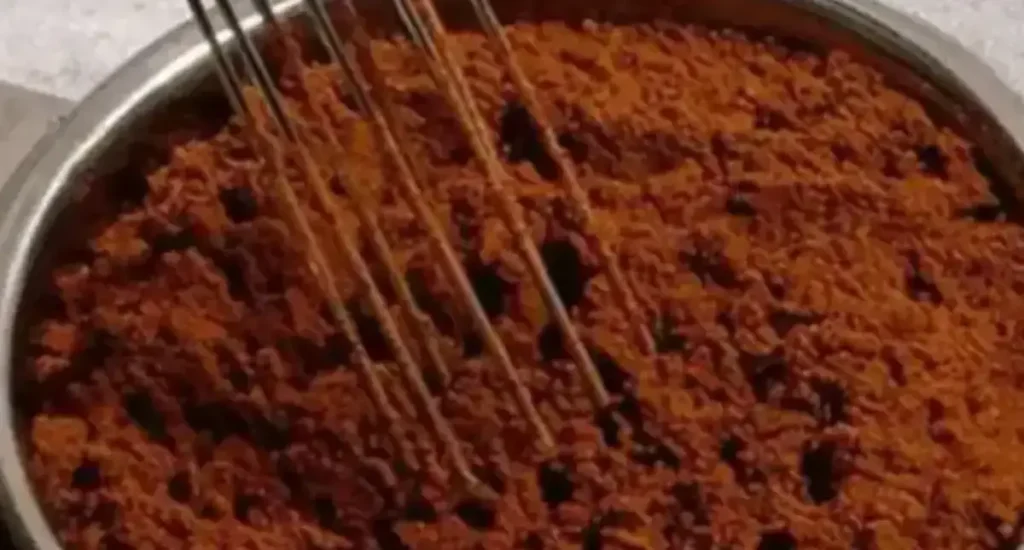
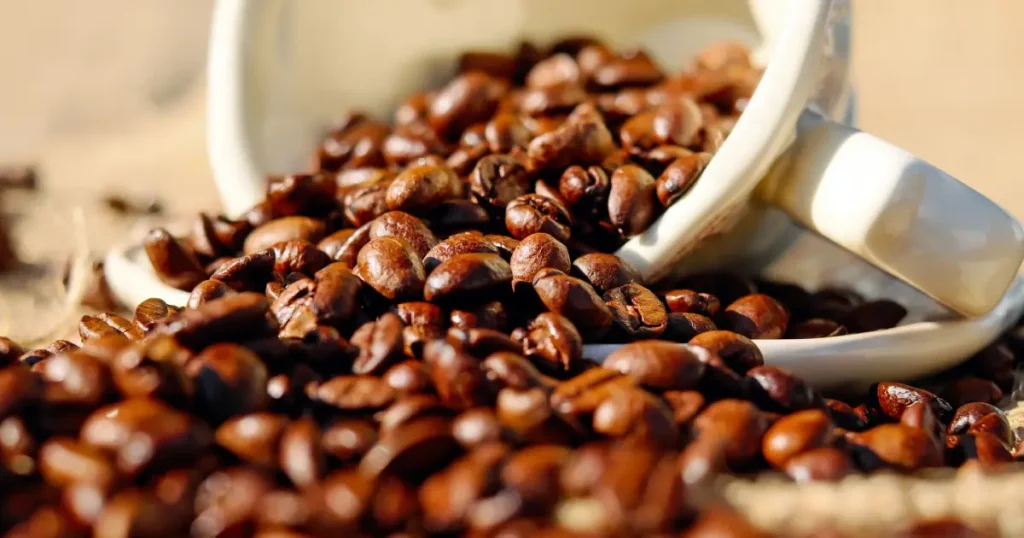
Beans matter more than the pot. Fresh, whole beans ground just before brewing give a sweeter, more aromatic cup. A medium-fine grind works best: finer than filter coffee, but noticeably coarser than espresso.
Grinding too fine can clog the filter and cause bitterness, while grinding too coarse leads to a weak, sour cup. If you use pre-ground coffee, choose one labelled for moka pots and use it within a couple of weeks of opening.
How to Use a Moka Pot: Step-by-Step
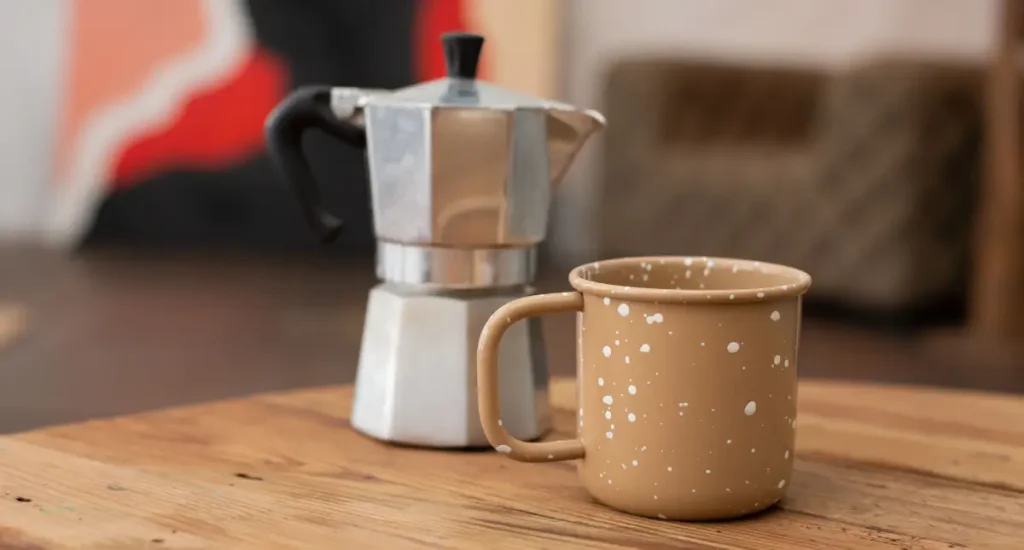
Follow these eight steps for a smooth, balanced cup. The whole process takes about 10 minutes from kettle to cup.
Step 1: Heat Your Water
Boil water in a kettle, then let it sit for about 30 seconds. Starting with hot water means the coffee grounds spend less time heating up inside the pot, which reduces the burnt, metallic flavour many beginners notice.
Helpful image: a kettle pouring into the base of a moka pot.
Step 2: Fill the Bottom Chamber
Pour the hot water into the base, stopping just below the safety valve. Never cover the valve. Too much water can leave the coffee weak and may prevent the pot from working properly.
Helpful image: close-up of the water level sitting just under the safety valve.
Step 3: Add the Funnel and Fill with Coffee
Place the funnel basket into the base. Spoon in medium-fine ground coffee until the basket is full, then level the top with a finger or the back of a knife. Do not tamp or press the coffee down. Wipe any stray grounds off the rim so the pot seals properly.
Helpful image: a level basket of ground coffee in the funnel.
☕ Frothy Fusion Tip: If the coffee puffs up and clogs the filter, your grind is likely too fine. Go slightly coarser next time.
Step 4: Screw the Top On Tightly
Use a tea towel to hold the hot base and twist the top chamber on firmly. A loose seal lets steam escape and can cause leaks around the middle of the pot.
Helpful image: hands screwing the top onto the base with a tea towel.
Step 5: Heat on Medium-Low with the Lid Open
Place the pot on the hob over medium-low heat. Keep the lid open so you can see the coffee emerge. On a gas hob, keep the flame within the edge of the base so it does not heat the handle. On an electric or induction hob, use a ring close to the size of the pot.
Helpful image: a moka pot on the hob with the lid open.
Step 6: Watch for the Coffee to Flow
After a few minutes, coffee begins to rise through the centre tube. A good flow looks like a slow, steady, honey-coloured stream. If it sprays or spurts quickly, your heat is too high.
Helpful image: coffee flowing into the top chamber.
Step 7: Remove from the Heat at the Right Moment
When the stream turns pale and you hear a gurgling or hissing sound, take the pot off the heat straight away. If you like, run the base under cold tap water for a few seconds to stop extraction and prevent any bitter, spluttering last drops.
Step 8: Stir, Pour and Enjoy
Give the coffee a gentle stir inside the top chamber, since the first and last parts of the brew differ in strength. Pour right away and enjoy it black, diluted with hot water or topped with steamed milk.
Helpful image: coffee being poured from a moka pot into a small cup.
Common Moka Pot Mistakes and How to Fix Them
Most bad moka pot coffee comes down to a handful of avoidable errors.
Avoid these mistakes:
- ❌ Tamping or packing the coffee grounds
- ❌ Using cold water and a high flame
- ❌ Grinding too fine (like espresso) or too coarse (like French press)
- ❌ Leaving the pot on the heat after it starts to gurgle
- ❌ Covering or blocking the safety valve with water
- ❌ Using stale beans or old pre-ground coffee
- ❌ Skipping regular cleaning and gasket checks
Moka Pot Troubleshooting
Use this table to diagnose problems quickly.
| Problem | Likely Cause | Fix |
|---|---|---|
| Bitter, burnt taste | Heat too high, left on too long, grind too fine | Lower the heat, remove at the first gurgle, grind slightly coarser |
| Weak or sour coffee | Grind too coarse, basket underfilled, heat too low | Grind finer, fill the basket level, raise the heat slightly |
| Coffee spurts or sprays | Heat too high | Use medium-low heat and keep the lid open |
| Leaking from the middle | Worn gasket, grounds on the threads, loose seal | Wipe the rim, tighten firmly, replace the gasket |
| Nothing comes out | Grind too fine, clogged filter, steam escaping | Coarsen the grind, clean the filter, check the seal |
| Metallic taste | New pot, residue, very high heat | Brew and discard a few batches, clean well, reduce the heat |
☕ Frothy Fusion Tip: Change one thing at a time. Adjust grind size first, then heat, then the amount of coffee, so you know exactly what improved the taste.
Why Is My Moka Pot Coffee Bitter?
Bitter moka pot coffee is almost always over-extracted. Too much heat, a very fine grind or leaving the pot on the stove after it starts to sputter pushes extra bitter compounds into the cup. Try lower heat, a slightly coarser grind and stopping the brew early.
Tips for Better Moka Pot Coffee
Small tweaks make a big difference once you know the basics.
- Use fresh beans: coffee within a few weeks of its roast date gives the sweetest, most aromatic cup.
- Grind just before brewing: a burr grinder gives a more even particle size than a blade grinder.
- Keep your routine consistent: use the same pot, water level and heat each time so you can fine-tune one variable at a time.
- Preheat your cup: warm cups help the coffee stay hot, especially for small servings.
- Use filtered water: it improves flavour and reduces scale build-up inside the boiler.
- Stop early rather than late: the last few seconds of a moka pot brew are where most bitterness comes from.
☕ Frothy Fusion Tip: Moka pot coffee is concentrated. If it tastes too strong, add a splash of hot water to make an Americano-style cup rather than changing your brewing method.
Moka Pot Coffee Recipes
Because moka pot coffee is strong and bold, it works well as a base for classic home cafe drinks.
| Drink | How to Make It |
|---|---|
| Moka pot latte | Pour the coffee into a cup and top with steamed or frothed milk. A 6-cup pot suits one large latte. |
| Moka pot Americano | Add hot water to the coffee, roughly one part coffee to one to two parts water. |
| Iced moka coffee | Pour the coffee over ice, then add cold milk or a splash of water. |
| Moka pot mocha | Stir a spoonful of chocolate syrup or cocoa into the hot coffee, then add steamed milk. |
| Moka cortado-style | Combine equal parts moka coffee and warmed milk in a small glass. |
For milk steaming, a handheld frother or a stovetop milk pan works well if you do not have an espresso machine. See our guide on Latte vs Flat White for how milk texture changes your drink.
Moka Pot vs Espresso Machine: What’s the Difference?
A moka pot makes strong, espresso-style coffee, but it is not true espresso. Espresso machines use roughly 9 bar of pressure for a 25 to 30 second extraction, while a moka pot relies on steam pressure of about 1 to 2 bar over several minutes. The result is a bolder, heavier cup without the thick, stable crema of a proper shot.
| Feature | Moka Pot | Espresso Machine | Drip or French Press |
|---|---|---|---|
| Pressure | About 1 to 2 bar | About 9 bar | None (gravity or immersion) |
| Brew time | 5 to 8 minutes | 25 to 30 seconds | 4 to 6 minutes |
| Crema | Light foam at most | Thick, stable crema | None |
| Strength | Bold and concentrated | Very concentrated | Milder |
| Grind | Medium-fine | Fine | Medium to coarse |
| Milk drinks | Works with added milk | Best with steam wand | Not typical |
| Cost | Low | Medium to high | Low to medium |
| Learning curve | Short | Steeper | Short |
If you already own a Nespresso or pod machine, a moka pot offers a different, more hands-on style of brewing with a rich, full-bodied cup and no capsules to buy.
Pros and Cons of Using a Moka Pot
Pros
- ✔ Affordable and long-lasting
- ✔ Rich, bold coffee with a small kitchen footprint
- ✔ No electricity or capsules needed
- ✔ Simple to learn with a few practice batches
Cons
- ✘ No true crema or 9-bar espresso extraction
- ✘ Easy to burn the coffee if the heat is too high
- ✘ Needs a little attention while brewing
- ✘ Works best when brewed at full capacity
Who a Moka Pot Is Best For
A moka pot suits home brewers who enjoy strong coffee, want an inexpensive espresso alternative or like a simple, hands-on routine. If you want consistent, push-button espresso or café-style crema, an espresso machine may suit you better.
How to Clean and Maintain a Moka Pot
To clean a moka pot, let it cool, unscrew it, discard the used grounds and rinse every part with warm water. Dry all the pieces completely before reassembling. Always follow the manufacturer’s care instructions, as materials and finishes vary.
Cleaning Steps
- Let the pot cool fully before opening it.
- Discard the used coffee puck and rinse the funnel and filter plate.
- Rinse the base and top chamber with warm water, using a soft sponge if needed.
- Wipe the gasket and check it for cracks or hardening.
- Dry every part thoroughly and store the pot with the top unscrewed so air can circulate.
Care Tips
- Skip the dishwasher with aluminium pots: harsh detergents can dull and damage the metal.
- Go easy on soap: many brands recommend rinsing with water only, or a very small amount of mild soap, then rinsing well.
- Replace the gasket about once a year: or sooner if it is hard, cracked or the pot starts leaking.
- Clean the filter plate: old oils can clog the holes and slow the brew.
- Descale occasionally: if you see mineral build-up in the boiler, use a gentle descaling solution suited to your pot’s material.
☕ Frothy Fusion Tip: Replacement gaskets and filter plates are inexpensive, so keep a spare on hand. A fresh gasket often fixes leaks and improves flavour more than buying a new pot.
👉 Troubleshoot Those Common Coffee Problems
Frequently Asked Questions About Using a Moka Pot
Do you use hot or cold water in a moka pot?
Hot water is usually better. Starting with freshly boiled water that has rested for about 30 seconds shortens the time the coffee grounds sit on a hot pot, which helps avoid a burnt, metallic flavour. Cold water works, but it needs a longer heating time and a little more attention. Whichever you choose, keep the water level just below the safety valve and use medium-low heat.
How much coffee do you put in a moka pot?
Fill the filter basket completely and level the top, without tamping. The basket is designed to hold the right amount for the pot’s water capacity, so you do not need to measure by weight. A rough guide is about one part coffee to eight to ten parts water, but a level, full basket matters more than hitting an exact number.
What grind size is best for a moka pot?
A medium-fine grind works best. It should feel slightly finer than table salt and coarser than espresso powder. If the coffee tastes bitter or the pot struggles to brew, go slightly coarser. If the coffee tastes weak or sour and flows too fast, go slightly finer. Adjust in small steps and change only one variable at a time.
Can you use a moka pot on an induction hob?
Only if the pot is made of magnetic stainless steel or has a base marked as induction-compatible. Traditional aluminium moka pots do not work directly on induction. Some brands sell an induction adapter plate, but it can slow heating, so check the manufacturer’s guidance. A purpose-made induction moka pot is the easiest solution.
Is moka pot coffee the same as espresso?
No. Moka pot coffee is strong and concentrated but is brewed at about 1 to 2 bar of pressure, compared with roughly 9 bar for espresso. It has a bold, full-bodied flavour but lacks the thick crema of a true espresso shot. It makes a great base for lattes and Americano-style drinks.
Should you tamp coffee in a moka pot?
No. Tamping compresses the grounds, which restricts the water flow and can cause over-extraction, bitterness or excess pressure in the pot. Simply fill the basket and level the surface with your finger. This lets the water pass evenly through the coffee for a balanced extraction.
How long does a moka pot take to brew?
With hot water on medium-low heat, most moka pots take around 5 to 8 minutes from the heat source to finished coffee. Starting with cold water can add a few minutes. Remove the pot from the heat when the stream turns pale and you hear gurgling, rather than waiting for a set time.
Is moka pot coffee stronger than regular coffee?
It tastes stronger per sip because it is more concentrated, but caffeine depends on how much coffee you use and how much liquid you drink. A large mug of drip coffee can contain as much caffeine as a small moka pot serving. If you find moka pot coffee too intense, dilute it with hot water or milk.
Final Verdict: Is Learning How to Use a Moka Pot Worth It?
Yes. Once you know how to use a moka pot, you can make bold, rich coffee at home for a fraction of the cost of an espresso machine. The keys are simple: use hot water, a level basket of medium-fine coffee, medium-low heat and an open lid, and remove the pot as soon as it starts to gurgle.
Who it’s for: beginners, budget-conscious coffee lovers, travellers and anyone who enjoys a hands-on brewing ritual.
Who should avoid it: anyone who wants push-button convenience, thick espresso crema or perfectly repeatable shots without any practice.
Best alternatives: an espresso machine for true espresso, an AeroPress for a portable concentrated brew, or a French press for a fuller, milder cup.
Keep Learning: What to Read Next
Ready to take your home brewing further? Read our guide to how to tamp espresso, explore what a lungo is or compare espresso vs coffee to choose your next brewing method.
👉 Related Reads
- Best Moka Pots for Strong, Stovetop Coffee
- Espresso Ratios and Brew Tips
- 5 Signs Your Tamping Incorrectly