Everyone says espresso is the strongest coffee, so you would expect caffeine in espresso to beat everything else on the menu.
- Quick Answer: Does Espresso Have More Caffeine Than Coffee?
- Key Takeaways
- Quick Comparison: Caffeine in Espresso vs Other Coffee Drinks
- How Much Caffeine Is in Espresso?
- Is Espresso Stronger Than Drip Coffee?
- Caffeine in Espresso Drinks: Latte, Cappuccino, Flat White and More
- Caffeine in Other Coffee Drinks
- What Changes the Caffeine in Your Espresso?
- Espresso as a Caffeine Source: Pros, Cons and Tips
- How Much Caffeine Is Too Much?
- Frequently Asked Questions About Caffeine in Espresso
- How much caffeine is in a shot of espresso?
- Does espresso have more caffeine than coffee?
- Does a latte have more caffeine than an espresso?
- Which coffee drink has the most caffeine?
- How much caffeine is in a Nespresso capsule?
- Is decaf espresso completely caffeine-free?
- Does dark roast have more caffeine than light roast?
- How many espresso shots a day is safe?
- Final Verdict: Is Caffeine in Espresso Higher Than in Other Coffee Drinks?
- 🌟Related Reads on Caffeine in Espresso
It does not, at least not per cup. A single shot holds about 63 mg of caffeine, while a standard mug of drip coffee holds around 96 mg. This guide compares espresso with lattes, americanos, drip, French press, cold brew, moka pot and Nespresso, so you can see exactly how much caffeine you are drinking.
Quick Answer: Does Espresso Have More Caffeine Than Coffee?
Per ounce, yes. Per cup, usually no. A 1 oz shot of espresso has roughly 63 mg of caffeine, about five times the concentration of drip coffee. But an 8 oz cup of drip has about 96 mg in total, so it out-caffeinates a single shot. A double shot (about 126 mg) lands close to a 12 oz mug of drip, and cold brew often tops both.
Key Takeaways
- Concentration: espresso is the most concentrated coffee, at about 63 mg per ounce versus about 12 mg per ounce for drip.
- Single shot: about 63 mg, which is less than an 8 oz cup of drip coffee (about 96 mg).
- Double shot: about 126 mg, so lattes, cappuccinos and flat whites made with two shots carry roughly the same.
- Most caffeine per serving: large cold brew and big drip coffees, often 200 mg or more in 16 oz.
- Milk does not dilute caffeine: a latte has the same caffeine as the shots in it, however much milk you add.
- Daily limit: the FDA cites 400 mg a day as an amount not generally associated with negative effects for most healthy adults, or about six single shots.
- Decaf is not zero: a decaf espresso shot has roughly 0 to 5 mg.
Quick Comparison: Caffeine in Espresso vs Other Coffee Drinks
The table is sorted by total caffeine per serving, highest first. Look at the last two columns together: espresso wins on concentration, but bigger drinks win on total dose.
| Drink | Typical serving | Caffeine per serving (mg) | Caffeine per oz (mg, approx.) | Best for |
|---|---|---|---|---|
| Cold brew | 16 oz | about 200 | 12–13 | Long, slow sipping with a big dose |
| Nespresso Vertuo mug | 7.77 oz | 170–200 | 22–26 | Full-size capsule coffee |
| Latte or cappuccino (2 shots) | 16 oz | 126–150 | 8–9 | Milky drinks with a solid kick |
| Americano (2 shots) | 12 oz | 126–150 | 10–12 | Long black-style coffee from espresso |
| Drip coffee | 12 oz | about 140 | 12 | A standard mug |
| Double espresso (doppio) | 2 oz | about 126 | 63 | A fast, concentrated hit |
| Drip coffee | 8 oz | about 96 | 12 | A small cup |
| French press | 8 oz | 80–107 | 10–13 | Rich body, moderate dose |
| Moka pot | 2 oz | 80–100 | 40–50 | Stovetop espresso-style coffee |
| Nespresso Original espresso | 40 ml | 55–105 | 41–78 | Convenient single serve |
| Single espresso | 1 oz | about 63 | 63 | A light, quick dose |
| Latte or cappuccino (1 shot) | 12 oz | 63–75 | 5–6 | A gentle milky coffee |
| Instant coffee | 8 oz | about 62 | 8 | Low-effort, lower caffeine |
| Decaf espresso | 1 oz | 0–5 | 0–5 | Evening espresso |
| Decaf drip coffee | 8 oz | 2–7 | under 1 | Caffeine-sensitive drinkers |
These are typical values. Espresso, drip and instant figures follow the Mayo Clinic caffeine chart; Nespresso ranges follow Nespresso’s own FAQ. Real cups vary with beans, dose and café recipe.
How Much Caffeine Is in Espresso?
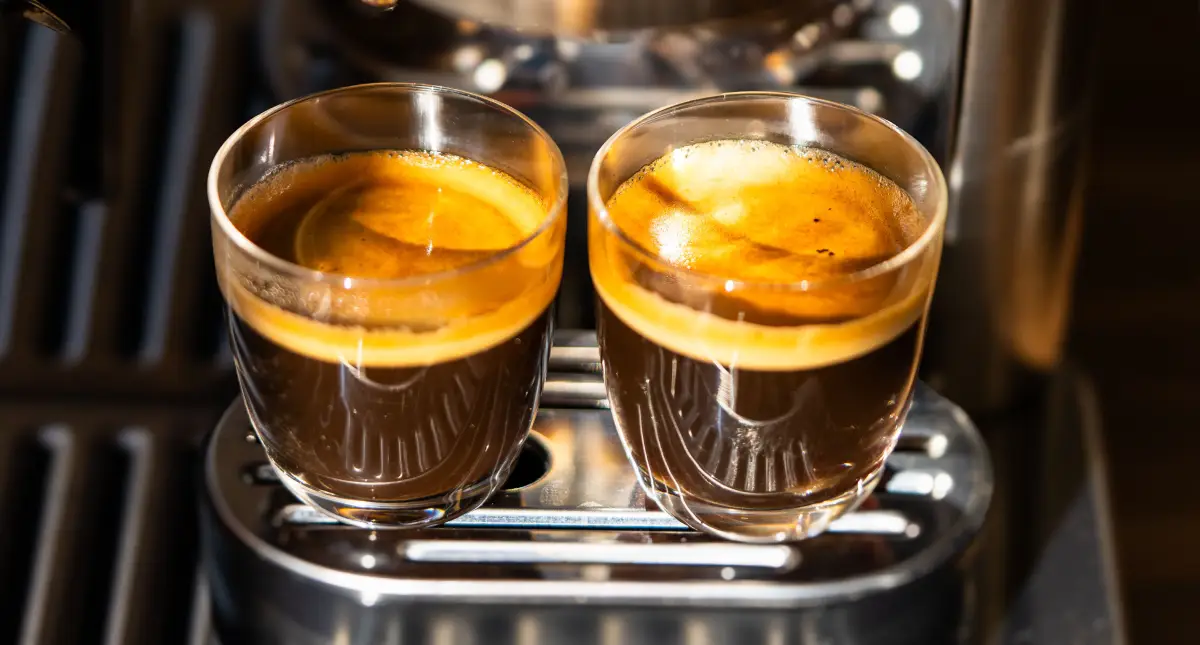
A standard 1 oz (30 ml) single shot of espresso contains about 63 mg of caffeine, and a 2 oz double shot contains about 126 mg. Those are the figures most health references use, including the Mayo Clinic. Real shots vary, because dose, beans and extraction all change what ends up in the cup.
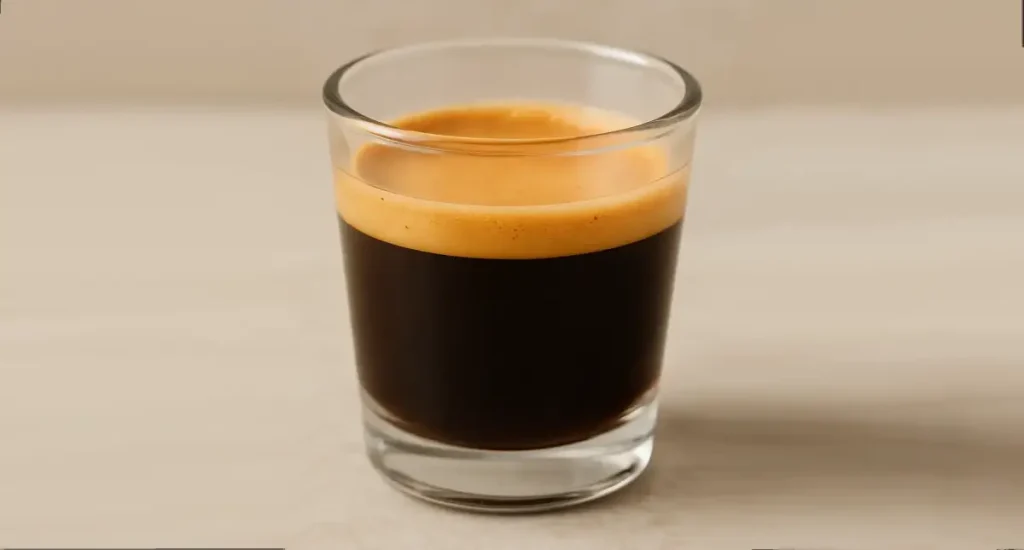
Single shot (about 63 mg)
A single shot is the baseline for every espresso drink. At about 63 mg, you would need roughly six of them to reach the FDA’s 400 mg daily reference point. Café shots often run a little higher than the textbook number. Starbucks, for example, lists about 75 mg for a single.
Double shot or doppio (about 126 mg)
Most cafés pull a double by default, so a latte, cappuccino or flat white usually carries about 126 mg or more. If you order a “small” drink, check whether it has one shot or two before you assume it is the lighter option.
Ristretto and lungo
A ristretto uses the same coffee with less water, and a lungo uses more. The caffeine difference is smaller than people expect, because most of the caffeine dissolves early in the extraction. A longer shot can pull a little extra, which is why Nespresso lists Original Lungo capsules at roughly 75 to 110 mg versus about 55 to 105 mg for Original espresso capsules.
Nespresso capsules
Nespresso says most Original and Vertuo espresso-size pods fall between 50 and 100 mg per cup. The exceptions are blends with more robusta, such as Original Kazaar at about 120 mg and Vertuo Diavolitto at about 150 mg. Full-size Vertuo coffees (7.77 oz and 14 oz) run 170 to 200 mg, which puts them closer to drip coffee than to a shot of espresso. See Nespresso’s caffeine FAQ for the current list.
Decaf espresso
A decaf shot typically has 0 to 5 mg, and sometimes a little more depending on the decaffeination method. Decaf Nespresso Original capsules list roughly 2 mg, and Vertuo decaf about 4 to 12 mg.
Why shots vary so much
Independent testing of café espresso has found shots ranging from roughly 50 mg to well over 100 mg, even at the same size. The sections below explain why. If you pull shots at home, a kitchen scale is the easiest way to keep your own dose consistent.
Is Espresso Stronger Than Drip Coffee?
Espresso is stronger in concentration, not in total caffeine. It packs about 63 mg into 1 oz, while drip coffee has about 12 mg per ounce. But drip is served in much larger cups, so one 8 oz serving (about 96 mg) beats a single shot (about 63 mg). “Strong” depends on whether you mean flavour, concentration or total dose.
The maths behind it
| Measure | Single espresso | Drip coffee (8 oz) | Drip coffee (12 oz) |
|---|---|---|---|
| Volume | 1 oz | 8 oz | 12 oz |
| Total caffeine | about 63 mg | about 96 mg | about 140 mg |
| Caffeine per oz | about 63 mg | about 12 mg | about 12 mg |
Why does espresso taste stronger if it has less caffeine? Because the shot is also packed with dissolved coffee solids and oils, and you taste them all in one small sip. The bitterness and body hit your palate harder than a mug of filter coffee does, even though the mug delivers more caffeine overall.
Same beans, different result
Espresso beans do not contain more caffeine than other coffee beans. The difference comes from how the coffee is brewed: about 18 g of fine grounds with hot water under pressure for roughly 25 to 30 seconds, versus a coarser grind and a lot more water for drip.
What the FDA says about regular coffee
The FDA lists regular brewed non-specialty coffee at 113 to 247 mg per 12 oz cup. That range is wider than the gap between a single and a double shot, which is why checking the size of your drink matters more than picking espresso or drip by name. Source: FDA, Spilling the Beans.
Caffeine in Espresso Drinks: Latte, Cappuccino, Flat White and More
Milk and water do not change the caffeine in an espresso drink. The caffeine comes from the shots, so count the shots, not the cup size. Multiply the number of shots by roughly 63 mg (the standard figure) to 75 mg (a common café figure).
| Drink | Typical shots | Estimated caffeine (mg) | Notes |
|---|---|---|---|
| Espresso macchiato | 1–2 | 63–150 | A small drink with a dash of foam |
| Cortado | 2 | 126–150 | Equal parts espresso and warm milk |
| Flat white | 2 | 126–150 | Often made with a ristretto-style double |
| Cappuccino | 1–2 | 63–150 | Check your café’s default |
| Latte | 1–2 | 63–150 | Size changes milk, not caffeine, unless a shot is added |
| Long black | 2 | 126–150 | Espresso poured over water |
| Americano | 1–3 | 63–225 | Large sizes add shots |
The drink name tells you less than you might think, because shot counts differ between cafés. A small latte may have one shot, while a large one may have three. Ask the barista, or check the café’s published caffeine information if they have it.
Does a bigger latte have more caffeine?
Only if it has more shots. Many cafés add a shot when you move up a size, which is where the extra caffeine comes from. A 12 oz latte with one shot and a 16 oz latte with two shots have about a two-to-one caffeine difference, even though the cups look similar.
Americano and long black
Both are espresso diluted with hot water, so the caffeine matches the shots used. An americano made with three shots holds about 190 to 225 mg, which is more than a typical 12 oz drip coffee. If you want the same flavour with less caffeine, ask for a single-shot version.
Flat white vs latte
A flat white usually has the same two shots as a medium latte but less milk, so the caffeine is similar and the coffee flavour is stronger. Your home espresso machine and milk steaming technique will affect the taste far more than the caffeine.
Caffeine in Other Coffee Drinks
Outside the espresso machine, the biggest factors are how much coffee goes into the water and how big the cup is. The sections below compare each method with espresso.
Drip and pour-over coffee
An 8 oz cup of drip coffee has about 96 mg, and a 12 oz mug has about 140 mg. Pour-over is similar at about 95 mg per 8 oz, though a generous 12 oz pour-over made with 18 g of coffee can reach 150 to 170 mg. Filter brewing pulls plenty of caffeine because there is a lot of water doing the extracting.
French press
Full immersion gives a rich cup with roughly 80 to 107 mg per 8 oz, depending on the recipe and steep time. A French press uses a coarse grind, which tends to extract slightly less caffeine than a finer filter grind.
Cold brew
Cold brew is usually the highest-caffeine drink on the menu per serving. A 16 oz Starbucks cold brew has about 205 mg and a 16 oz Dunkin’ cold brew about 260 mg, according to figures in Healthline’s cold brew guide. The reason is dose: recipes use far more coffee per unit of water, and the long steep extracts most of the caffeine. Home-made concentrate is stronger still and is meant to be diluted, so measure what you actually pour.
Moka pot
A moka pot makes strong, espresso-style coffee without a machine. Published figures vary, but a small 2 oz serving is often cited at around 80 to 100 mg. It is more concentrated than drip, though not as concentrated as a true espresso shot.
Instant coffee
Instant coffee has about 62 mg per 8 oz according to the Mayo Clinic, which is lower than fresh-brewed coffee. It is a handy choice when you want a milder cup.
Decaf coffee
Decaf is not caffeine-free. The FDA says decaf coffee typically has 2 to 15 mg per 8 oz cup, so a few cups a day can still add up if you are very sensitive.
Espresso vs other coffee: who each suits
- Espresso: best if you want a small, fast and controllable dose.
- Drip or pour-over: best for a steady, moderate caffeine hit over a long sit-down.
- Cold brew: best when you need a big dose, but sip it knowing it adds up quickly.
- Instant or decaf: best for lower-caffeine routines.
What Changes the Caffeine in Your Espresso?
Five things move the number most: the beans, the dose, the volume of the drink, the extraction, and the café’s recipe. The 63 mg figure is an average, not a promise.
Bean type: arabica vs robusta
Robusta beans contain roughly twice the caffeine of arabica. Blends with robusta, which are common in traditional Italian-style espresso and some Nespresso capsules, can push a shot well above the average. That is why Original Kazaar sits near 120 mg while most other Original capsules stay below 100 mg.
Coffee dose
A shot made with 18 g of ground coffee has more caffeine available than one made with 14 g. A double basket at a café often uses more coffee than the textbook example, which helps explain why café shots tend to run higher than the standard 63 mg.
Shot volume and brew ratio
A longer shot (a lungo) pulls a little more caffeine than a ristretto from the same dose. The effect is modest, though, because caffeine dissolves quickly. Total drink volume matters far more: adding a second or third shot is what really changes the total.
Roast level
Roast has less impact than most people think. Dark roasts taste bolder but contain about the same caffeine as light roasts when you measure by weight. If you measure by scoop, dark beans are lighter and puffier, so a scoop of dark roast can hold slightly less caffeine.
Grind size and extraction
A grinder set too coarse gives a fast, under-extracted shot with less of everything, including caffeine. A well-dialled grind extracts more evenly. Water temperature, pressure and flow rate all play a smaller role.
Café recipes and brand
One café’s single shot is another’s one-and-a-half. If you track your caffeine closely, treat café figures as estimates and use the brand’s published numbers where available.
Espresso as a Caffeine Source: Pros, Cons and Tips
Pros of getting your caffeine from espresso
- ✔ Easy to portion: one shot is a known, small amount
- ✔ Fast to drink, so you feel the effect quickly
- ✔ Easy to scale up or down by adding or skipping a shot
- ✔ Works in milk drinks, long blacks and cold drinks
Cons of getting your caffeine from espresso
- ✘ Shot size and strength vary between cafés and machines
- ✘ Doubles and triples add up faster than people expect
- ✘ Milk drinks hide how many shots you are drinking
- ✘ Concentrated and often drunk quickly, which can feel jittery
☕ Frothy Fusion Tip
Count shots, not cups. Whenever you order a milk drink, ask how many shots it has. At home, weigh your dose and your yield so every shot is consistent, and keep a note of how you feel after one, two and three shots.
Common mistakes
- ❌ Assuming a bigger latte means more caffeine (only extra shots do)
- ❌ Assuming espresso always has more caffeine than drip coffee
- ❌ Forgetting that decaf still has a little caffeine
- ❌ Treating the FDA’s 400 mg as a target rather than an upper reference point
- ❌ Drinking caffeine late in the day and wondering why you cannot sleep
How Much Caffeine Is Too Much?
For most healthy adults, the FDA cites 400 mg of caffeine a day as an amount not generally associated with negative effects. That is about six single espresso shots, three double shots, four 8 oz cups of drip, or one large cold brew. Sensitivity varies, so some people feel jittery well below that.
| Source | Roughly equals 400 mg |
|---|---|
| Single espresso (about 63 mg) | 6 shots |
| Double espresso (about 126 mg) | 3 doubles |
| Drip coffee, 8 oz (about 96 mg) | 4 cups |
| Cold brew, 16 oz (about 205 mg) | 2 cups |
The FDA also notes that it has not set a level for children and adolescents. The American College of Obstetricians and Gynecologists recommends that pregnant people limit caffeine to under 200 mg a day, so anyone who is pregnant, breastfeeding or managing a health condition should ask their doctor what is right for them. Signs you have had too much can include jitters, a racing heart, an upset stomach and trouble sleeping. Source: FDA
How to manage your caffeine intake
- Count your shots. Write down how many espresso shots are in each drink you order for a few days.
- Add up the total. Use the comparison table above to estimate your daily milligrams, including cold brew, Nespresso and tea.
- Compare with your limit. Keep your total comfortably under the 400 mg reference point, or lower if you are sensitive.
- Choose your drink size by shots. Order a single-shot drink for a lighter day, or a double when you need more.
- Move your last coffee earlier. Many people sleep better when their last caffeinated drink is in the morning or early afternoon.
- Mix in decaf. A decaf espresso or half-caf keeps the ritual without the full dose.
- Cut back gradually. The FDA says withdrawal is not considered dangerous but can be unpleasant, so reduce slowly.
→ How Coffee Grind Size Affects Flavor
Frequently Asked Questions About Caffeine in Espresso
How much caffeine is in a shot of espresso?
A standard 1 oz single shot has about 63 mg of caffeine, and a 2 oz double has about 126 mg. Real shots vary with the beans, the dose and the café. Some chains list around 75 mg for a single, and independent testing has found café shots from about 50 mg to well over 100 mg.
Does espresso have more caffeine than coffee?
Per ounce, yes: about 63 mg versus about 12 mg for drip. Per cup, usually no. A single shot (about 63 mg) has less caffeine than an 8 oz cup of drip coffee (about 96 mg). A double shot is closer to a 12 oz mug, so the answer depends on the size of the drink you compare.
Does a latte have more caffeine than an espresso?
A latte has the same caffeine as the shots in it, and the milk adds none. A single-shot latte has about the same caffeine as a single espresso. A latte made with two shots has about the same as a double espresso. Larger lattes only have more caffeine if the café adds extra shots.
Which coffee drink has the most caffeine?
By total caffeine per serving, large cold brews and big drip coffees are usually the highest. A 16 oz cold brew often has around 200 mg or more, and larger sizes can reach about 300 mg. Per ounce, espresso is the most concentrated. Check the size and shot count, because those matter more than the drink name.
How much caffeine is in a Nespresso capsule?
Nespresso says most Original and Vertuo espresso-size capsules contain 50 to 100 mg per cup. Capsules with more robusta, such as Original Kazaar (about 120 mg) and Vertuo Diavolitto (about 150 mg), run higher. Full-size Vertuo coffees (7.77 oz and 14 oz) contain 170 to 200 mg. Decaf capsules contain only a few milligrams.
Is decaf espresso completely caffeine-free?
No. A decaf shot typically has about 0 to 5 mg of caffeine, and the FDA notes that decaf coffee generally has 2 to 15 mg per 8 oz cup. That is a small amount, but if you are very sensitive, are pregnant or have been told to avoid caffeine, ask your doctor about decaf too.
Does dark roast have more caffeine than light roast?
Not meaningfully. Roast level changes flavour much more than caffeine. By weight, light and dark roasts have about the same amount. If you measure by scoop, dark roast beans are less dense, so a scoop can hold slightly less caffeine. Bean type (robusta vs arabica) and dose matter much more than roast.
How many espresso shots a day is safe?
The FDA cites 400 mg a day for most healthy adults as an amount not generally associated with negative effects. That is about six single shots or three doubles. Your own limit may be lower, and the limit is lower again for pregnancy. Pay attention to how you feel and talk to your doctor if you are unsure.
Final Verdict: Is Caffeine in Espresso Higher Than in Other Coffee Drinks?
The caffeine in espresso is the most concentrated in coffee, at about 63 mg per ounce, but a single shot is a small dose. Drip coffee beats it per cup, a double shot roughly matches a 12 oz mug, and cold brew usually has the most caffeine per serving. Count shots and ounces, not drink names, and you will always know what is in your cup.
Who espresso is best for
- People who want a small, fast and easy-to-measure dose
- Home baristas who like to adjust shots up or down
- Anyone who wants milk drinks with a predictable caffeine count
Who should be careful
- People who are sensitive to caffeine, who may feel doubles and triples quickly
- Anyone who is pregnant or has a health condition, who should check their limit with a doctor
- Cold brew fans who sip large sizes, since totals climb quickly
Best alternatives
- Lower caffeine: single-shot drinks, half-caf or decaf espresso
- Gentler and longer: an 8 oz cup of drip, pour-over or instant coffee
- Bigger dose: a double shot, a large americano or a cold brew
Tip: The caffeine in drinks like lattes or cappuccinos comes from the espresso shots used. Milk adds volume and creaminess but does not contribute caffeine.
What To Read Next
Continue with our guides on espresso vs coffee, ristretto vs espresso and decaf vs regular coffee, or learn to dial in your shots at home and put your new caffeine knowledge to work.
🌟Related Reads on Caffeine in Espresso
- Espresso vs Americano: What’s the Difference?
- Latte vs Cappuccino: Which Coffee Drink is Right for You?
- Best Coffee Beans for Maximum Caffeine
☕ Just a heads up—this Caffeine in Espresso post contains affiliate links. If you buy through them, Frothy Fusion may earn a small commission (at no cost to you). Thanks for supporting our coffee-fueled content!