Learning how to make Turkish coffee can feel intimidating: the tiny pot, the powder-fine grind, the foam that is supposed to rise but never boil over.
- Key Takeaways
- Why Turkish Coffee Is Different From Other Brewing Methods
- Equipment
- Ingredients and Ratio
- Choosing the Right Coffee
- Step 1: Measure Cold Water Into the Cezve
- Step 2: Add the Coffee (and Sugar)
- Step 3: Stir Gently Until Just Combined
- Step 4: Heat Slowly on Low
- Step 5: Watch for the Foam to Form and Rise
- Step 6: Remove From the Heat Just Before It Boils
- Step 7: Spoon the Foam Into the Cups
- Step 8 (Optional): Return to the Heat for a Second Rise
- Step 9: Pour Slowly and Let the Grounds Settle
- Quick Reference: The Process in One Glance
- Flavor Variations to Try
- Pros and Cons of Traditional Turkish Coffee
- Turkish Coffee vs Espresso
- Turkish Coffee vs Moka Pot
- Turkish Coffee vs Greek Coffee
- How to Make Turkish Coffee Without a Cezve
- Hot Sand Method
- Avoid These Mistakes
- Why Cold Water Matters
- Cleaning Your Cezve
- Serving Traditions
- How to Drink It
- Reading the Grounds
- Turkish Coffee and Hospitality
- Choosing a Cezve
- Choosing the Coffee
- Choosing a Grinder
- Budget, Warranty and Brand Reputation
- Who Should Make Turkish Coffee
- What is the ratio for Turkish coffee?
- Can I make Turkish coffee without a cezve?
- Can I use regular ground coffee for Turkish coffee?
- Why does my Turkish coffee not foam?
- Do you stir Turkish coffee?
- How strong is Turkish coffee?
- Is Turkish coffee the same as espresso?
- What do you serve with Turkish coffee?
- Your Next Step
The good news is that it takes about five minutes, three ingredients and one small pot. This guide walks you through every step, from choosing the coffee to pouring the perfect cup, so you can brew a rich, velvety Turkish coffee with a thick foam cap at home.
Quick Answer: To make Turkish coffee, add cold water, extra-fine ground coffee and optional sugar to a cezve (a small long-handled pot). Use about one heaped teaspoon of coffee per 60 ml of water. Heat slowly on low, without stirring once it warms, until a foam rises to the rim. Remove from the heat before it boils, then pour gently and let the grounds settle.
Key Takeaways
- Best ratio to start with: 1 heaped teaspoon (about 6–7 g) of coffee per 60 ml (2 fl oz) of cold water
- Best grind: powder-fine, finer than espresso, ground just before brewing
- Best heat: low and slow; the foam (kaimaki) is the goal, a rolling boil is the mistake
- Best pot: a copper or stainless-steel cezve that tapers toward the top
- Ideal for: beginners, adventurous home coffee drinkers and anyone who wants a strong, unfiltered cup without a machine
- Don’t stir after pouring: let the grounds sink to the bottom and sip the clear coffee above them
What Is Turkish Coffee?
Turkish coffee is a brewing method, not a type of bean or roast. Extra-fine coffee powder is simmered with cold water (and usually sugar) in a small pot called a cezve, then served unfiltered in a small cup, grounds and all. The result is a strong, full-bodied drink with a layer of foam on top and a thin sediment at the bottom.
The method is old and well loved. UNESCO inscribed Turkish coffee culture and tradition on its Representative List of the Intangible Cultural Heritage of Humanity in 2013, recognising both the preparation technique and the social rituals around it.
Coffee is offered to guests, served at engagements and holidays, and the leftover grounds are traditionally used for fortune reading.
You will also see the same style of coffee called Greek coffee, Arabic coffee or Armenian coffee, and the pot called an ibrik or a briki, depending on the region. The core idea is the same: fine powder, slow heat, no filter.
Why Turkish Coffee Is Different From Other Brewing Methods
- Unfiltered: the coffee grounds stay in the cup rather than being strained out
- Powder-fine grind: much finer than espresso, so flavour extracts quickly in hot water
- Cold start: the water starts cold and heats gradually with the coffee already in it
- Foam by design: the foam (kaimaki in Greek and Turkish usage) is part of what makes the cup, not a by-product
- Small servings: a typical cup holds about 60–90 ml, so it is closer to an espresso in size and intensity
If you enjoy the foam side of this, our guide to kaimaki and coffee foam explains where else you will meet it.
What You Need to Make Turkish Coffee
You need only a few items: a cezve, finely ground coffee, cold water and a heat source. Sugar, spices and a small cup are optional extras that change the style and the serving.
Equipment
- Cezve (ibrik): a small pot with a long handle, usually copper, brass or stainless steel. Its narrow neck helps the foam build. A 2-cup (about 150–200 ml) cezve suits one or two servings.
- Heat source: a gas or electric hob on the lowest practical setting. Induction hobs need a cezve with a magnetic base.
- Small spoon: for stirring and for scooping foam into the cups.
- Demitasse or Turkish coffee cups: small cups of about 60–90 ml keep the coffee hot and the foam intact.
- Grinder (if grinding your own): one that can reach a true powder. Many standard burr grinders cannot, which is why Turkish-specific hand grinders exist.
Ingredients and Ratio
| Servings | Cold water | Coffee (heaped tsp) | Coffee (grams) | Sugar to taste |
|---|---|---|---|---|
| 1 small cup | 60 ml (2 fl oz) | 1 | 6–7 g | 0–1 tsp |
| 2 small cups | 120 ml (4 fl oz) | 2 | 12–14 g | 0–2 tsp |
| 3 small cups | 180 ml (6 fl oz) | 3 | 18–21 g | 0–3 tsp |
Frothy Fusion Tip: Measure water using the cups you plan to serve in. Fill one cup per serving and pour that into the cezve, so you never end up with too much or too little for the cezve’s size.
Curious how ratios work in other brews? See our guide to espresso ratios.
Choosing the Right Coffee
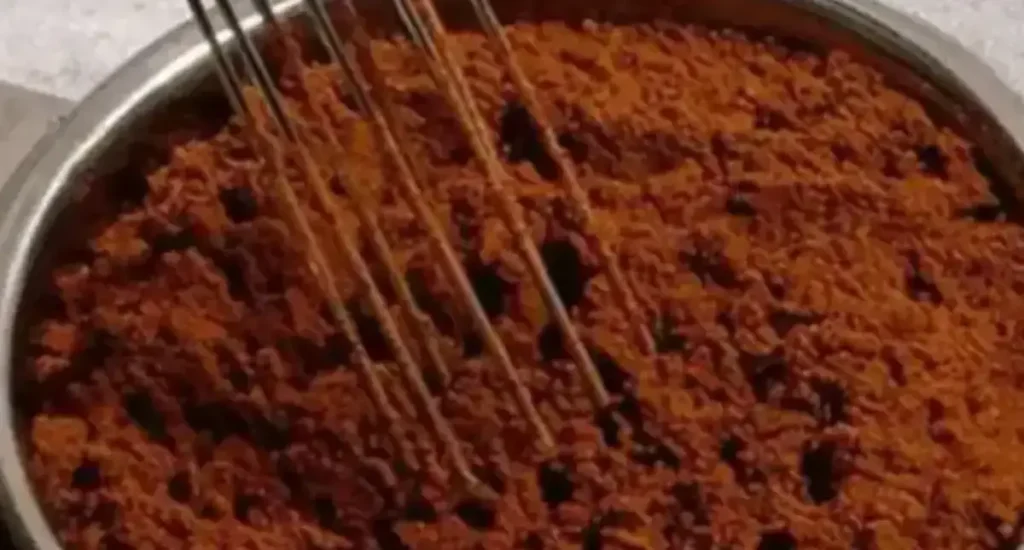
Any good-quality Arabica can work, but it must be ground to a powder. Medium roasts are the usual choice because they give balanced flavor without the harsh bitterness that a very dark roast can bring to such a concentrated cup.
Pre-ground Turkish coffee is widely sold and is a convenient way to start, since grinding it yourself requires the right grinder. Buy small bags, store them airtight and use them within a few weeks, as this fine powder goes stale quickly.
Not sure which roast to pick? Our guide to medium roast coffee explains the flavor profile and who it suits.
Based on research and traditional brewing guidance rather than lab testing: ratios vary by cezve size and by taste, so treat the table as a starting point and adjust by a quarter teaspoon at a time.
How to Make Turkish Coffee: Step-by-Step Method
The full process takes about five minutes once your cezve is on the heat. Read all the steps once before you start, because the foam stage moves quickly.
Step 1: Measure Cold Water Into the Cezve
Use cold, fresh water, filtered if your tap water has a strong taste. Pour in one demitasse of water per serving, as in the ratio table above. Never fill the cezve past its widest point, because the foam needs headroom to rise.
Step 2: Add the Coffee (and Sugar)
Add one heaped teaspoon of Turkish-ground coffee per cup. If you want sugar, add it now, because sugar must be in the pot before heating (see the sweetness guide below). Spices such as a pinch of ground cardamom also go in at this stage.
Step 3: Stir Gently Until Just Combined
Stir once or twice, just until the powder is wet and the sugar has dissolved. This is the only stirring you will do in the whole process, because stirring later breaks the foam.
Frothy Fusion Tip: Don’t stir hard or for long. The goal is only to wet the grounds, not to create a vortex.
Step 4: Heat Slowly on Low
Place the cezve on a low heat and stay with it. A slow rise in temperature gives the coffee time to extract evenly and lets the foam build in a fine, creamy texture. This stage takes roughly two to four minutes, depending on your hob and cezve.
Step 5: Watch for the Foam to Form and Rise
As the coffee warms, a dark foam will gather at the surface and begin to climb toward the neck of the cezve. This is the moment that matters. Keep your eyes on the pot and do not walk away.
Step 6: Remove From the Heat Just Before It Boils
When the foam swells to the rim and starts to lift, take the cezve off the heat immediately, before the coffee rolls into a full boil. Boiling collapses the foam and makes the coffee bitter.
Step 7: Spoon the Foam Into the Cups
Use a small spoon to divide the foam evenly between the cups first, so that every guest gets some. This is a traditional courtesy and it is the secret to a nicely finished cup.
Step 8 (Optional): Return to the Heat for a Second Rise
For a thicker foam, many people return the cezve to the heat for a few seconds until the foam rises a second time, then take it off again. Some do this a third time for a very dense foam. Do it only if you are comfortable judging the moment, as it is easy to overshoot.
Step 9: Pour Slowly and Let the Grounds Settle
Pour the remaining coffee slowly down the side of each cup so you do not break the foam. Let the cups rest for a minute or two so the grounds sink to the bottom. Serve with a glass of water and, if you like, a piece of Turkish delight.
Quick Reference: The Process in One Glance
| Step | Action | Time |
|---|---|---|
| 1–3 | Add cold water, coffee and sugar; stir once | About 1 minute |
| 4–5 | Heat on low until foam forms | 2–4 minutes |
| 6 | Remove from heat before it boils | A few seconds |
| 7–9 | Divide foam, pour, let grounds settle | 1–2 minutes |
How Sweet Should Turkish Coffee Be? Sugar Levels Explained
Turkish coffee is traditionally ordered by sweetness, and the sugar goes into the cezve before heating, not into the cup afterwards. Sugar stirred in later sinks to the bottom and disturbs the foam. Guests are often asked how they like their coffee, and four common answers cover most tastes.
| Style | Turkish name | Sugar per small cup | Taste |
|---|---|---|---|
| Unsweetened | Sade | None | Bold, bitter and aromatic |
| Lightly sweet | Az şeker | About ½ tsp | Slightly softened, still coffee-forward |
| Medium | Orta | About 1 tsp | Balanced, the most popular choice |
| Sweet | Çok şeker | About 2 tsp | Rich, syrupy and dessert-like |
If you are new to Turkish coffee, start with orta. It softens the intensity without hiding the coffee, and it is easy to dial up or down on your next brew.
Flavor Variations to Try
- Cardamom: a small pinch of ground cardamom added with the coffee gives a warm, floral note that is popular in many regions.
- Mastic or rosewater: used in some traditions for a more perfumed cup; add very sparingly.
- Cinnamon or clove: a tiny amount adds gentle spice, particularly in cooler months.
- Milk (Turkish latte style): not traditional, but some people add a splash of warm milk after brewing. If you try it, pour it gently so the foam stays intact.
Frothy Fusion Tip: Change only one thing at a time. Adjust sugar first, then spices, then ratio, so you know exactly what changed the flavor.
Pros and Cons of Traditional Turkish Coffee
Pros
✔ Strong, full-bodied flavor with very little equipment
✔ Rich foam and a satisfying ritual
✔ Inexpensive and quick once you get the hang of it
✔ Easy to customise with sugar and spice
Cons
✘ Needs a very fine grind that many grinders cannot reach
✘ Sediment in the cup is part of the experience, but not to everyone’s taste
✘ Requires attention at the stove; boil-overs happen quickly
✘ Small serving size, so you may want a second round
Turkish Coffee vs Espresso, Greek Coffee and Moka Pot
Turkish coffee is closest to Greek coffee in method and closest to espresso in strength. The biggest difference from every other style is that the coffee is simmered with the water and drunk unfiltered.
| Turkish coffee | Greek coffee | Espresso | Moka pot | |
|---|---|---|---|---|
| Grind | Powder-fine | Powder-fine | Fine | Medium-fine |
| Method | Simmered in a cezve | Simmered in a briki | Pressurised machine extraction | Steam pressure through a basket |
| Filtered? | No | No | Yes (puck) | Yes (basket) |
| Foam | Kaimaki foam | Kaimaki foam | Crema | Little to none |
| Cup size | 60–90 ml | 60–90 ml | 25–60 ml | 50–100 ml |
| Equipment cost | Low | Low | Medium to high | Low |
| Best for | Ritual and bold flavour | Ritual and bold flavour | Cafe-style drinks | Strong stovetop coffee |
Turkish Coffee vs Espresso
Espresso uses pressure to push hot water through a compact puck of ground coffee and is filtered, so the cup is clean and the crema forms from emulsified oils. Turkish coffee uses no pressure, no filter and a finer grind.
Both are concentrated, but Turkish coffee is heavier on the tongue because the fine particles stay suspended. If you love one, you will probably enjoy the other, but they are not interchangeable.
For a wider look at how espresso compares with other coffee styles, see our guides to espresso vs coffee and ristretto vs espresso.
Turkish Coffee vs Moka Pot
A moka pot also brews on the stove, which makes it a familiar step for many home brewers. The difference is that a moka pot forces water up through a basket of medium-fine coffee and filters it, while Turkish coffee stays in the pot with the grounds. If you already use a moka pot, our how to use a moka pot guide and espresso vs moka pot comparison are good reading before you try a cezve.
Turkish Coffee vs Greek Coffee
The two methods are almost the same, and the people who make them often have strong feelings about the differences. Names, serving traditions and sometimes the roast or the foam finishing technique vary. For a home brewer, the steps in this guide work for both.
Other Ways to Make Turkish Coffee
The stovetop method is the standard, but it is not the only way. Choose the method that suits your kitchen and your patience.
| Method | How it works | Best for | Watch out for |
|---|---|---|---|
| Gas or electric hob | Cezve on low heat, watched constantly | Most home brewers | Boil-overs if the heat is too high |
| Induction hob | Same steps, but needs a magnetic cezve base | Modern kitchens | Heat can jump quickly; use the lowest setting |
| Hot sand | Cezve nestled in heated sand for very even heat | Authentic ritual and the best control of foam | Needs a sand tray and a dedicated heater |
| Electric cezve or coffee maker | Heats automatically and often stops at the foam | Convenience and beginners | Less control over the foam and flavour |
| Small saucepan (no cezve) | Same method in a small pot with a pouring lip | When you do not own a cezve | Wider pots spread the foam and are harder to pour |
How to Make Turkish Coffee Without a Cezve
A small, narrow saucepan or milk pan will work in a pinch. Use the same ratio, keep the heat low and pour slowly to keep the foam. The result will be good, though a cezve’s tapered shape gives a noticeably better foam, so it is worth buying one if you plan to make this regularly.
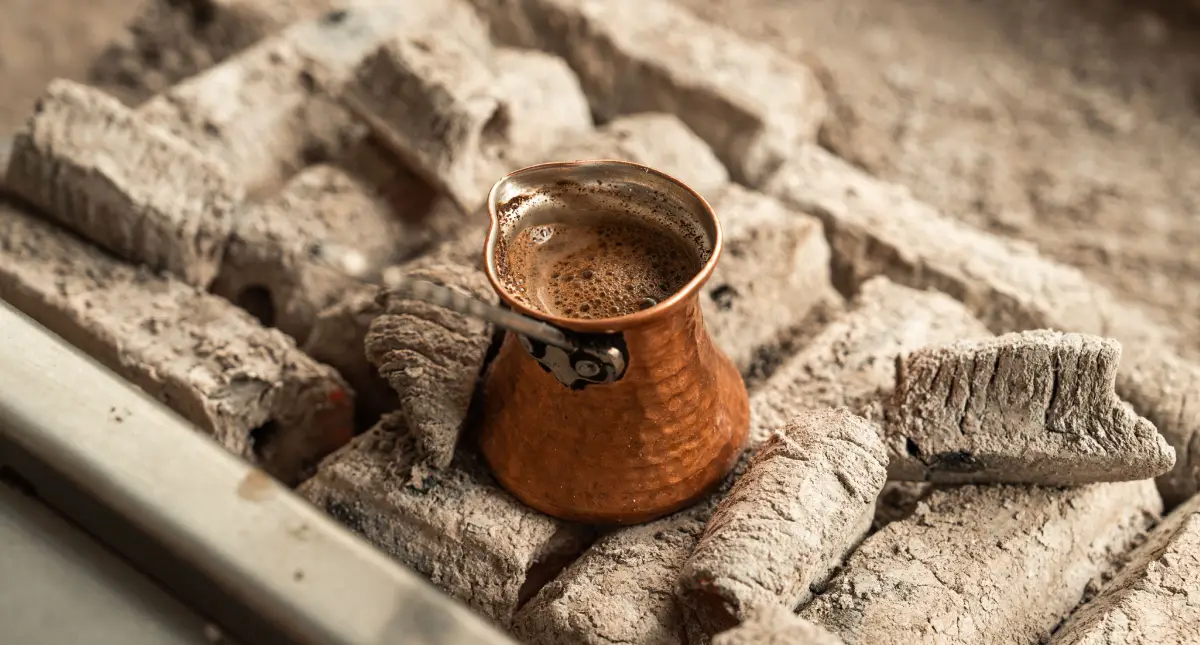
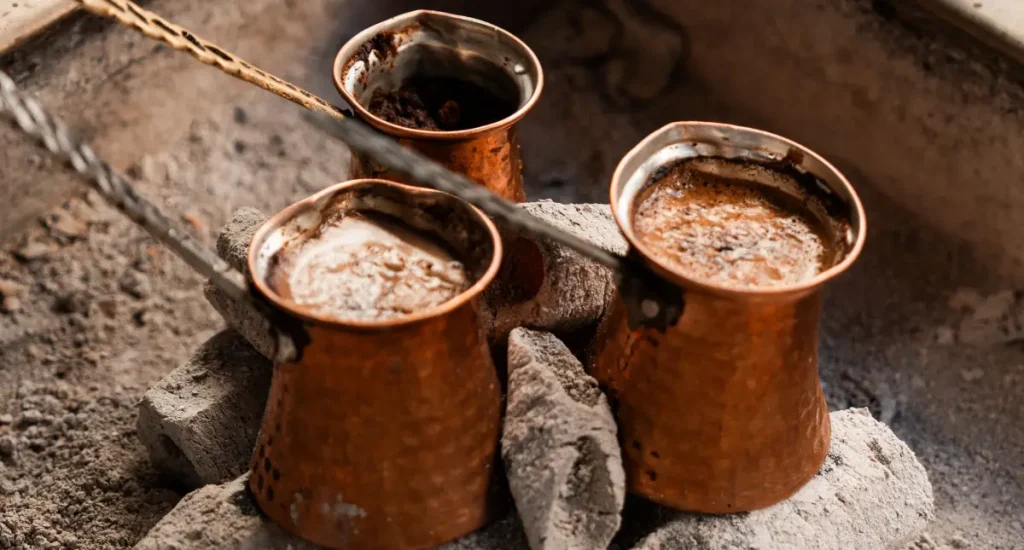
Hot Sand Method
In traditional Turkish coffee houses, the cezve is often set into hot sand, which gives very gentle, even heat and makes it easier to judge the moment the foam rises. It is a lovely way to brew if you have the equipment, but not necessary for a great cup at home.
Common Turkish Coffee Mistakes (and How to Fix Them)
Most problems come down to heat, grind or timing. Match your symptom in the table below to find the likely cause.
| Problem | Likely cause | Fix |
|---|---|---|
| No foam | Heat too high, grind too coarse or stale coffee | Lower the heat, use a finer grind and fresher coffee |
| Foam collapses | Coffee boiled, or you stirred after heating | Take it off the heat as soon as the foam rises; stir only at the start |
| Bitter taste | Over-heating, boiling or too dark a roast | Brew gently and try a medium roast |
| Weak, watery cup | Too little coffee or too coarse a grind | Use a heaped teaspoon per cup and a powder-fine grind |
| Gritty mouthfeel | Pouring too quickly or not letting grounds settle | Pour slowly and wait a minute before drinking |
| Boil-over | Cezve too full or heat too high | Fill below the widest point and use the lowest heat |
Avoid These Mistakes
❌ Using hot water instead of cold
❌ Stirring after the coffee has begun to heat
❌ Grinding too coarse
❌ Leaving the cezve unattended
❌ Stirring the cup after pouring
Why Cold Water Matters
Starting with cold water gives the coffee time to extract gradually as the temperature rises. Hot water speeds the process up too much, so the foam forms unevenly and the flavour turns harsh. It is a small detail that makes a visible difference to the finished cup.
Cleaning Your Cezve
Rinse the cezve with warm water straight after use and wash it with a soft sponge. Copper cezves can be polished occasionally with a gentle copper cleaner, but check the manufacturer’s advice and avoid abrasive pads, which can scratch the tin lining. Dry it fully so it does not spot or tarnish.
How to Serve and Drink Turkish Coffee
Turkish coffee is meant to be sipped slowly, not gulped. Serving it well is part of the experience.
Serving Traditions
- A glass of water on the side: to cleanse the palate before the first sip
- Something sweet: Turkish delight (lokum), a small biscuit or a square of chocolate pairs well, especially with unsweetened coffee
- Foam first: serve the foam to every cup before pouring the rest, so each guest receives their share
- Small cups on a saucer: these keep the coffee warm and make it easy to hold
How to Drink It
Wait a minute or two after pouring so the grounds settle. Sip from the top and stop before you reach the thick sediment at the bottom. Do not stir the cup. If you like a milder taste, add a little more water to the cup after brewing rather than stirring in extra sugar.
Reading the Grounds
In Turkish and neighbouring cultures, the grounds left in the empty cup are traditionally used for fortune telling. Guests turn the cup upside down on the saucer, let it cool, then read the patterns the grounds leave. According to UNESCO’s description of the tradition, this fortune reading is one of the social customs tied to Turkish coffee, alongside its role in ceremonies and everyday hospitality. It is good fun at a gathering and a nice excuse to linger over a second cup.
Turkish Coffee and Hospitality
Turkish coffee is closely linked with welcoming guests and with occasions such as engagements and holidays. Offering a cup is a gesture of hospitality, and making it carefully is seen as a mark of respect. Even at home, taking five minutes to brew a proper cup is a small ritual that slows the day down.
Buying Guide: What to Look For in Turkish Coffee Gear
You do not need much, but three choices shape the result: the cezve, the coffee and the grinder.
Choosing a Cezve
| Feature | What to look for |
|---|---|
| Material | Copper (tin-lined) heats evenly and looks traditional; stainless steel is durable and easy to clean; brass and ceramic are also available |
| Size | A 2-cup size suits one or two servings; choose the size you will use most, because the cezve works best when it is about two-thirds full |
| Shape | A narrower neck helps build and hold the foam |
| Handle | Long, heat-resistant and comfortably attached |
| Hob compatibility | Check for an induction-ready base if you cook on induction |
| Pouring lip | A clean lip prevents drips and keeps the foam intact |
Choosing the Coffee
Look for freshly roasted Arabica labelled as Turkish ground, or buy whole beans and grind them yourself. Medium roasts are the safe starting point. Buy small quantities, keep them airtight and away from light, and use them within a few weeks for the best foam.
Choosing a Grinder
A Turkish-style hand grinder is usually the most reliable way to reach a true powder at home. Many electric burr grinders sold for espresso or filter cannot grind fine enough, and blade grinders are inconsistent. If you only brew Turkish coffee occasionally, buying good pre-ground coffee is more practical than buying a grinder.
Budget, Warranty and Brand Reputation
A decent cezve is inexpensive, so spend a little more for a solid base and a comfortable handle. A dedicated grinder is the larger expense. Check warranty terms for any grinder and read independent reviews before you buy. Disclosure: this guide is based on research and traditional brewing guidance rather than hands-on testing of specific products, so it does not rank individual brands.
Who Should Make Turkish Coffee
Best for: people who enjoy strong, aromatic coffee, like a ritual and want to explore a traditional method without buying a machine.
Not ideal for: anyone who dislikes sediment in the cup, wants a large mug of coffee or needs a fully hands-off brew.
Frequently Asked Questions About Making Turkish Coffee
What is the ratio for Turkish coffee?
A good starting ratio is one heaped teaspoon (about 6–7 g) of extra-fine coffee for every 60 ml (2 fl oz) of cold water. Because cezve sizes and tastes vary, adjust by a quarter teaspoon at a time. A little more coffee gives a stronger cup, while less gives a lighter one. Keep the water measurement consistent so you can compare results from brew to brew.
Can I make Turkish coffee without a cezve?
Yes. A small, narrow saucepan or milk pan will work using the same ratio and the same slow heat. Fill it no more than two-thirds, stir once at the start and watch for the foam to rise. The foam may be a little thinner than in a cezve, because a cezve’s tapered neck is designed to trap it, but the flavour will still be good.
Can I use regular ground coffee for Turkish coffee?
Regular drip or espresso grinds are too coarse and will not produce the same body or foam. Turkish coffee needs a powder-fine grind that dissolves into the water and stays suspended. If you cannot grind that fine at home, buy pre-ground Turkish coffee, or ask a coffee shop to grind it for you, then use it within a few weeks.
Why does my Turkish coffee not foam?
Usually the heat is too high, the coffee is stale or the grind is too coarse. Start with cold water, stir only at the beginning, and heat gently so the foam forms slowly. Use fresh, powder-fine coffee and take the cezve off the heat as the foam rises. If the coffee boils, the foam collapses, so patience at the stove makes the biggest difference.
Do you stir Turkish coffee?
Stir it only at the start, just until the grounds are wet and the sugar has dissolved. Once the coffee begins to heat, avoid stirring because it breaks the foam. Do not stir the cup after pouring either, as this lifts the sediment and makes the coffee gritty. Let the grounds settle and sip from the top.
How strong is Turkish coffee?
It tastes strong because it is served in small, concentrated portions with the fine grounds still in the cup. Caffeine content varies by beans, ratio and cup size, and a small cup does not necessarily contain more caffeine than a full mug of brewed coffee. The bolder flavour and heavy body are what most people notice first.
Is Turkish coffee the same as espresso?
No. Espresso is made by forcing hot water through ground coffee under pressure and is filtered, giving crema on top. Turkish coffee is simmered with the grounds in a cezve and served unfiltered, giving a thick foam and sediment. Both are strong and served in small cups, but the method, grind and mouthfeel differ.
What do you serve with Turkish coffee?
Traditionally you serve a glass of water alongside it, plus something sweet such as Turkish delight (lokum), a small biscuit or chocolate. The sweetness balances the bitterness, especially if the coffee is unsweetened. Many people also enjoy it with dried fruit or nuts. Serve it in small cups on saucers and let guests sip slowly.
Final Verdict: Is Making Turkish Coffee Worth Learning?
Knowing how to make Turkish coffee gives you a bold, aromatic cup with almost no equipment and a pleasing ritual to go with it. The method is simple: cold water, powder-fine coffee, slow heat and a gentle hand at the foam stage. Expect your first cup or two to be a learning exercise, then enjoy how quickly the technique clicks.
- Who it is for: beginners who want a hands-on method, espresso lovers who like intense flavour and anyone who enjoys a slow, social way of drinking coffee
- Who should avoid it: anyone who dislikes sediment, wants a large or milky coffee, or prefers a fully automatic brew
- Best alternatives: a moka pot for a stovetop brew that is filtered, or an espresso machine for a cafe-style cup
Your Next Step
Make one cup this weekend using the ratio table and the steps above, then adjust the sugar level to suit you. When you are ready to explore more, learn the brewing techniques in our moka pot guide, compare espresso vs moka pot, or browse more coffee recipes and guides on Frothy Fusion.
💛 Related Reads on How to Make Turkish Coffee
- How to Make Espresso Without a Machine
- Greek Coffee vs Turkish Coffee: What’s the Difference?
- Best Manual Grinders for Turkish Coffee
- Coffee Traditions Around the World
☕ Just a heads up—this How to Make Turkish Coffee post contains affiliate links. If you buy through them, Frothy Fusion may earn a small commission (at no cost to you). Thanks for supporting our coffee-fueled content!